
ACID Cigar Flavor Guide: Decoding Colors, Taste, and Sweetness Levels
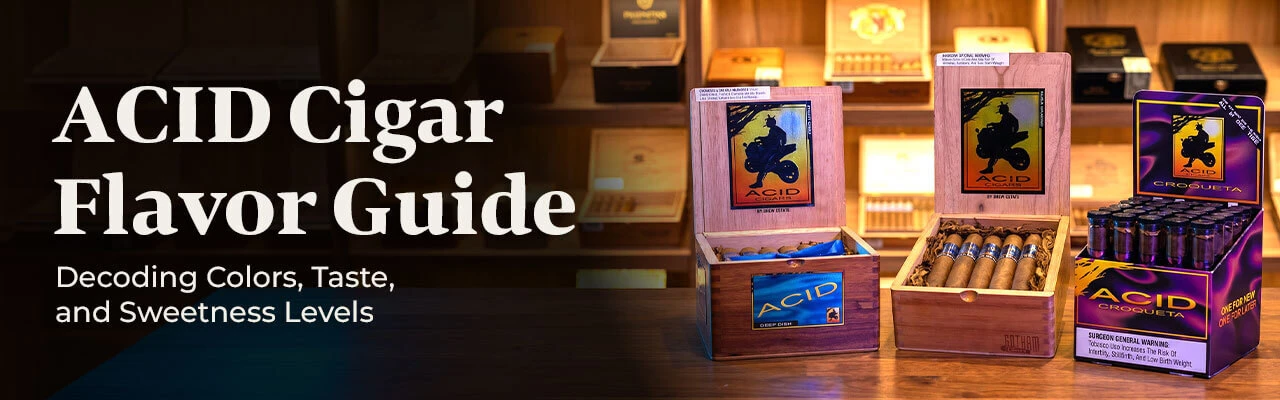
Picking an ACID cigar based solely on its vibrant label is a fast way to end up with a flavor profile you never wanted. It's frustrating to spend your money on a premium stick only to find it's too floral or cloying for your palate. Understanding ACID cigar colors is the first step toward a perfect smoking session.
We know you want a reliable, aromatic experience without the confusion of Drew Estate's secret recipes. This comprehensive ACID cigar flavor guide reveals exactly what do ACID cigars taste like so you can buy with confidence. You'll master ACID cigar sweetness levels and learn the crucial differences in ACID Blue vs Gold vs Purple lines.
Whether you are searching for the best ACID cigar for beginners or need to know how to choose an infused cigar that won't ruin your collection, we have the answers. We'll even cover essential storage tips to keep your botanicals away from your traditional blends. Let's find your new favorite smoke.
Key Takeaways
- Understand the proprietary infusion process where tobacco ages with botanicals and essential oils to achieve its unique aromatic profile.
- Master the color-coding system with our ACID cigar flavor guide to quickly distinguish between sweet, mellow, and floral blends.
- Analyze the sweetness levels of Blue, Gold, and Purple lines to find your ideal balance of sugar and spice.
- Identify the best ACID cigar for beginners, including why the legendary Kuba Kuba is the ultimate starting point for your palate.
- Protect your humidor by learning the essential storage protocols that prevent flavor migration between infused and traditional cigars.
Table of Contents
- Decoding the ACID Infusion Process: Beyond Traditional Tobacco
- The ACID Cigar Color Coding System Explained
- Comparing ACID Blue vs. Gold vs. Purple Sweetness
- Selecting the Best ACID Cigar for Beginners
- Essential Storage Rules for Infused Cigars
This is the optimized and expanded version of your first section. I have corrected the technical inaccuracies (specifically the ingredient count) and added the "how it works" depth regarding osmosis and the infusion vs. flavoring distinction to give the reader a truly expert perspective.
Decoding the ACID Infusion Process: Beyond Traditional Tobacco
When Drew Estate launched ACID cigars in 1999, they didn't just release a new product—they disrupted the entire industry. While many "flavored" cigars rely on surface-level additives, ACID redefined the category through a process that treats tobacco with the same reverence as a fine wine or a high-end botanical gin.
The Science of Osmosis: Inside the "Aroma Rooms"
Unlike traditional flavored sticks, the secret to ACID’s depth lies in osmosis. Premium Nicaraguan tobacco leaves are placed in specialized "aroma rooms" for several months. These rooms are meticulously lined with actual herbs, exotic flower petals, and essential oils.
Instead of direct contact, which could damage or oversaturate the leaf, the air within these rooms is continuously circulated. This allows the tobacco to slowly "breathe in" the aromatic compounds, ensuring the scent and flavor penetrate the entire leaf structure rather than just sitting on the surface.
Infusion vs. Flavoring: Why Quality Matters
It is a common misconception that ACID cigars are "flavored." In reality, there is a massive technical gap between mass-market flavoring and Drew Estate's infusion:
| Feature | Mass-Market "Flavoring" | ACID "Infusion" |
|---|---|---|
| Process | Synthetic syrups or chemical sprays applied to the surface. | Months-long natural absorption through air circulation. |
| Tobacco Quality | Often short-filler or "mixed-fill" tobacco. | 100% High-quality Nicaraguan long-filler. |
| Flavor Longevity | Fades quickly once the cellophane is removed. | Deeply embedded; remains consistent from head to foot. |
| Burn | Can be uneven or "soggy" due to chemical sprays. | Slow, even, and cool—characteristic of premium handmade sticks. |
The Secret 140+ Ingredients
While the industry buzz often inflates the numbers, the true recipe for the ACID line is a closely guarded secret involving over 140 different natural ingredients.
Expert Note: Many sources mistakenly cite 240 ingredients, but official Drew Estate lore confirms the number is 140+. These range from rare essential oils to botanical extracts, curated to preserve the integrity of the leaf without making it chemically altered or artificial.
Aroma vs. Palate: The Multi-Sensory Experience
Understanding what an ACID cigar tastes like requires a distinction between the "room note" and the palate.
- The Room Note: Because of the infusion, the unlit cigar (and the resting smoke) often carries a powerful, incense-like aroma.
- The Palate: Once lit, the experience is grounded in the creamy, earthy base of Nicaraguan tobacco.
- The Sweet Tip: A signature element of the ACID experience is the sugar-based treatment applied to the head of the cigar. This provides an immediate burst of sweetness on the lips that complements—rather than masks—the botanical smoke, creating a complex, multi-sensory finish.
The ACID Cigar Color Coding System Explained
Drew Estate simplified the infused cigar market by using a color-coded system that functions like a flavor compass. Each color represents a specific aromatic "room note," a wrapper type, and a flavor intensity. Understanding these colors is the difference between a relaxing smoke and a flavor profile that overwhelms your palate.
The ACID Color Spectrum at a Glance
| Color | Profile | Best For... |
|---|---|---|
| Blue | High Intensity, Floral, Sweet | The classic "Acid" experience. |
| Gold | Mellow, Creamy, Honey/Tea | Morning smokes or light palates. |
| Red | Spicy, Earthy, Savory | Smokers who want aroma without the sugar. |
| Purple | Floral, Botanical, Complex | Deep, dark, and wine-like notes. |
| Green | Grassy, Herbal, Fresh | Fans of Candela wrappers and green tea. |
| Silver/White | Subtle, Traditional, "Hybrid" | Traditional smokers trying infusion. |
| Orange | Savory, Toasty, Woodsy | Fans of rich, "bready" tobacco notes. |
Blue Line: The Gateway to ACID
The Blue line is the heart of the brand. If you want to know what ACID cigars taste like in their truest form, start here.
-
The Flagship: The Kuba Kuba (Sumatra wrapper) is the gold standard, offering an approachable sweetness and a signature perfume-like aroma.
-
The Quicker Hit: The Blondie offers the same profile in a concentrated 4 x 38 format. The Blue line defines the "sweet tip" experience, balancing sugary lips with a lush, fragrant smoke that fills a room instantly.
Gold and Red: The Refined vs. The Robust
The Gold Line (e.g., Cold Infusion) is sophisticated and light. Utilizing a Connecticut Shade wrapper, it provides a tea-like profile with lower sweetness levels. It’s the "Chardonnay" of the ACID world.
The Red Line (e.g., Liquid, Nasty) is often misunderstood. While labeled as "spicy," the real nuance is their intensity. Unlike the Blue line, many Red line sticks feature zero-to-low sweetness on the cap. They are "fierce" aromatics designed for the experienced smoker who wants the botanical scent to complement—rather than mask—the bold, earthy Nicaraguan tobacco.
The Specialized Lines: Green, Silver, and Orange
To truly master the ACID collection, you must look beyond the primary colors:
- The Green Line (Candela): Featuring the Kuba Kuba Green and Blondie Green, these cigars use a green Candela wrapper. The result is a distinctively grassy, herbal profile that tastes more like green tea than potpourri. It’s the perfect bridge for those who find the Blue line too "floral."
- The Silver/White Line (The Hybrids): This line includes Acid One and Opulence 3. These are designed for the "traditionalist." They are subtly infused and often lack the heavy sugar-tipped cap, focusing instead on the high-quality nuances of the aged tobacco.
- The Orange Line (Subculture): This line includes cult favorites like Toast. The Orange line moves away from floral notes, leaning into savory, "toasty," and woodsy flavors. It is the "comfort food" of the ACID portfolio.
Comparing ACID Blue vs. Gold vs. Purple Sweetness
Choosing the right ACID stick is a balancing act between sugary finish and botanical complexity. While the infusion provides the aroma, the sweetness you feel on your lips comes from a specific sugar-water (sucrose) solution applied to the cap. Understanding how this "sweet-tip" interacts with different wrapper leaves is the secret to finding your perfect match.
The Sweetness Intensity Scale
Not all ACID cigars are "sugar bombs." If you use a 1–10 scale for sweetness, the lineup looks like this:
| Line | Sweetness Level | Wrapper Type | Flavor Profile |
|---|---|---|---|
| Blue | 9/10 (High) | Sumatra | Sugary, Floral, Spicy "Zing" |
| Acid 20 | 6/10 (Medium) | Mexican San Andrés | Refined, Cocoa, Herbal |
| Gold | 4/10 (Low-Mid) | Connecticut | Creamy, Milky, Honey |
| Purple | 2/10 (Low) | Maduro | Dark Fruit, Cocoa, Botanical |
The "Sweet-Tip" Variable
The immediate "pop" of flavor when you put an ACID in your mouth is the result of the sugar treatment on the head of the cigar.
- The Blue Line (Kuba Kuba, Blondie) uses the most concentrated solution, designed to provide a candy-like contrast to the rich tobacco.
- The Purple Line uses the least, relying instead on the heavy, incense-like density of the smoke itself.
- The Acid 20 (Silver/Black Band): A critical addition to this list, the 20th Anniversary blend sits perfectly in the middle. It offers a "grown-up" sweetness—more refined than the Blue line but noticeably sweeter than the dry, botanical profile of the Purple line.
Wrapper Interaction: The Flavor "Filter"
The wrapper leaf acts as a filter that changes how your palate perceives the sweetness. It is the "bass note" to the infusion’s "treble."
- Blue (Sumatra Wrapper): The Sumatra leaf provides a natural, peppery "zing." This spice is essential because it cuts through the high sugar content of the tip, preventing the cigar from feeling cloying.
- Gold (Connecticut Shade Wrapper): This thin, golden leaf is naturally buttery. When combined with the Gold infusion, the sweetness feels "milky" or "creamy," much like a vanilla latte or herbal tea with honey.
- Purple (Maduro/Broadleaf Wrapper): Darker, oilier Maduro wrappers introduce notes of dark chocolate, raisins, and espresso. This transforms the sweetness into a "dark" profile, making the cigar feel more like a rich dessert than a floral treat.
Vitola and Concentration
The physical size (vitola) also dictates the intensity of the experience.
- The Blondie (4 x 38): A smaller ring gauge means you get more wrapper and sweet-tip per puff. It is a concentrated, intense blast of flavor.
- The Kuba Kuba (5 x 54): The larger ring gauge allows for more filler tobacco, which creates a cooler draw. This "dilutes" the sweetness slightly, allowing the natural Nicaraguan tobacco and the complex botanicals to share center stage.
Selecting the Best ACID Cigar for Beginners
Choosing your first ACID is about more than just picking a color; it’s about matching the time commitment and your palate history to the right vitola. Whether you are a total novice or a traditional smoker looking for a change of pace, here is how to navigate your first "infusion" experience.
1. The "Time Commitment" Factor: Blondie vs. Kuba Kuba
While the Kuba Kuba (5 x 54) is the legendary king of the Blue line, its large ring gauge can be intimidating and may lead to "flavor fatigue" for a first-timer.
- The Expert's Choice: Start with the Blondie (4 x 38). This petit corona offers the full "ACID experience" in a manageable 20-minute window. It’s the perfect way to test the waters without committing to a 60-minute session or risking nicotine sickness from a larger stick.
- The Classic Choice: If you have an hour to relax, the Kuba Kuba provides a cooler, more balanced draw that many find synonymous with the brand.
2. The "Krush" Sampler: Zero Commitment
If you’re unsure which color profile fits you, don’t buy a full-sized stick yet. The Krush Classic Tins are 4 x 32 cigarillos that allow you to sample the Blue, Gold, Red, and Morado (Purple) lines for a fraction of the cost. Think of it as a "tasting flight" for your palate.
3. The "Palate Bridge" for Traditional Smokers
If you already smoke non-infused cigars (like Padrón or Arturo Fuente), jumping straight into the floral intensity of a Kuba Kuba can be jarring. You need a "bridge" cigar:
- ACID 20: This box-pressed anniversary blend uses a Mexican San Andrés wrapper. It’s sophisticated and cocoa-forward, offering a refined transition from traditional to infused.
- ACID Toast (Orange Line): Moving away from heavy florals, the Toast offers savory, woodsy, and "bready" notes that feel more familiar to a traditional tobacco lover.
Beginner Pro-Tips: Don't Ruin the Experience
- The Shallow Cut: Be careful not to cut too much off the head. The "sweet-tip" treatment is concentrated on the very end of the cap. If you use a deep straight cut, you risk cutting off the flavor entirely. Use a V-cutter or a very shallow straight cut.
- The "Purge": Because ACIDs are oil-heavy, they can occasionally build up a bitter "char" taste. Every 10 minutes, gently blow out through the cigar (purging) to clear the airway and keep the botanicals fresh.
Expert Pairing Guide
Enhancing your smoke involves finding a beverage that complements—rather than masks—the infusion.
| Label Color | Recommended Pairing | Why it Works |
|---|---|---|
| Blue | Earl Grey Tea or Creamy Latte | Bergamot and milk fats highlight the floral/citrus notes. |
| Gold | Green Tea or White Wine | The crispness cuts through the honey-like sweetness. |
| Purple | Port or Botanical Gin | These dark/aromatic drinks stand up to the Maduro density. |
| Red/Orange | Bourbon or Dark Coffee | The oak and char of the drink complement the spicy, savory notes. |
Essential Storage Rules for Infused Cigars
Storing ACID cigars is not like storing traditional tobacco. Because they are finished with over 140 different herbs, oils, and botanicals, these cigars are "aromatic aggressors." If you don't follow strict isolation protocols, the potent essential oils will leach into your other cigars, permanently altering their flavor through a process called flavor migration.
1. The 100% Separation Rule
Never store an ACID cigar in the same humidor as your non-infused cigars.
- Cedar Ghosting: Spanish cedar is highly porous and acts like a flavor sponge. If an ACID "ghosts" a wooden humidor, the wood will absorb the botanicals and redistribute them to every other cigar you ever put in that box. This contamination can happen in as little as 48 hours and is nearly impossible to reverse.
- Label Intensity: The Blue and Purple lines are particularly pungent. Even among your ACID collection, keep these separated from milder Gold or Silver lines if you want to keep their profiles distinct.
2. The Climate "Sweet Spot"
While traditional cigars often thrive at 62%–65% humidity and room temperature, ACID cigars require a slightly different environment to keep their essential oils volatile and their caps intact.
| Variable | ACID Ideal Range | Why? |
|---|---|---|
| Humidity | 69% – 72% | Higher moisture preserves the essential oils on the wrapper. |
| Temperature | 65°F – 70°F | Prevents oils from becoming rancid or "bleeding." |
Expert Warning: Avoid temperatures above 72°F. Excessive heat can cause the sugar-tipped cap to become sticky or "tacky," which ruins the mouthfeel. High heat also causes the oils to break down, which can lead to a bitter, "rancid" taste.
3. The "Sacrificial" Tupperdor Strategy
If you don't have a second wooden humidor, a "Tupperdor" is the perfect solution—but with a catch.
- Plastic Ghosting: Just like cedar, plastic is porous. If you store ACIDs in a plastic container for a year, that container will smell like Kuba Kuba forever.
- The Strategy: Designate one BPA-free container as your "sacrificial" infused box. Do not expect to use it for traditional cigars or food ever again.
How to Build a Professional Infused Tupperdor
- Select a Container: Use a BPA-free plastic container with a silicone gasket and locking clips for a 100% airtight seal.
- The Prep: Wash the container with mild, unscented soap. Dry it completely to ensure no "plastic" smell remains.
- The Humidity: Add a 69% or 72% Boveda pack. ACIDs perform best when they are slightly "plumper" than traditional sticks.
- Cello On: Always keep your ACID cigars in their original cellophane. While traditionalists often "undress" their cigars for aging, the cello on an ACID acts as a vital barrier, slowing down the evaporation of the secret botanicals.
- Placement: Store your container in a cool, dark place (like a closet floor) to ensure the temperature stays below the 72°F danger zone.
By following these strict preservation rules, you ensure that every puff of your ACID cigar tastes exactly as the master blenders at Drew Estate intended—aromatic, sweet, and perfectly balanced.
Elevate Your Infused Smoking Experience
Mastering the color-coded world of Drew Estate allows you to predict your smoking experience before you even strike a match. You now have the technical knowledge to navigate the floral intensity of the Blue label, the creamy sophistication of the Gold series, and the dark, botanical complexity of the Purple line.
To truly elevate your session, follow these expert-level "Best Practices" for infused cigars.
Pro-Tips for the Perfect Burn
Infused cigars are oil-heavy by nature. To prevent these delicate botanicals from turning bitter, use these two essential techniques:
- The "Shallow Cut" Caution: The sugar-based "sweet tip" is applied to the very surface of the cap. If you use a deep straight cut, you risk removing the sweetness entirely. Use a V-cutter or a very shallow straight cut to keep the flavor intact.
- The Gentle Purge: Because of the high oil content, ACIDs can occasionally accumulate tar, which masks the floral notes with bitterness. Every 10 to 15 minutes, gently blow out through the cigar (purging). This clears the airway and keeps the aromatic profile crisp and bright.
The Connoisseur’s Pairing Guide
The right drink doesn't just wash down the smoke—it acts as a flavor multiplier. Use this guide to match the weight of your drink to the intensity of the infusion:
| ACID Line | Recommended Beverage | Why it Works |
|---|---|---|
| Blue | Earl Grey Tea | The bergamot in the tea perfectly mirrors the floral aromatics. |
| Gold | Gin & Tonic / White Wine | The crisp acidity cuts through the honey and cream notes. |
| Purple | Port or Bourbon | The dark fruit and oak notes stand up to the heavy Maduro richness. |
| Red/Orange | Black Coffee / Stout | The roasted notes complement the savory, toasty tobacco base. |
Protecting Your Investment
Proper maintenance is the final step in your journey. Always store your ACID cigars in a dedicated, climate-controlled environment—keeping them between 69%–72% humidity and below 72°F. This prevents flavor migration and ensures the essential oils don't become rancid.
Gotham Cigars has supported the community for over 20 years with a commitment to quality and scale. We utilize climate-controlled warehousing to provide a Freshness Guaranteed experience with every delivery. Benefit from our lightning-fast shipping and secure your favorite blends at competitive retail prices today.
Shop the best prices on ACID Cigars at Gotham Cigars and start exploring the diverse world of infused tobacco. It’s time to find the blend that defines your unique style.
Frequently Asked Questions
What is the sweetest ACID cigar?
The ACID Kuba Kuba is widely considered the sweetest cigar in the brand's portfolio. It features a heavy sugar-infused cap and the signature aromatic profile of the Blue line. This combination creates a sugary, herbal experience that remains a top-rated fan favorite for those who prioritize high ACID cigar sweetness levels. This specific vitola uses a Sumatra wrapper to balance the intense botanical infusions with a smooth finish.
Do ACID cigars have real tobacco?
Yes, every ACID cigar uses premium Nicaraguan long-filler tobacco. Drew Estate crafts these sticks using high-quality wrappers such as Connecticut Shade, Sumatra, or Maduro. While the secret infusion process adds botanicals and essential oils, the foundation remains 100% authentic tobacco leaf construction. This ensures a slow, even burn that matches the quality and performance of traditional premium cigars found in any connoisseur's collection.
Can I store ACID cigars with my other cigars?
You shouldn't store ACID cigars in the same humidor as your traditional sticks. The potent essential oils and botanicals will bleed into your non-infused cigars, permanently altering their natural flavor profiles. It's best to use a separate humidor or a dedicated travel case to keep these aromatic blends completely isolated. This practice ensures your classic Nicaraguan or Dominican blends don't pick up unwanted floral notes from the ACID infusion process.
What does the ACID Blue label taste like?
Blue labels offer a sweet, creamy, and highly aromatic experience. When you're understanding ACID cigar colors, the Blue line represents the original floral and herbal infusions that made the brand famous. You'll typically taste notes of honey, citrus, and cream that create a room note unlike any other cigar on the market. These are the most popular choices for smokers who enjoy a lush, fragrant smoke that lingers pleasantly.
Are ACID cigars good for beginners?
ACID cigars are the best ACID cigar for beginners because they provide a smooth, approachable introduction to premium tobacco. The sweetened tip and floral aroma make the transition into cigar smoking much less intimidating for a novice. New enthusiasts can enjoy the craftsmanship of a hand-rolled cigar while benefiting from a flavor profile that's easy on the palate. This approachable nature has made them a staple in humidors for over 20 years.
How long do ACID cigars last?
ACID cigars can last for several years if you store them in a separate, humidified environment at a consistent 70% humidity. It's vital to maintain this moisture level to prevent the essential oils and botanicals from drying out and losing their potency. If the humidity fluctuates significantly, the cigar's unique flavor profile will degrade within a few weeks. Always use a dedicated hygrometer to ensure your infused collection stays fresh and vibrant for the long term.
Further Insights:
- The Acid Infused Cigar Experience: A Guide to Drew Estate’s Unique Blends
- ACID Blue vs Gold vs Purple: The Definitive Guide to Infused Cigars
- Are ACID Cigars Flavored? The Science Behind the Infusion Revolution
- ACID Kuba Kuba vs. Blondie: A Head-to-Head Blue Line Comparison (2026)
- ACID Blue vs Gold: The Ultimate ACID Cigar Color and Flavor Guide
- Acid Cold Infusion Tea vs. Blondie: Which Blue Label Cigar Wins?
- ACID Cold Infusion Tea vs ACID Blondie: Sweet Aroma vs Lighter Feel
- ACID Kuba Kuba vs. ACID Toast: Comparing Two Infused Icons
- ACID Kuba Kuba vs ACID Toast: Shorter Session vs Larger Format Experience
- ACID Purple vs. ACID Blue: The Technical Guide to Drew Estate Infused Cigars
- ACID Blondie vs. Kuba Deluxe: The Ultimate Drew Estate Infused Cigar Guide
- Modern Cigar Culture: Why ACID Cigars and Urban Brands Dominate in 2026
- ACID Cigar Flavor Profiles: A Complete Guide to Kuba Kuba and Infused Smokes
- ACID and Infused Cigars: The Complete Guide to Selection, Storage, and Maintenance
- ACID Kuba Kuba vs. Traditional Premium Cigars: The Ultimate Comparison Guide
Recent Posts
-

Holiday Gift Guide for Cigar Lovers: Gifts for Every Type of Enthusiast
Finding the right holiday gift for a cigar lover doesn't have to mean choosing the most expensive b …13th Nov 2026 -

Cigar Review | Avo Cigars No.2 Cigar is One of the Best
I'm not a cigar expert, but I know when I get my hands on something good, and this weekend I defini …11th Nov 2026 -
Top Five Avo Cigars and a History of Avo
"I have always loved beautiful music. Then I found the cigar. A good cigar is like music. Now I hav …6th Nov 2026