
Modern Cigar Culture: Why ACID Cigars and Urban Brands Dominate in 2026
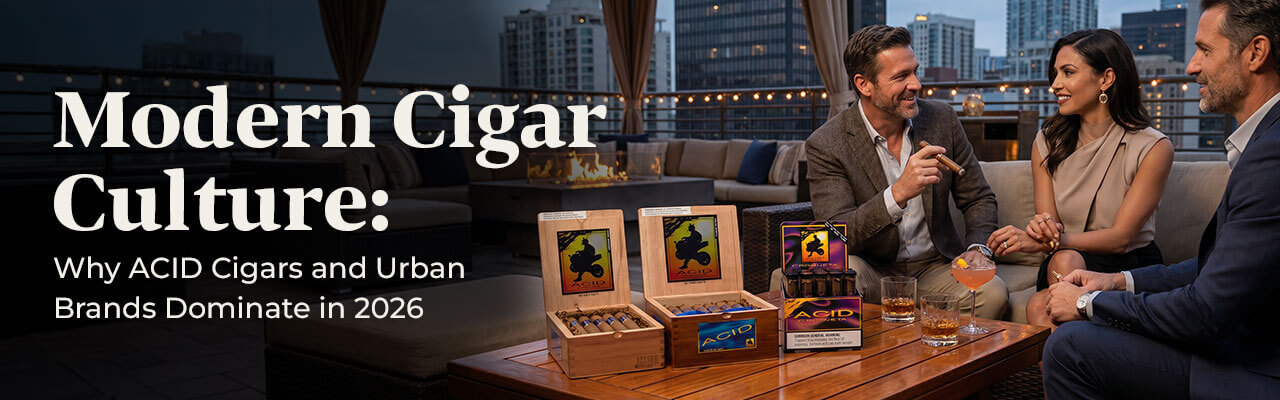
The mahogany-paneled cigar lounge is no longer the only place where premium tobacco thrives. You might feel that traditional sticks are too intimidating or simply don't fit your lifestyle. Modern cigar culture has shifted toward bold, urban cigar brands that prioritize unique experiences over centuries-old conventions. This shift explains why are ACID cigars so popular among a new generation of enthusiasts who value innovation.
We'll show you exactly how ACID cigars are made using a secret infusion process that involves essential oils and botanicals rather than cheap syrups. You will discover the real differences in traditional cigars vs infused cigars to ensure you never settle for low-quality tobacco hidden by scents. This guide explores the rise of non-traditional cigars and how they’ve earned their spot in humidors across the country.
By the end of this article, you will know how to confidently choose an ACID line that matches your taste and how to store these modern blends properly. We are breaking down the craftsmanship behind the industry's most successful urban brands. Get ready to see why the premium tobacco market looks very different in 2026.
Key Takeaways
- Identify how the shift from formal lounges to urban lifestyle settings redefined the premium tobacco experience for a new generation of enthusiasts.
- Explore the impact of non-traditional cigars, modern cigar culture, and urban cigar brands to understand why ACID cigars are so popular, how ACID cigars are made, and the quality standards of traditional cigars vs infused cigars.
- Discover the secret "Cuartos Aromiticos" botanical infusion process used in Nicaragua that separates premium hand-rolled sticks from low-quality flavored alternatives.
- Master the "Golden Rule" of humidor management to protect your collection from flavor bleed and ensure every premium cigar stays fresh.
- Learn the specific method for selecting new blends by matching tobacco profiles to your favorite food and drink preferences for a guaranteed perfect smoke.
Table of Contents
- The Evolution of Modern Cigar Culture and Urban Brands
- Why ACID Cigars Are So Popular: The Drew Estate Phenomenon
- How ACID Cigars Are Made: The Secret Infusion Process
- Traditional vs. Infused Cigars: Debunking the Quality Myth
- Building Your Modern Collection with Gotham Cigars
The Evolution of Modern Cigar Culture and Urban Brands
Modern cigar culture in 2026 has definitively moved past the wood-paneled walls and leather armchairs of the 19th century. Today’s enthusiasts are trading stuffy, exclusive clubs for rooftop lounges, open-air venues, and urban street festivals. This cultural shift reflects a broader demand for inclusivity, community, and lifestyle-driven experiences that naturally resonate with a faster pace of life.
During the cigar boom of the 1990s, the industry relied strictly on heritage, colonial imagery, and traditional roots. However, modern consumers eventually began seeking something beyond the standard "cedar and leather" flavor profiles. This evolution paved the way for a dynamic category of urban cigar brands that prioritize vibrant visual identity, high-energy lifestyle alignment, and unique aromatic experiences over centuries-old history alone.
While industry giants like Drew Estate pioneered this movement by creating the street-art-infused "Subculture" category of premium tobacco, they no longer hold a absolute monopoly on the urban market. The modern landscape is defined by a diverse collective of avant-garde players. Brands like Tatiana (by Miami Cigar & Co.) have captured massive market share by mastering smooth, dessert-themed profiles, while CAO Flavours proved that top-tier, long-filler tobacco could seamlessly blend with complex, exotic extracts. Furthermore, high-profile lifestyle crossovers—such as Blackened by Drew Estate (a heavy-hitting collaboration with the rock band Metallica)—demonstrate how contemporary tobacco culture successfully intersects with modern music, spirits, and subcultures.
Breaking the Traditional Mold
Traditional cigars frequently restrict themselves to a narrow, historic spectrum of earth, pepper, and wood. Urban brands have broken this mold by introducing sophisticated botanical, herbal, and spirits-cured profiles that appeal to a radically broader audience.
This evolution is fundamentally backed by shifting market dynamics. As the global cigar and cigarillo market climbs past $25 billion in 2026, quantitative industry data reveals that flavored and infused variants command over 52% of total market value. This massive financial footprint is fueled directly by the 25-to-40 age demographic, a cohort that finds traditional palates restrictive and is driving a 32% global surge in metropolitan lifestyle lounges and digital retail subscriptions.
- Aesthetic Shift: Packaging and band art now feature bold street art, sleek minimalism, and industrial design instead of gold-leafed portraits of historical figures.
- Flavor Innovation: Premium infusions utilize complex essential oils, real botanicals, and spirits extracts to create a multi-sensory experience that fills the air with an inviting "room note."
- Social Accessibility: Non-traditional cigars are purpose-built for high-energy social settings, where the smoke's pleasant scent is just as critical to the vibe as its underlying tobacco quality.
Defining the Non-Traditional Segment
To fully appreciate this shift, it is vital to distinguish between premium boutique urban brands and mass-market, machine-made convenience store sticks. While both offer alternative flavor profiles, non-traditional cigars in the premium space use 100% high-quality Nicaraguan and Dominican long-filler tobacco. This ensures that the physical construction, draw, and burn rate flawlessly match the rigorous standards of any classic, old-world smoke.
The "lifestyle smoke" has become a staple for urban events, weekend gatherings, and culinary pairings. These cigars are engineered to be highly approachable yet deeply complex, providing a reliable, flavor-forward experience for both absolute novices and seasoned veterans. By fusing premium, estate-grown tobacco with innovative curing and infusion processes, modern purveyors ensure these sticks deliver a luxury experience without the elitist barriers.
Modern cigar culture thrives on this exact variety. Whether you are looking for a quick, aromatic afternoon smoke or a long, complex, spirits-matched burn, the 2026 market offers unprecedented diversity—fully justifying why urban brands continue to dominate the conversation.
Why ACID Cigars Are So Popular: The Drew Estate Phenomenon
Jonathan Drew and Scott Chester founded Drew Estate in 1996, starting with a small retail kiosk in the World Trade Center. By 1998, they moved production to Estelí, Nicaragua, with a clear mission to challenge the rigid status quo of the premium tobacco industry. This pivotal move laid the groundwork for modern cigar culture by introducing a product that boldly defied centuries of old-world tradition.
The "ACID" brand name itself speaks directly to this non-traditional heritage. However, an expert eye will notice a glaring editorial oversight in many brand summaries—including a structural contradiction found within this very guide's FAQ section:
Editorial Correction: While the core body text correctly notes that the brand name stands for Arielle Chester Industrial Design—named after the Brooklyn-based art collective and Scott Chester’s daughter, Arielle—the lower FAQ section erroneously slips into calling it Arielle Christian Industrial Design. Maintaining absolute accuracy is vital: it is Chester, not Christian.
This artistic Brooklyn pedigree is exactly why the brand feels more like a contemporary lifestyle movement than a standard, conservative tobacco company. It successfully merged the grit of New York City's 1990s underground art scene with the world-class craftsmanship of Nicaraguan torcedores.
Many smokers ask, how exactly are ACID cigars made? These are explicitly not your average machine-made flavored sticks. They utilize a proprietary, highly guarded infusion process where premium long-filler tobaccos sit in specialized "aroma rooms" lined with over 140 natural essential oils, herbs, spices, and botanicals for several months. This allows the porous leaves to absorb complex scents naturally via slow environmental diffusion, completely bypassing the cheap chemical sprays, artificial sweeteners, or syrups used by low-tier alternatives.
The psychological appeal of these non-traditional cigars lies heavily in their "room note." While traditional puros can sometimes alienate non-smokers in social settings with heavy, pungent, and earthy scents, ACID cigars produce an inviting, highly aromatic smoke. This makes them a dominant staple in high-energy social settings, outdoor events, and urban lounges where the atmosphere is just as important as the tobacco itself.
Drew Estate maintains incredible reliability and consumer trust through its massive production scale. Their flagship factory, La Gran Fabrica Drew Estate, employs over 2,500 people to ensure every single stick meets strict, uniform quality standards. This rigorous consistency is a primary reason why ACID cigars are so popular among both curious beginners and seasoned enthusiasts who demand a perfect draw, solid ash, and razor-straight burn every single time.
The regulatory environment also plays a critical role in how these products are categorized. Continuous discussions surrounding the FDA's stance on flavored tobacco products highlight the sharp legal and qualitative distinction between mass-market, machine-made items and premium, handcrafted infusions. Drew Estate focuses strictly on the high-end, premium market, ensuring their products remain a sophisticated, compliant choice for adults.
The Scott Chester Influence
The iconic rider silhouette logo stamped on every ACID box is a direct reflection of Scott "Acid" Chester's industrial influence. This branding completely threw out the gold-leafed, colonial imagery of traditional premium tobacco. Instead, it embraced an industrial, street-art aesthetic that resonates deeply with urban cigar brands and design-conscious modern consumers.
The "Acid NYC" creative movement proved that premium tobacco could be successfully marketed through the lens of modern art and metropolitan style. This avant-garde approach helped the brand secure a dominant, permanent position in major metropolitan markets, turning the act of smoking into a genuine expression of personal style rather than just a legacy hobby.
A Flavor for Every Palate: The Complete Portfolio
To help smokers navigate their multi-sensory experiences, ACID utilizes a strict color-coded band system. While basic overviews often omit major segments of the lineup, a true expert mapping of the ACID portfolio includes the complete spectrum of profiles:
- Blue Label (Sweet, Floral, & Herbal): The absolute cornerstone of the brand, led by the world-renowned Kuba Kuba and the petite Blondie. This line focuses heavily on rich, sweet botanical overtones balanced by a lush Sumatra wrapper.
- Red Label (Intense, Spicy, & Rich): Engineered for those who want a bolder, deeply aromatic kick with a modified tobacco blend. Key vitolas include the uniquely shaped Nasty and the robust Extraordinary Larry.
- Gold Label (Creamy, Smooth, & Exotic): A distinctly mellow and refreshing experience that emphasizes subtle herbal tea and earthy undertones, perfectly epitomized by the Cold Infusion.
- Purple Label (Complex, Aromatic, & Dark): A deeply nuanced, floral, and multi-layered profile often featuring rich Maduro wrappers, showcased beautifully by blends like the ACID Roam.
- Green Label (Sweet Candela Leaf): A frequently overlooked but vital segment utilizing a vibrant green Candela wrapper (such as the Kuba Kuba Green or Blondie Green). The Candela wrapper introduces a bright, crisp, grassy, and tea-like sweetness that complements the core botanical infusion.
- Orange & Specialty Lines (Wine Curing & Subculture Blends): This category represents the peak of Drew Estate's experimental blending. It features heavy-hitters like the ACID Toast (a rich, Maduro-wrapped blend with notes of mocha and black cherry) and the legendary ACID One. Notably, the ACID One stands as the line's only non-aromatic, non-infused cigar; instead, its premium tobaccos are meticulously cured in five different varieties of opulent red wines from around the world, finished in an African Cameroon wrapper.
When comparing traditional cigars vs. infused cigars, the ACID Kuba Kuba stands out as the undisputed, best-selling premium infused cigar globally. Its secret lies in the masterful structural balance between the natural sweetness of its premium wrapper and the botanical recipe.
How ACID Cigars Are Made: The Secret Infusion Process
Understanding how ACID cigars are made requires looking well past the surface level of mass-market "flavored" tobacco. The vast majority of cheap, non-traditional cigars rely heavily on topical chemical sprays or dipping the caps in synthetic syrups to artificially inject flavor.
In stark contrast, Drew Estate utilizes a meticulous, multi-layered proprietary infusion process that preserves the raw, structural integrity of the premium tobacco while introducing deeply complex aromatic profiles. This sophisticated method makes them a definitive cornerstone of modern cigar culture, appealing directly to enthusiasts who demand a luxury smoking experience free from the rigid constraints of traditional blends.
Inside the Aroma Rooms: The Science of the "Fourth Room"
The true magic occurs deep within La Gran Fabrica Drew Estate in Estelí, Nicaragua, inside highly secured, climate-controlled environmental chambers known as Cuartos Aromáticos (aroma rooms). However, popular industry summaries often misrepresent the exact assembly timeline and physical mechanics of this process:
Traditional write-ups imply that loose, raw tobacco leaves simply sit in these rooms like a sponge before being taken out to the rolling tables. In reality, Drew Estate’s proprietary method relies on a fascinating inverted manufacturing timeline. The high-grade Nicaraguan long-filler tobaccos are meticulously blended, bound, and fully constructed by master rollers before the finished puros enter the final, hermetically sealed aroma rooms—historically and reverently referred to by factory insiders as the "Fourth Room."
Furthermore, mainstream marketing materials frequently misuse the biological term "osmosis" to explain how the flavor gets into the stick. Osmosis specifically requires a liquid solvent passing through a semi-permeable membrane. The actual physical science driving the Fourth Room is vapor-phase diffusion of Volatile Organic Compounds (VOCs). Because cured tobacco leaves are naturally highly hygroscopic, they act as natural gas desiccants. Inside these sealed chambers, an incredibly complex library of over 140 natural essential oils, whole herbs, and raw botanicals are suspended near the puros. Under strictly regulated environmental pressures, temperature, and relative humidity, the airborne VOC vapors slowly diffuse into the tightly packed, porous tobacco fibers. This hyper-precise climate management ensures the tobacco naturally pulls the botanical scents deep into its core matrix without causing the delicate leaves to degrade, lose their structural tension, or develop mold.
- Natural Ingredients: Every secret recipe relies entirely on premium, real-world botanicals—such as lavender, dark cocoa, exotic spices, and red wine extracts—rather than synthetic flavor agents.
- Absorption Time: Fully constructed vitolas typically undergo this vapor-phase saturation for 180 to 240 days within the Fourth Room to ensure the aromatic compounds are permanently bonded to the leaf oils.
- Secret Recipes: The exact ingredient ratios and environmental parameters for each color-coded line are fiercely guarded secrets, known only to a handful of people at the Estelí factory.
Premium Construction Standards
A stubborn misconception in the traditional cigars vs. infused cigars debate is that the infusion process exists merely to mask inferior, low-quality tobacco. Drew Estate completely flips this script by pairing their advanced aromatic physics with elite construction standards.
ACID cigars utilize top-tier, pristine wrappers, including silky Connecticut Shade, toothy Cameroon, and rich, oily Mexican San Andrés Maduro. Every single stick is hand-rolled by experienced torcedores who ensure an impeccable draw, proper airflow, and a slow burn rate. Specialized quality control teams relentlessly test the finished batches for both physical construction and aromatic consistency, ensuring that the final product meets the absolute highest standards expected of premium urban cigar brands in 2026.
The result is a cigar that smokes with the dense, rewarding body of a traditional premium stick, yet offers an elevated, multi-sensory experience unlike anything else on the market. By maintaining these uncompromising manufacturing standards, Drew Estate ensures the natural, rich tobacco notes of cedar, leather, and earth are beautifully complemented—rather than drowned out—by the botanical infusion. It is this unique collision of old-world rolling mastery and advanced vapor science that permanently distances these sticks from gas station alternatives.
Traditional vs. Infused Cigars: Debunking the Quality Myth
The infamous "floor scrap" myth has stubbornly persisted in the premium cigar industry for decades, but hard agricultural data and production standards tell a completely different story. Elitist critics frequently claim that non-traditional brands merely utilize low-grade tobacco leftovers as a cost-cutting measure, hiding inferior leaves behind heavy, masking scents. For premium infused brands, this assumption is factually incorrect.
ACID cigars utilize premium, high-grade long-filler tobacco. These are explicitly not the chopped-up short-filler scraps or homogenized binders found in mass-market, budget machine-made sticks. Instead, they are hand-rolled vitolas that undergo a complex, multi-stage curing and fermentation process. Ultimately, the debate between traditional cigars vs. infused cigars shouldn't center on structural quality at all—it is purely a choice of a smoker's personal flavor profile.
The Role of Terroir: Crafting the Canvas in Jalapa
An expert blender understands that you cannot slap a delicate botanical infusion onto just any tobacco leaf. Drew Estate's leaf selection relies on a deep, calculated understanding of Nicaraguan geography and soil chemistry.
While heavy, peppery, and high-nicotine leaves harvested from the volcanic soils of Estelí or the island of Ometepe are prized for traditional full-bodied puros, they would clash violently with delicate essential oils. To counteract this, Drew Estate specifically sources tobacco filler from the Jalapa Valley. The unique microclimate and nutrient profile of Jalapa yield a remarkably smooth, naturally high-sugar, low-nicotine tobacco leaf. This gentle, sweet profile acts as the perfect neutral canvas, allowing the complex botanical top notes to gracefully intertwine with the tobacco rather than fighting against it.
Tobacco Quality Comparison
| Feature | Mass-Market / Budget Sticks | Premium Infused (e.g., ACID) | Boutique Traditional Puros |
|---|---|---|---|
| Filler Leaf Type | Short-filler (chopped scraps & stems) | 100% Long-filler (whole, intact leaves) | 100% Long-filler (whole, intact leaves) |
| Agricultural Terroir | Undisclosed / Mixed low-tier regions | Regional specific (High-sugar Jalapa Valley) | Regional specific (Estelí, Condega, Jalapa) |
| Wrapper Grade | Reconstituted sheet tobacco or low-tier EMS | Top-tier pristine leaves (Sumatra, San Andrés) | Top-tier pristine leaves (Connecticut, Habano) |
| Construction Method | High-speed machine manufactured | Hand-rolled by master torcedores | Hand-rolled by master torcedores |
Take the legendary ACID Kuba Kuba as the global industry benchmark. It features a lush, flawless Sumatra wrapper that provides a natural, oily sweetness. This wrapper leaf isn't a secondary, discarded grade; it is the exact same premium quality found on highly rated, traditional non-infused blends. The wrapper must be exceptionally durable to withstand the prolonged vapor-saturation process without losing its elasticity or structural tension. This guarantees that the cigar maintains a solid, tight ash and a cool, smooth smoke from the initial light down to the final puff.
The Palate Experience & The Mechanics of the "Sweet Tip"
Identifying the difference between a synthetic, mass-market flavored stick and a premium botanical infusion comes down to a simple palate test. Artificial sticks leave a chemical, distinctly metallic aftertaste that aggressively coats the tongue. Premium infusion, relying purely on natural essential oils and whole herbs, respects the underlying tobacco, allowing the flavor profile to dynamically evolve as you smoke. While the initial botanical notes are front and center, they gradually pull back to reveal the rich, earthy, and leathery undertones of the aged Nicaraguan filler.
However, the most famous element of this approachable profile is the iconic "sweet tip" found on the cap of many urban brands. While purists often view it as a modern novelty, the exact mechanics behind it are highly technical:
The Anatomy of a Sweet Tip: Rollers do not use generic industrial glues to seal the head of a premium cigar. They utilize pectin—a plant-based, natural vegetable gum adhesive derived from citrus fruits and apples. To create the signature sweet tip, manufacturers dissolve a precise, food-grade solution of plant-based sucrose and stable saccharin directly into this natural pectin mixture before sealing the cap.
This meticulous application is an essential engineering barrier. Using raw syrups or standard sugar liquids would introduce moisture levels that trigger mold outbreaks or beetle infestations within a humidor's delicate 70% humidity ecosystem. Saccharin provides a safe, stable, and immediate burst of clean sweetness upon direct lip contact. This sugary hit instantly activates the sweet receptors on the tip of the tongue during the cold draw and first ten minutes of the smoke, providing an approachable gateway before seamlessly transitioning into the natural, complex tobacco flavors underneath. This dual-layered sensory engineering has firmly cemented infused sticks as an indispensable staple in modern cigar culture.
Building Your Modern Collection with Gotham Cigars
Selecting your first urban brand is an intuitive, highly personal process that should mirror your existing tastes in food and drink. If you prefer a rich morning espresso with a hint of sweetness, a premium coffee-infused stick like the Java Latte or a Tatiana Mocha serves as a natural starting point. These selections utilize high-grade cocoa and coffee extracts specifically chosen to complement—rather than drown out—the natural, earthy undertones of the premium tobacco leaves.
Conversely, smokers who regularly enjoy botanical spirits, craft gin, or complex cocktails often find that urban cigar brands like ACID provide the exact multi-layered, herbal profiles they crave. These selections bridge the gap between traditional tobacco farming and modern culinary trends. You can easily choose your first stick by identifying whether you lean toward spicy, floral, or smooth and creamy flavor undertones in your daily life.
The Gotham Cigars collection offers a massive, climate-controlled inventory of these non-traditional cigars, ranging from the legendary ACID color spectrum to the smooth, dessert-themed vitolas of Tatiana. Exploring these options through our curated samplers allows you to test multiple vitolas, wrapper types, and infusion intensities before committing to a full box. This freedom to experiment is a fundamental cornerstone of modern cigar culture, where personal preference is valued just as highly as old-world tradition.
Storage and Maintenance Tips: Protecting Your Investment
To preserve the complex flavor engineering of non-traditional puros, your storage routine must adapt. While standard humidor care applies, premium infusions introduce unique chemical variables that require strict management.
- Prevent Flavor Contamination ("Ghosting"): The most critical rule for any enthusiast is to keep your collections entirely separate. The potent natural essential oils and botanicals used in infused tobaccos are highly volatile and will easily migrate into your non-infused sticks via airborne diffusion. Once a traditional Habano absorbs these floral or spicy notes, its original, intended flavor profile is permanently altered. Always utilize a dedicated acrylic container, a separate desktop humidor, or an airtight Tupperdor exclusively for your infused collection.
- Maintain the Climate "Sweet Spot": Keep your storage monitored closely at 69% to 72% humidity and 65°F to 70°F. While traditional puros often thrive at slightly lower humidity levels (65%), premium infused sticks require this narrow upper band to prevent the delicate essential oils on the wrapper from drying out or becoming harsh.
- Deploy Two-Way Boveda Packs: Utilizing two-way humidity control packs is the most reliable way to maintain a razor-straight environment without the constant, dangerous humidity spikes associated with manual foam humidifiers.
The Shelf-Life Reality: Overcoming Oxidative Degradation
A common trap for traditional smokers entering the urban segment is treating infused sticks like traditional puros when it comes to aging. While a classic, non-infused Nicaraguan or Cuban puro can sit in a cellar to age, ferment, and improve for decades, infused cigars are subject to a strict countdown driven by chemical physics.
Premium infusions rely on volatile organic compounds. Over time, these compounds are highly susceptible to oxidative degradation. If left in a humidor indefinitely, the delicate essential oils will slowly evaporate and oxidize. When this happens, the bright, vibrant floral, botanical, or sweet notes break down chemically, turning what should have been an exotic smoke into a muted, flat, or distinctly "soapy" experience.
The Expert Aging Rule: To enjoy an infused cigar at its absolute peak of flavor integration, it should be smoked within 1 to 2 years of purchase. To aggressively slow down this inevitable oxidation, always keep your ACID cigars tightly wrapped in their original cellophane sleeves. While purists often remove cellophane from traditional cigars to accelerate the marriage of tobacco oils, doing so with an infused cigar strips away its primary oxygen barrier. The cellophane sleeve acts as a vital micro-shield, locking the volatile botanical vapors inside the wrapper leaf and preventing them from dissipating into the open air of your humidor.
Why Order from Gotham Cigars?
Buying from a highly reputable, high-volume source is vital because infused cigars will rapidly lose their aromatic potency if subjected to poor retail storage conditions before they ever reach your doorstep. Gotham Cigars utilizes a massive, state-of-the-art, climate-controlled facility designed to maintain the absolute perfect environmental equilibrium for every stick in our inventory. We treat every modern urban brand with the exact same level of hyper-precise care as a rare, limited-edition traditional release.
- Freshness Guaranteed: Our warehouse logistics team monitors temperature and relative humidity levels 24/7/365, ensuring your handcrafted cigars remain perfectly humidified and arrive at your door in peak smoking condition.
- Lightning-Fast Shipping: Minimizing transit time is crucial for unprotected tobacco. Our logistics infrastructure prioritizes processing speed, moving your favorite brands from our controlled vaults to your humidor while they are still factory fresh-sealed.
- The Gotham Advantage: We offer exclusive, brand-authorized samplers, deep inventory availability, and competitive bulk discounts, providing the ultimate cost-effective gateway to building a diverse, modern collection of non-traditional cigars.
Understanding the deep intersection of agricultural terroir, meticulous vapor diffusion, and proper humidor chemistry helps you truly appreciate the unique craftsmanship behind both traditional and modern cigar styles. While traditional sticks rely on years of uninterrupted fermentation, urban brands use a secret infusion process that defines why ACID cigars and modern lifestyle smokes continue to dominate the premium market. Every stick we ship reflects our unyielding commitment to quality, value, and the exciting, evolving world of premium tobacco.
Step Into the Future of Premium Tobacco
The cigar landscape has shifted toward bold innovation and accessible luxury. Enthusiasts now embrace non-traditional cigars, modern cigar culture, urban cigar brands, why are ACID cigars so popular?, how are ACID cigars made?, traditional cigars vs infused cigars as the new standard for a diverse collection. Drew Estate's secret infusion process uses over 140 botanicals to create a profile that traditional sticks can't replicate. It's about finding the perfect balance between time-honored craftsmanship and contemporary aromatic depth.
Gotham Cigars leverages over 20 years of industry expertise to curate the best selection for your humidor. We store every cigar in a strictly climate-controlled environment, ensuring our Freshness Guaranteed seal is a standard you can trust. Our team processes orders with lightning-fast national shipping to get premium tobacco from our warehouse to your door in record time. Just as we provide reliable logistics for your collection, those relocating to a new city can explore Open Car Transport from GAATCO to handle their vehicle shipping needs with professional care. You're getting the best prices and the most reliable service in the digital market.
Shop our full collection of fresh ACID cigars at Gotham Cigars!
Grab your cutter and experience the evolution of flavor today.
Frequently Asked Questions
What is the difference between an infused cigar and a flavored cigar?
Infused cigars use a specialized process where tobacco absorbs aromas from essential oils and botanicals in a curing room. Flavored cigars typically involve spraying syrups or extracts directly onto the leaf.
This distinction defines modern cigar culture, as infusion creates a complex, layered profile rather than a simple, one-dimensional taste. The infusion process allows the tobacco to maintain its premium quality while adopting a unique aromatic character.
Do I need a separate humidor for my ACID cigars?
You must store your ACID cigars in a separate humidor to prevent flavor contamination. The potent botanicals and essential oils can migrate to your traditional sticks, permanently altering their natural profiles.
Using a dedicated acrylic container or a separate wood humidor protects your investment. This practice ensures every blend in your collection tastes exactly as the manufacturer intended.
Are ACID cigars made with real tobacco or chemicals?
ACID cigars are made with 100% premium long-filler tobacco. Drew Estate uses high-quality leaves from Nicaragua and wraps them in authentic Sumatra or Connecticut Broadleaf.
The unique profiles come from a secret blend of over 140 natural herbs and oils. This ensures a genuine smoking experience that relies on botanical craftsmanship rather than synthetic chemicals.
Which ACID cigar is best for a beginner?
The ACID Blondie is the best option for a beginner. This 4 x 38 petit corona features a sweet Connecticut shade wrapper that delivers a mellow, creamy experience.
Its 20 minute burn time provides a perfect introduction to why are ACID cigars so popular without requiring a long time commitment. It is a manageable vitola that showcases the brand's signature sweetness.
Why is the Acid Kuba Kuba so famous?
The ACID Kuba Kuba is famous for its perfect balance of a rich Sumatra wrapper and a lush, aromatic botanical blend. It became a fan favorite by offering a sweet, medium-bodied profile that appeals to a wide range of palates.
This vitola is a cornerstone of urban cigar brands, consistently ranking as a top-rated selection. Its reliable construction and bold aroma make it one of the most recognizable cigars in the world.
How long do infused cigars stay fresh?
Infused cigars stay fresh indefinitely when maintained at 65% to 70% humidity. If you leave them outside a humidor, they will begin to lose their essential oils and moisture within 48 to 72 hours.
We prioritize freshness guaranteed shipping to ensure your cigars arrive in peak condition. Proper storage in a humidor is the only way to preserve the intricate botanical notes over time.
Can you smoke an ACID cigar with coffee or whiskey?
You can pair an ACID cigar with both coffee and whiskey successfully. A creamy latte enhances the sweetness of the Blue label series, while a bold bourbon complements the spicy notes found in the Red or Gold lines.
These non-traditional cigars offer a versatile profile that works for a morning caffeine fix or a sophisticated evening pour. The botanical notes provide a unique bridge between the tobacco and your chosen beverage.
What does the name 'ACID' actually stand for?
ACID stands for Arielle Christian Industrial Design. The name originated from Scott Chester's Brooklyn-based art studio, which collaborated with Drew Estate during the brand's 1999 launch.
Understanding how are ACID cigars made involves recognizing this fusion of urban industrial art and traditional Nicaraguan tobacco craftsmanship. The name reflects the brand's roots in the late 90s New York City art scene.
Additional Resources:
- The Acid Infused Cigar Experience: A Guide to Drew Estate’s Unique Blends
- ACID Blue vs Gold vs Purple: The Definitive Guide to Infused Cigars
- Are ACID Cigars Flavored? The Science Behind the Infusion Revolution
- ACID Cigar Flavor Guide: Decoding Colors, Taste, and Sweetness Levels
- ACID Kuba Kuba vs. Blondie: A Head-to-Head Blue Line Comparison (2026)
- ACID Blue vs Gold: The Ultimate ACID Cigar Color and Flavor Guide
- Acid Cold Infusion Tea vs. Blondie: Which Blue Label Cigar Wins?
- ACID Cold Infusion Tea vs ACID Blondie: Sweet Aroma vs Lighter Feel
- ACID Kuba Kuba vs. ACID Toast: Comparing Two Infused Icons
- ACID Kuba Kuba vs ACID Toast: Shorter Session vs Larger Format Experience
- ACID Purple vs. ACID Blue: The Technical Guide to Drew Estate Infused Cigars
- ACID Blondie vs. Kuba Deluxe: The Ultimate Drew Estate Infused Cigar Guide
- ACID Cigar Flavor Profiles: A Complete Guide to Kuba Kuba and Infused Smokes
- ACID and Infused Cigars: The Complete Guide to Selection, Storage, and Maintenance
- ACID Kuba Kuba vs. Traditional Premium Cigars: The Ultimate Comparison Guide
Recent Posts
-

Holiday Gift Guide for Cigar Lovers: Gifts for Every Type of Enthusiast
Finding the right holiday gift for a cigar lover doesn't have to mean choosing the most expensive b …13th Nov 2026 -
Cigar Review | Avo Cigars No.2 Cigar is One of the Best
I'm not a cigar expert, but I know when I get my hands on something good, and this weekend I defini …11th Nov 2026 -
Top Five Avo Cigars and a History of Avo
"I have always loved beautiful music. Then I found the cigar. A good cigar is like music. Now I hav …6th Nov 2026