
The Acid Infused Cigar Experience: A Guide to Drew Estate’s Unique Blends
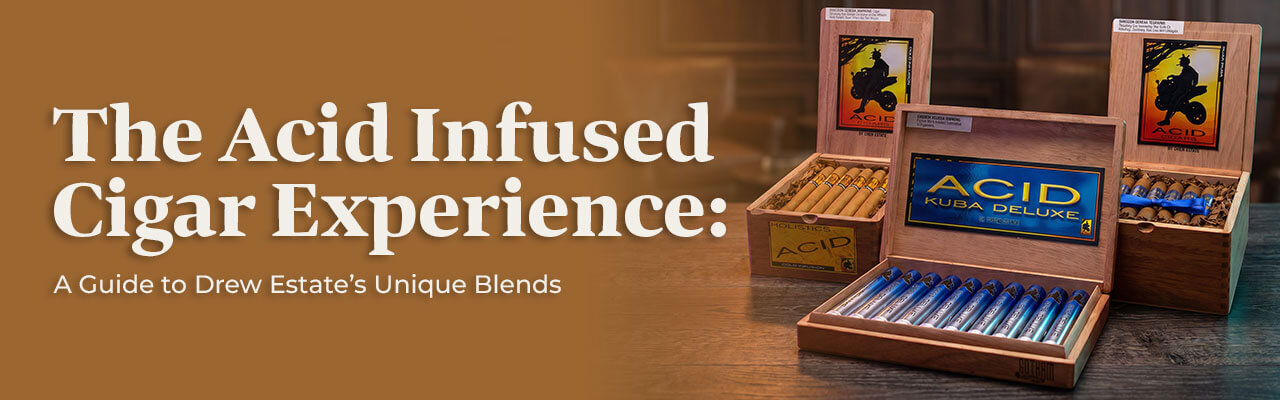
What if the most complex cigar in your humidor didn't rely on tobacco aging alone, but on a secret room lined with 140 different essential oils and botanicals? Many purists assume these sticks are just flavored, yet that common misunderstanding misses the technical artistry behind the Drew Estate brand. You want a smoke that breaks the mold, but the fear of ruining your traditional collection or getting lost in a sea of color-coded labels is real.
The acid infused cigar experience is a unique category that Drew Estate has dominated for over 20 years. This guide explains the precise differences between botanical infusion and topical flavoring so you can choose the right blend for your palate. We'll show you how to pick between a 5 x 54 Robusto and a 6 x 50 Toro while protecting your investment from cross-contamination.
You will learn the specific mechanics of the Drew Estate infusion process and the essential storage rules for your humidor. From the floral sweetness of the Blue line to the spicy kick of the Red, we'll help you identify your next favorite vitola with confidence. Get ready to explore a side of the industry that prioritizes innovation and aroma above all else.
Key Takeaways
- Understand how Drew Estate uses secret aroma rooms and precise timelines to craft the signature Acid profile before the rolling process begins.
- Compare the flavor progression of an Acid Kuba Kuba against traditional Nicaraguan sticks to identify which smoking profile suits your preferences.
- Discover how choosing between a Robusto or Toro vitola changes the intensity of your acid infused cigar experience by altering the surface area to volume ratio.
- Master the essential rule of separate storage to prevent "flavor bleed" and maintain the distinct integrity of both your infused and traditional cigars.
- Gain the technical knowledge to select the perfect Acid blend based on specific aroma-flavor connections and desired smoke duration.
Table of Contents
- What Defines the Acid Infused Cigar Experience?
- The Infusion Process: How Drew Estate Creates the Blend
- Acid Infused vs. Traditional Premium Cigars: A Comparison
- Robusto vs. Toro: Selecting the Right Size for Your Acid Experience
- Sourcing and Storing Your Acid Cigars for Maximum Freshness
What Defines the Acid Infused Cigar Experience?
The cigar world underwent a seismic shift in 1999 when Drew Estate launched the ACID line. This brand discarded traditional playbooks to offer a sensory-first approach to premium tobacco. However, to truly understand the ACID infused cigar experience, one must first look past the labels to the brand’s origin. Contrary to common myths, "ACID" is not an acronym or a psychedelic reference; it is the moniker of Scott “Acid” Chester, an influential industrial and graffiti artist. His urban-industrial silhouette and artwork define the packaging, signaling a departure from the "stodgy" traditions of the past toward a lifestyle-driven smoke.
The core of this experience centers on a unique aroma-flavor connection. Unlike traditional sticks where the scent of the smoke may differ from the taste on the tongue, ACID ensures that what you smell in the air matches the notes on your palate. This creates a cohesive, immersive session that feels more like a culinary event than a standard smoke.
Technical Anatomy: Sweet Tip vs. Botanical Infusion
A frequent point of confusion for purists is the source of the sweetness. To appreciate the technical artistry of Drew Estate, you must distinguish between the two layers of flavor:
- The Sweetened Cap (Topical): The immediate, sugary sweetness you notice upon the first few puffs is a topical application. Drew Estate uses a proprietary mixture—often containing food-grade sweeteners like saccharin and a gum arabic binding agent—applied directly to the cap. This is designed to hit the sweet receptors on the tip of the tongue instantly.
- The Botanical Infusion (Internal): As the "cherry" moves down the barrel, the topical sweetness fades, giving way to the true heart of the cigar: the herbal core. This is achieved through a molecular absorption process where the tobacco is infused with essential oils and botanicals before rolling. This ensures the flavor is integrated into the leaf itself, rather than just sitting on the surface.
The Role of Botanicals and Herbs
While the exact recipes are kept under lock and key, we know the process utilizes over 140 different essential oils, herbs, and botanicals. These ingredients aren't simply sprayed on; the tobacco is placed in "cuartos aromáticos" (aroma rooms) for months until the leaves naturally pull in the surrounding scents.
- The Cold Draw: Before you strike a match, the unlit cigar offers a potent preview of floral, spicy, and creamy notes that hint at the complexity to come.
- The Room Note: ACID cigars produce a signature fragrance often compared to high-end incense. This distinct room note is much more approachable for non-smokers and provides a socially "friendly" aroma.
- Sensory Depth: By targeting the olfactory senses as much as the taste buds, the infusion makes the experience feel multidimensional, bridging the gap between high-end tobacco and aromatic art.
Premium Infused vs. Standard Flavored Cigars
It is a mistake to categorize ACID with mass-market "flavored" cigars. Every ACID blend is built on a foundation of premium Nicaraguan long-filler tobaccos. This ensures that the smoke maintains the structural integrity, draw resistance, and combustion standards of a high-end, hand-rolled stick. You aren't just smoking an aroma; you are smoking a technically sound, premium cigar that happens to prioritize innovation above all else.
The Infusion Process: How Drew Estate Creates the Blend
The creation of an ACID cigar is a closely guarded secret that takes place within the high-security walls of La Gran Fabrica Drew Estate in Estelí, Nicaragua. Unlike mass-market flavored products that rely on topical sprays or syrups, Drew Estate utilizes a methodical, time-intensive infusion process. This craft begins long after the agricultural work is done, focusing on the environmental absorption of botanical essences into high-grade tobacco.
Inside the "Cuartos Aromáticos"
The heart of the operation lies in the cuartos aromáticos, or aroma rooms. To understand this stage, it is vital to correct a common technical misconception: tobacco is not "cured" in these rooms. By the time the leaf reaches the infusion stage, it has already been fully cured (dried) and fermented to reach peak maturity. Infusing raw, unfermented tobacco would result in a bitter, unstable product.
Instead, these rooms act as a molecular scent-immersion chamber.
- The Physical Setup: Inside these hermetically sealed spaces, the fermented tobacco is typically kept in loosely packed bales or wrapped in permeable plastics. This allows the volatile aromatic compounds—emitted from a complex mixture of over 140 essential oils, herbs, and floral botanicals placed nearby—to permeate the leaf fibers slowly over time.
- Molecular Absorption: The leaves are never in direct contact with the oils. Instead, the tobacco acts as a natural desiccant, pulling in the concentrated scent from the air at a molecular level.
- The Timeline: This process is not a "quick soak." The tobacco remains in this environment for 6 to 8 months (roughly 240 days), ensuring the aromatic output is deeply integrated and won't vanish once the cigar is lit.
- Climate Precision: Technicians maintain strict temperature and humidity levels within these rooms. This precision is required because heat and moisture dictate the porosity of the leaf; if the room is too cool, the oils won't penetrate the core of the bale.
Maintaining Tobacco Integrity
A common critique from traditionalists is that infusion masks the quality of the tobacco. In reality, Drew Estate blenders must be even more selective with their leaf. The blender has to calculate how the spicy, earthy notes of a Nicaraguan long-filler will interact with specific botanical profiles. If the tobacco is too weak, the botanicals overwhelm it; if it is too strong, the infusion is lost.
The wrapper choice serves as the final, critical balance to the ACID experience:
- Sumatra Wrappers: Often used for a mellow, herbal finish that allows the floral notes to shine.
- Connecticut Broadleaf: Provides a sugary, cocoa-like weight that pairs well with deeper, woodier infusions.
The Marriage and Secondary Aging
After the cigars are hand-rolled by master torcedores, they undergo a secondary aging process in cedar-lined rooms. This resting period is essential for "marrying" the natural tobacco oils with the newly infused essences. This ensures a smooth, consistent burn and prevents the flavors from feeling "layered" or disconnected.
By committing to this nearly year-long cycle of preparation, Drew Estate ensures that the aromatic output lasts from the initial light to the final puff. This dedication to the "how" and "why" of environmental infusion is what transformed a boutique experiment into a global industry standard.
Acid Infused vs. Traditional Premium Cigars: A Comparison
The debate between traditionalists and infused enthusiasts often centers on the definition of a "premium" experience. Traditional Nicaraguan cigars rely on the holy trinity of soil, seed, and aging to produce natural profiles like earth, black pepper, and toasted cedar. In contrast, the ACID infused cigar experience utilizes a proprietary botanical process to layer those same tobacco foundations with over 140 essential oils and herbs.
Flavor Progression and Complexity
A traditional Nicaraguan cigar typically follows a linear progression. You might start with a sharp blast of white pepper that mellows into cream, cocoa, or leather by the final third. An ACID cigar, such as the iconic Kuba Kuba, is engineered for aromatic consistency. The floral and honey notes remain prominent from the first light to the nub, supported by a rich tobacco core that prevents the sweetness from becoming cloying or "thin."
The Role of Wrapper Variation
A common misconception is that the infusion does all the heavy lifting. In reality, the wrapper choice is just as critical in an ACID cigar as it is in a traditional puro. The wrapper doesn't just hold the cigar together; it provides the primary combustion flavor that interacts with the infusion.
- Sumatra: Used in the Blue line (Kuba Kuba) for a mellow, herbal, and slightly sweet finish.
- Connecticut Shade: Offers a creamy, buttery profile found in the Gold line.
- Connecticut Broadleaf: Adds a sugary, cocoa-heavy weight and "grit" to the Red and Purple lines.
- Candela: Provides a unique, grassy sweetness that complements specific botanical blends.
- Cameroon: Delivers a subtle spice and woodiness that bridges the gap for traditional smokers.
Construction and the "Liga Privada" Myth
There is a persistent marketing claim that ACID cigars use the "same" tobacco as Drew Estate’s ultra-premium Liga Privada or Undercrown lines. While we strive for accuracy, we must call this what it is: marketing fluff. While ACID cigars absolutely utilize high-grade, hand-selected Nicaraguan long-filler, the leaf reserved for Liga Privada consists of rare, high-priming stalks with notoriously low yields and specific fermentation requirements. You are getting a premium, hand-rolled product with ACID, but the tobacco is chosen specifically to complement infusion, whereas Liga Privada leaf is chosen to stand entirely on its own.
- Draw Resistance: Like their traditional counterparts, ACID cigars are known for an effortless draw and massive smoke volume.
- Burn Consistency: You can expect a razor-sharp burn line, indicating high-quality binder and filler placement that prevents tunneling.
- Handmade Integrity: Every ACID is 100% handmade at La Gran Fabrica Drew Estate. They are not "flavored" mass-market cigars; they are premium vitolas that use a different flavor medium.
Comparison at a Glance
| Feature | Traditional Premium | ACID Infused |
|---|---|---|
| Primary Flavor | Terroir (Soil, Aging, Fermentation) | Botanicals, Herbs, and Essential Oils |
| Progression | Dynamic/Linear (Changes in thirds) | Consistent/Aromatic (Core stays steady) |
| Common Notes | Leather, Oak, Spice, Espresso | Clove, Rose Petals, Wildflower Honey |
| The "Cap" | Natural Tobacco | Proprietary Sweetened Tip |
Whether you prefer the raw, unadulterated taste of fermented leaf or the culinary complexity of a botanical blend, the technical skill required to produce both is identical. Many seasoned smokers now keep a "split" humidor to accommodate both styles depending on the time of day or the desired "room note."
Robusto vs. Toro: Selecting the Right Size for Your Acid Experience
In the traditional cigar world, a manufacturer might release one blend in ten different sizes. In the ACID portfolio, however, the rules change. The size of your cigar, or vitola, is often intrinsically tied to a specific sub-blend and product name. You cannot simply walk into a humidor and ask for a "Blondie Toro"—to get a larger size, you have to move to an entirely different product identity.
This distinction is vital because the physical dimensions of the stick dictate the concentration of essential oils and the temperature of the smoke.
The Name is the Vitola: Navigating the Lineup
When selecting your ACID experience, you aren't just picking a length and width; you are picking a specific aromatic intensity.
- The Blondie (4 x 38 Petit Corona): A short, high-intensity smoke. The small ring gauge and short length deliver the botanical notes rapidly to the palate.
- The Kuba Kuba (5 x 54 Robusto): The gold standard of the Blue line. Its thick ring gauge allows for a massive volume of cool smoke.
- The Kuba Deluxe (6 x 50 Toro) & Kuba Grande (6 x 60): If you want the Kuba Kuba flavor in a larger format, you must look for these specific names. The Kuba Deluxe offers a more focused, slightly "sharper" delivery of the aroma due to the narrower ring gauge compared to the original Robusto.
The Physics of the "Cherry"
A cigar's ring gauge (thickness) impacts the temperature of the "cherry" or burning tip. This is a critical technical factor for infused cigars:
- Airflow and Temperature: Thicker cigars (like a 54 or 60 ring gauge) allow for more airflow. This keeps the burning tobacco at a lower temperature, preventing the delicate botanical oils from "scorching." When oils scorch, they turn bitter; a cooler burn preserves the intended floral sweetness.
- Surface Area vs. Volume: A larger ring gauge provides more space for complex filler blends to interact. Thinner vitolas burn faster and hotter, which can intensify the natural spice of the Nicaraguan tobacco, sometimes at the expense of the subtle botanical nuances.
Comparison: The Robusto vs. The Toro Format
| Product Example | Vitola | Dimensions | Experience Profile |
|---|---|---|---|
| Kuba Kuba | Robusto | 5 x 54 | The Powerhouse: Concentrated, cool, and creamy. A 45-minute burst of high-intensity aroma. |
| Kuba Deluxe | Toro | 6 x 50 | The Evolution: A 75-minute commitment. The narrower gauge focuses the smoke, allowing tobacco and botanicals to share the spotlight equally. |
Which Should You Choose?
- The Robusto Experience (5 x 54): Engineered for smokers who want a high-impact session without a two-hour time commitment. The 54 ring gauge facilitates an effortless draw, ensuring the herbal infusions remain vibrant. It is a dense, impactful smoke that stays consistent from light-up to the nub.
- The Toro Experience (6 x 50 / 6 x 52): Designed for the patient enthusiast. This size allows the blend to evolve. As you move through the second and third acts of a Toro, the flavor profile often shifts, revealing deeper tobacco undertones and "earthy" notes that shorter, faster-burning vitolas might skip.
Understanding that the name defines the size will help you navigate the sea of color-coded labels with confidence. Whether you’re looking for a quick, aromatic hit or a long, evolving journey, there is a specific ACID vitola—and name—designed for that exact moment.
Sourcing and Storing Your Acid Cigars for Maximum Freshness
Protecting the integrity of your collection is the most critical step after purchase. The ACID infused cigar experience relies on a fragile balance of volatile botanical oils and premium tobacco. If you store these aromatic sticks alongside your traditional cigars, you will encounter "flavor bleed." This occurs when the essential oils from the ACID blends migrate into your standard Habanos or Nicaraguan puros, permanently altering their flavor profiles with floral and herbal notes where they don't belong.
The Storage Dilemma: Wood vs. Acrylic
While a dedicated wooden humidor is often cited as a "classic" choice, you must understand the permanence of wood. Spanish cedar is highly porous; once it absorbs the potent essential oils of an ACID Kuba Kuba or Blondie, that wood is seasoned for life.
- The Point of No Return: If you use a wooden humidor for infused cigars, you can never revert it to storing traditional cigars. The scent will linger in the grain for years.
- The Superior Solution: For this reason, many experts consider airtight acrylic humidors or "Tupperdors" to be the gold standard for infused storage. These containers are non-porous and will not absorb or ghost the botanical scents, allowing you to maintain a clean environment for your collection.
Preventing Intra-Brand Cross-Contamination
It isn't enough to just keep your ACIDs away from your traditional cigars; you must also protect them from each other. A "Red" line stick (spicy/woody) will absolutely bleed into a "Blue" line stick (sweet/floral) if they are touching.
- The Cellophane Rule: Unlike traditional cigars where enthusiasts often debate "cello on or off," with ACID cigars, the answer is definitive: Keep the cellophane on. This provides a vital barrier that slows down aromatic migration between different labels within the same container.
- Segmented Storage: If possible, try to group your Blue, Gold, and Red labels in separate sections of your container to maintain their individual aromatic nuances.
Why Freshness is Final
Freshness is the lifeblood of an infused cigar. When tobacco dries out, it loses the moisture and, more importantly, the volatile essential oils that provide the signature aroma.
Expert Note: While you can technically rehydrate a dry cigar, you cannot replace evaporated botanical essences. A stick that has sat in a dry environment for more than 48 hours will likely lose its flavor punch, resulting in a flat, papery, and underwhelming smoke.
Setup Checklist for Your ACID Humidor
To ensure your sticks arrive soft, oily, and ready for the flame, follow this technical checklist:
- Container: Choose an airtight acrylic case or a dedicated (permanent) Spanish cedar humidor.
- Humidification: Use 69% RH two-way humidity packs. This level is ideal for keeping the wrapper supple and the oils stable.
- The "Cello" Protocol: Never strip the cellophane until you are ready to light up.
- Tool Hygiene: Wipe your cutter and the nozzle of your lighter with isopropyl alcohol after use. Residual oils on a blade can transfer the ACID scent to the next non-infused cigar you clip.
- Monitoring: Use a calibrated digital hygrometer to ensure the temperature stays between 65°F and 70°F. Heat is the enemy of essential oils.
By mastering the science of storage, you ensure that every ACID cigar delivers the exact sensory experience the blenders at La Gran Fabrica intended. Don't settle for compromised flavors and secure your collection with the right gear and the right boundaries.
Elevate Your Next Smoke Session
The acid infused cigar experience represents a masterclass in blending botanical herbs, essential oils, and floral extracts with premium Nicaraguan leaf. Drew Estate's signature process ensures these flavors are deeply integrated into the tobacco rather than simply applied to the surface. Whether you choose the concentrated punch of a Robusto or the extended journey of a Toro, you're getting a smoke that challenges traditional boundaries.
Proper storage is vital to preserving these delicate aromatic profiles. Keeping your Acid cigars in a separate humidor prevents their unique scents from migrating to your traditional sticks. As an Authorized Drew Estate Retailer, we ensure every box arrives with our Freshness Guaranteed seal. You'll benefit from Lightning-Fast Shipping, getting your favorite Kuba Kuba or Blondie sticks to your door without delay.
Ready to discover why these blends remain the gold standard for infused cigars? Shop the complete Acid Cigar lineup at Gotham Cigars and find your new favorite vitola today. It's time to light up something truly unique.
Frequently Asked Questions
Are Acid cigars flavored or infused?
Acid cigars are infused through a specialized process, not flavored with topical sprays or syrups. Drew Estate places premium long-filler tobaccos in "aroma rooms" for 2 to 8 months where they absorb essential oils and botanicals naturally. This meticulous method ensures the aroma permeates the entire leaf, providing a consistent taste that lasts from the first light to the final puff.
Do Acid cigars need to be stored in a separate humidor?
You should always store your Acid cigars in a separate humidor or a dedicated airtight container. The potent botanical oils used in the acid infused cigar experience are highly volatile and will migrate to your traditional cigars. This cross-contamination permanently alters the natural tobacco profile of your non-infused sticks, even if they're only stored together for 48 hours.
What is the most popular Acid cigar for beginners?
The Acid Kuba Kuba is the most popular choice for beginners and remains a top-rated fan favorite. This 5 x 54 Robusto features a lush Sumatra wrapper and a mild to medium body that highlights the brand's signature sweet, floral aroma. It provides a perfect introduction to the acid infused cigar experience without overwhelming the palate with excessive spice or strength.
How long does an Acid Kuba Kuba Toro take to smoke?
An Acid Kuba Kuba Toro typically takes between 60 and 75 minutes to smoke. This 6 x 52 vitola is larger than the standard Robusto, offering a slower burn that allows the complex botanical notes to develop across the palate. Your specific smoking time depends on your personal pace and the humidity levels maintained in your humidor.
Can I store Acid cigars with my traditional cigars if they are in cellophane?
You cannot store Acid cigars with traditional cigars even if they remain in their original cellophane. Cellophane is a semi-permeable material designed to allow humidity to pass through, which means aromatic oils will also escape. Over time, these scents will penetrate the wrappers of your other premium cigars, ruining their intended flavor profiles and natural tobacco characteristics.
What are the main ingredients in the Acid infusion process?
The infusion process relies on a secret blend of over 140 essential oils, herbs, and botanical extracts. While Drew Estate keeps the exact recipe confidential, smokers frequently identify distinct notes of lavender, red wine, and white pepper. These ingredients are infused into the tobacco during a cool-room aging period that lasts for several months before the cigars are rolled.
Are Acid cigars handmade or machine-made?
Every Acid cigar is 100 percent handmade at the La Gran Fabrica Drew Estate in Estelí, Nicaragua. These sticks use premium long-filler tobaccos and high-grade wrappers, matching the construction quality of traditional luxury cigars. This artisan approach ensures a perfect draw and a reliable burn rate, separating them from cheaper, machine-made flavored products found in convenience stores.
Why do some Acid cigars have different colored labels?
Label colors represent the specific aromatic intensity and flavor profile of each blend within the line. Blue labels like the Kuba Kuba are typically sweet and floral, while Red labels offer a more intense, spicy, and woody experience. Gold labels provide a creamy, medium-bodied profile, and Purple labels focus on heavy floral notes and complex wine-influenced aromas.
Recent Posts
-
Pairing a Smooth Premium Cigar With Coffee, Wine, or Light Spirits
A world-class cigar is only half of the experience. You likely know the frustration of lighting up a …1st Jul 2026 -
When Avo Fits the Moment: Social Evenings, Quiet Reflection, or Travel
Why do some cigar sessions feel like a chore while others feel like a masterpiece? Most enthusiasts …1st Jul 2026 -
Understanding the Smooth Profile Often Associated With Avo Cigars
A truly smooth cigar isn't just a weak smoke; it's a technical masterpiece of precise fermentation a …1st Jul 2026