
Ashton Cigars vs Arturo Fuente: How the Brands Differ Despite Sharing a Factory
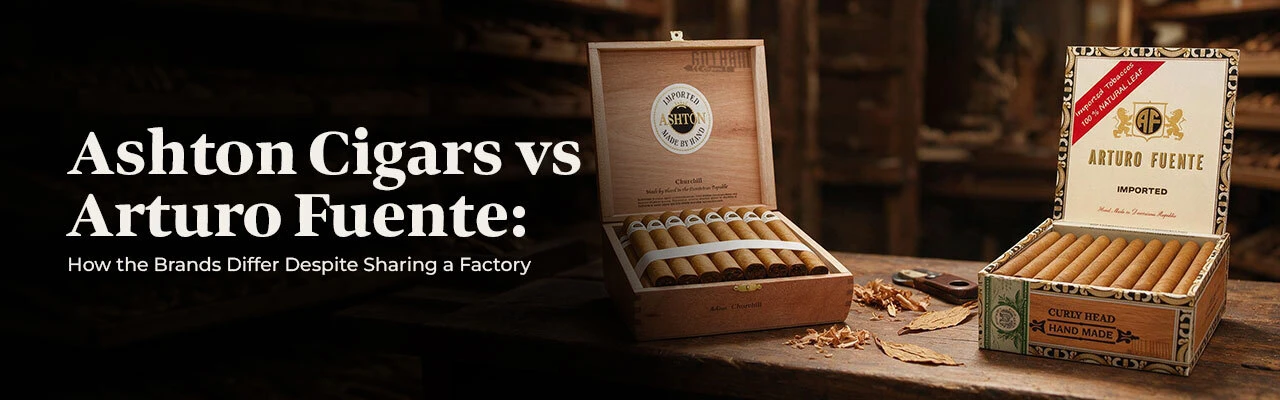
You might assume that two brands sharing a factory, a master blender, and legendary Dominican tobacco would produce identical results. In the world of premium cigars, the relationship between Ashton Cigars and Arturo Fuente is one of the most successful partnerships in history. This ashton vs arturo fuente cigars comparison provides a detailed cigar comparison to show that while they share the same craftsmen, these cigar brands maintain unique identities.
It's easy to feel confused by the overlapping history of the Fuente family or worry about overpaying for a name without understanding the true tobacco quality. We'll show you exactly how different blending philosophies create distinct cigar flavor profiles for each line. You'll gain a clear understanding of the partnership and find actionable advice on which premium smoke to buy next.
From the creamy consistency of the Ashton Classic to the spice-heavy Arturo Fuente Hemingway, we'll help you find your perfect smoke. Discover the historical connection and flavor differences between these two legendary names to find your perfect premium smoke.
Key Takeaways
- Understand the unique manufacturing partnership where the Fuente family handcrafts every Ashton cigar at the world-renowned Tabacalera A. Fuente factory.
- Use this ashton vs arturo fuente cigars comparison to learn how Ashton focuses on refined consistency while Arturo Fuente emphasizes bold, spicy complexity.
- Identify the best entry point for your palate by comparing the mellow, creamy profiles of Ashton’s flagship lines against the medium-to-full-bodied strength of Fuente’s legendary blends.
- Evaluate the price points and strength levels of both brands to find a premium smoke that aligns with your specific preferences and budget.
- Learn why sourcing these cigars from a climate-controlled retailer like Gotham Cigars is essential for preserving the delicate flavor profiles of aged Dominican tobacco.
The Ashton-Fuente Connection: A Partnership in Dominican Craftsmanship
Robert Levin established Ashton in 1985 with a vision for luxury that would rival the world's finest smokes. Levin’s deep industry insight stemmed from taking over his family's business, Holt’s Cigar Company in Philadelphia, which gave him direct access to evolving consumer preferences and market demands prior to launching his own brand.
While Ashton is modernly synonymous with the Fuente family, the brand's early manufacturing history includes a key transitional chapter. When Ashton debuted in 1985, its initial lines were produced in the Dominican Republic by Henke Kelner—the master blender who would later achieve global fame with Davidoff. It was not until 1988 that Levin forged his historic, trust-based collaboration with the Arturo Fuente family, shifting all production to Tabacalera A. Fuente in Santiago.
In this unique relationship, Ashton operates as the brand architect, defining the aesthetic, blend requirements, and consumer experience. The Fuentes act as master growers and rollers, bringing multi-generational technical skill and agricultural mastery to the table. This arrangement grants Ashton priority access to some of the rarest, longest-aged Dominican leaves available, establishing a foundational synergy that sets Ashton apart from typical contract-manufactured brands.
How the Levin and Fuente Families Built a Legacy
The bond between Robert Levin and Carlos Fuente Sr. extended far beyond a standard manufacturing agreement. It was built on a shared philosophy that uncompromising quality must always precede volume, prioritizing slow growth and meticulous fermentation over market trends. Today, Sathya Levin and Carlito Fuente continue this tradition, maintaining the same rigorous production standards that have kept Ashton and Arturo Fuente at the pinnacle of the premium cigar industry for decades.
The Significance of the Dominican Republic Terroir
The Santiago region and the surrounding Cibao Valley represent the undisputed heart of Dominican tobacco cultivation, offering ideal soil composition and humidity levels for long-filler leaves. However, the Fuente family's terroir expertise extends into specialized microclimates—most notably Chateau de la Fuente in El Caribe/Bonao, where the family successfully cultivated the first world-class Dominican sun-grown wrapper leaves.
The Fuente family relies on these distinct geographical regions to deliver:
- Mineral-Rich Volcanic Soil: The nutrient-dense earth of the Cibao Valley and Bonao endows the leaves with natural depth, strength, and complexity.
- Microclimate Protection: Surrounding mountain ranges shield the growing fields from extreme weather, allowing tobacco plants to mature under optimal humidity and cloud-filtered light.
- Unrivaled Aging protocols: Fuente-grown leaves undergo multi-year fermentation and resting cycles, ensuring the essential oils yield the refined texture and burn consistency expected of high-end Dominican tobacco.
Arturo Fuente Cigars: Exploring the Legacy of the Fuente Family
Arturo Fuente is a family-owned dynasty with a history spanning over a century. However, understanding the brand's identity requires looking back to its origins in West Tampa, Florida, where Cuban immigrant Arturo Fuente Sr. founded A. Fuente & Company in 1912. Rolling cigars using imported Cuban leaf, the company built a strong local reputation before encountering a series of devastating setbacks—including a catastrophic factory fire in 1924, political upheaval, and lost facilities across Central America during the 1970s.
Led by Carlos Fuente Sr. and later his son Carlos "Carlito" Fuente Jr., the family made a high-stakes decision in 1980 to establish operations in Santiago, Dominican Republic. There, at Tabacalera A. Fuente, they grew into global industry leaders. Today, the Fuentes are the primary guardians of traditional Cuban-seed Dominican tobacco. Their vertical integration—growing, fermenting, aging, and rolling their own tobacco—allows them to maintain rigorous quality control from seed to ash.
The OpusX Dominican Wrapper Breakthrough
In an Ashton vs. Arturo Fuente comparison, Fuente’s reputation for agricultural innovation stands front and center. For decades, cigar experts asserted that Dominican soil lacked the necessary nutrients to grow high-grade wrapper leaf, using the country's tobacco strictly for binder and filler.
Carlito Fuente set out to challenge that consensus. At Chateau de la Fuente in Bonao, he planted Cuban seeds under shade cloth, yielding a thick, oily, reddish wrapper leaf. This effort culminated in 1995 with the release of the landmark Fuente Fuente OpusX—the world’s first successful 100% Dominican puro. This achievement changed the industry's view of Dominican terroir, proving the region could yield elite wrapper tobacco capable of anchoring a world-renowned blend.
The Arturo Fuente Hemingway Series
The Hemingway Series serves as a showcase of specialized rolling skill. Wrapped in a toothy African Cameroon leaf prized for its natural sweetness, each vitola in the line features a historic Figurado (Perfecto) shape tapered at both ends.
Crafting these tapered shapes requires exceptional precision from master torcedores, as the changing ring gauge alters the air draw and flavor concentration throughout the smoke. Smokers can expect a medium-bodied profile defined by vibrant cedar, toasted nuts, and sweet baking spice notes.
Core Flavor Profiles: From Mellow to Full-Bodied
The Arturo Fuente portfolio provides a diverse spectrum of profiles designed for every palate:
- Mellow to Medium (Gran Reserva & Chateau Series): The ideal entry point for a classic, smooth Dominican smoke, featuring mild Connecticut or sweet Cameroon wrappers over aged Dominican fillers.
- Medium-Plus (Don Carlos & Hemingway): Rich, balanced options utilizing aged African Cameroon wrappers that deliver notes of cedar, toasted almond, and sweet spice.
- Full-Bodied Powerhouse (OpusX & Añejo): High-octane luxury releases. The OpusX provides intense spice, earth, and leather from its shade-grown Dominican wrapper, while the seasonal Añejo line uses dark Maduro wrappers aged in Cognac barrels to impart a rich, boozy chocolate sweetness.
Ashton Cigars: Refined Profiles and Unmatched Consistency
Ashton is globally recognized for producing some of the most consistent premium cigars in the industry. While other brands may experience flavor shifts across crop years or seasonal batches, Robert Levin’s brand maintains an unwavering flavor profile year after year. This reliability is the direct result of a rigorous aging protocol, requiring all interior Dominican binder and filler tobaccos to mature for a minimum of three to seven years so natural oils mellow into a smooth, sophisticated smoking experience.
Ashton focuses on elegance, nuance, and clean finishes rather than raw power alone. It remains a preferred choice for connoisseurs who appreciate a non-aggressive smoke that reveals complex, evolving layers over time. In an Ashton vs. Arturo Fuente comparison, Ashton often presents as a more polished, curated option for a luxury palate, embodying a commitment to blending where harmony and balance are the ultimate goals.
Ashton Classic vs. Cabinet Selection: Key Aging Differences
The Ashton Classic and Cabinet Selection serve as benchmark pillars of the mild-to-medium luxury market. While both lines showcase golden Connecticut Shade wrappers, their distinct flavor depths stem from key differences in tobacco maturation:
- Ashton Classic: Features a silky Connecticut Shade wrapper pairing with Dominican long-fillers aged for 3 to 4 years. The result is a crisp, approachable, and remarkably creamy profile with signature notes of cedar, coffee bean, cashew, and light almond.
- Ashton Cabinet Selection: Often dubbed the "White Burgundy" of cigars, this line elevates the experience by utilizing Dominican binders and fillers aged for 5 to 7 years. Furthermore, its Connecticut Shade wrapper undergoes an extra year of aging to achieve a rich, "French Café" hue. This extended aging creates a velvety texture with deep notes of toasted almond, cream, white pepper, and subtle sweet oak.
These mild-to-medium lines provide an ideal morning or early afternoon smoke, pairing effortlessly with a fresh latte or light spirits without fatiguing the palate.
The Intensity of Ashton VSG and ESG
While renowned for mellow refinement, Ashton also commands respect in the full-bodied category with two legendary sun-grown lines:
- Ashton Virgin Sun Grown (VSG): Introduced in 1999, the VSG redefined the full-bodied market. Its proprietary Ecuadorian Sumatra wrapper is cultivated exclusively for Ashton and Fuente by the Oliva Tobacco Company (the historic family operation in Tampa and Ecuador, distinct from Oliva Cigar Co.). Grown in Ecuador’s Los Ríos region under cloud-filtered, shade-free sunlight, this high-priming wrapper yields a dark, oily leaf packed with bold spice, dark chocolate, espresso, and rich earthiness.
- Ashton Estate Sun Grown (ESG): Created in 2005 to commemorate Ashton’s 20th Anniversary, the ESG represents the peak of Dominican tobacco craft. Master blender Carlito Fuente developed the line using an ultra-rare, sun-grown Dominican wrapper harvested exclusively from the Chateau de la Fuente estate—a wrapper leaf previously unreleased on any commercial blend. The ESG delivers a unique "velvet power," blending medium-to-full body with complex notes of black pepper, graham cracker, cocoa, and aged wood.
Both lines demonstrate that Ashton can deliver high-octane strength and depth while maintaining the trademark refinement and balance that define the brand.
Ashton vs. Arturo Fuente: Comparing Flavor, Strength, and Price
While both brands share the same world-class manufacturing origin at Tabacalera A. Fuente, they fulfill distinct roles in price, flavor architecture, and market positioning. Ashton focuses strictly on the ultra-premium luxury sector, resulting in higher average price points per stick. This reflects the mandatory three-to-seven-year aging requirement applied to every leaf in the Ashton portfolio.
In contrast, Arturo Fuente offers a vastly broader portfolio. Their range spans from accessible, value-driven daily smokes (such as the Gran Reserva line) to ultra-rare, high-end collector grails like the OpusX and Añejo series.
Wrapper Signature Differences
The fundamental identity of each brand is heavily shaped by their choice of primary wrapper leaves:
- Arturo Fuente Signature Wrappers: Built around toothy African Cameroon (featured on the Hemingway and Don Carlos lines) which provides a signature sweet-and-spicy note, and proprietary Dominican Sun Grown leaves (grown at Chateau de la Fuente for the OpusX) which deliver intense power, cedar, and leather notes.
- Ashton Signature Wrappers: Grounded in golden U.S. Connecticut Shade (Classic and Cabinet Selection) for velvety creaminess, high-priming Ecuadorian Sumatra (VSG) cultivated by Oliva Tobacco Company for heavy earth and black pepper, and silky Ecuadorian Habano Rosado (Symmetry) for floral sweetness and balanced spice.
Format and Vitola Flavor Dynamics
The structural shapes favored by each brand dramatically alter how smoke and flavor are delivered to the palate:
- Arturo Fuente (Mastery of Figurados & Perfectos): Fuente is famous for its intricate tapered vitolas, such as the Hemingway Perfectos. As the fire burns through fluctuating ring gauges—expanding from a pointed foot to a wide bulb and tapering back down—the ratio of wrapper to filler constantly shifts. This concentrates the smoke density and creates dynamic, evolving flavor spikes throughout the session.
- Ashton (Focus on Straight-Sided Parejos): Ashton relies predominantly on classic, uniform Parejo shapes (such as Robustos, Toros, and Churchills). This structural choice prioritizes steady airflow, consistent wrapper-to-filler ratios, and a clean, predictable, linear transition of flavor notes from head to foot.
Strength Tiers and Palate Profiles
Selecting between these brands involves matching their primary flavor cores—Fuente's traditional spice-forward character versus Ashton's refined cream-forward profile—to your strength preference:
- Mild Tier: Ashton Classic (creamy, buttery, cashew) vs. Arturo Fuente Gran Reserva Connecticut (mellow cedar, crisp finish).
- Medium Tier: Ashton Cabinet Selection / Symmetry (toasted almond, subtle white pepper, oak) vs. Arturo Fuente Hemingway / Don Carlos (sweet Cameroon spice, citrus zest, baking spice).
- Full-Bodied Tier: Ashton VSG / ESG (heavy cocoa, espresso, black pepper, velvet body) vs. Arturo Fuente OpusX / Añejo (raw Dominican power, dark chocolate, Cognac-barrel sweetness, bold earth).
Construction, Burn, and Technical Performance
Both brands benefit from identical, uncompromising quality control standards at Tabacalera A. Fuente, where torcedores roll each stick to strict density, weight, and draw-resistance metrics. A hallmark of both portfolios is a "self-correcting" burn line: if minor draft variations cause an uneven burn, the tightly bunched internal long-fillers and properly aged binder leaves allow the burn line to straighten automatically without requiring a torch relight.
Finding Your Perfect Dominican Smoke at Gotham Cigars
Choosing between these two legendary names depends on your specific mood, palate preference, and smoking occasion. While Ashton and Arturo Fuente share the renowned Tabacalera A. Fuente production facility in Santiago, they fulfill distinct sensory goals. Sourcing through authorized online retailers like Gotham Cigars ensures access to extensive inventories preserved within professional, climate-controlled warehouse facilities.
Recommendations by Aficionado Experience Level
Matching a blend to your current palate tolerance guarantees an optimal smoking session:
- Best for Beginners: The Ashton Classic offers a mild, buttery introduction with creamy cedar and cashew notes. Alternatively, the Arturo Fuente Gran Reserva 8-5-8 provides a classic, smooth Dominican experience with a gentle finish.
- Best for Seasoned Smokers: The Ashton VSG delivers full-bodied sun-grown power with heavy spice and dark chocolate. For maximum intensity and depth, the Arturo Fuente OpusX stands as an elite milestone for smokers seeking raw Dominican power.
- Best Short Smoke Value: The Arturo Fuente Hemingway Short Story is a masterclass in Figurado blending, delivering sweet Cameroon spice and oak in a compact, 30-minute format.
Critical Post-Transit Storage: The 14-Day Rest Rule
While cigars leave climate-controlled facilities in protective packaging, transit exposes packages to ambient atmospheric shifts, temperature swings, and humidity drops.
Placing mail-order cigars in a humidor for 24 to 48 hours only equalizes outer wrapper moisture. To achieve proper combustion, sharp burn lines, and uninhibited flavor expression, mail-order cigars require at least 1 to 2 weeks (14 days) in a calibrated humidor (65–70% RH) to fully balance moisture levels deep within the filler core prior to lighting.
Verifying Box Authenticity Indicators
Due to the global prestige and high market demand surrounding Fuente-made cigars, verifying product authenticity is essential for collectors:
- Factory Guarantee Seals & Stamps: Authentic boxes feature crisp, raised-relief guarantee stamps, official factory seals, and clear typography across outer labels.
- Embossed Band Precision: Genuine Ashton and Fuente bands feature metallic gold foil, distinct tactile embossing, sharp die-cut borders, and perfect color alignment. Faded print or smooth paper indicates a counterfeit.
- Factory Date & Origin Codes: Official boxes carry stamped factory inspection codes and production dates applied to the underside of the wooden box.
- Authorized Retail Channels: Sourcing directly through verified authorized retailers guarantees products are acquired through legitimate brand distribution networks.
Why Sourcing Matters
Operating with over two decades of industry expertise since its founding in 2001, Gotham Cigars provides nationwide distribution of fresh Dominican releases. Programs like their Cigar of the Month Club allow enthusiasts to sample curated selections from both the Levin and Fuente families, offering a direct avenue to compare these iconic portfolios side by side.
Choose Your Next Masterpiece
The shared craftsmanship at Tabacalera A. Fuente guarantees world-class construction for both brands, but your final choice comes down to the specific blending philosophy you prefer. Ashton delivers a curated, ultra-consistent experience centered on refined elegance, silky creaminess, and linear flavor balance. Arturo Fuente showcases the dynamic, spice-forward complexity and rich agricultural diversity of a century-old tobacco dynasty.
Portfolio Escalation Pathway: Evolving Your Palate
To help you navigate both portfolios as your palate matures, follow this natural progression guide across mild, medium, and full-bodied tiers:
- Mild Tier (Smooth & Approachable): Start with the Ashton Classic for a creamy, buttery introduction featuring notes of cedar and cashew. Transition to the Arturo Fuente Gran Reserva (Connecticut wrapper) for a similar mild body infused with subtle spice, mild woodiness, and a clean finish.
- Medium Tier (Layered Complexity & Rich Aromatics): Move up to the Ashton Cabinet Selection for velvety notes of toasted almond, oak, and cream. Progress into the Arturo Fuente Hemingway or Don Carlos series to experience toothy African Cameroon wrappers packed with sweet cedar, baking spice, and citrus zest.
- Full/Complex Tier (High Intensity & Bold Depth): Bridge traditional Dominican smoothness and Nicaraguan spice with the Ashton Symmetry. Step up to the raw sun-grown power of the Ashton VSG for heavy black pepper, dark chocolate, and espresso, or reach for the Arturo Fuente OpusX for the ultimate benchmark in rich, earthy Dominican strength.
Whether you favor Ashton’s polished elegance or Arturo Fuente’s storied heritage, stocking a mix of both in your humidor ensures you have the ideal Dominican smoke for any time of day or special occasion.
Frequently Asked Questions
Are Ashton cigars made by Arturo Fuente?
Yes, every premium Ashton cigar is handcrafted at Tabacalera A. Fuente in Santiago, Dominican Republic. While Robert Levin founded Ashton in 1985 (with initial production handled by Henke Kelner), production shifted to the Fuente family in 1988. This established one of the industry's most historic collaborations, combining the manufacturing and agricultural mastery of the Fuentes with the brand vision of the Levin family.
Who grows the wrapper leaf for the Ashton VSG?
The proprietary Ecuadorian Sumatra wrapper leaf used on the Ashton VSG is cultivated exclusively for Ashton and Fuente by the Oliva Tobacco Company (the historic Tampa/Ecuador farming entity, distinct from Oliva Cigar Co.). Operating in Ecuador's Los Ríos region, Oliva Tobacco Company is the sole grower of this sun-grown leaf, cultivating it under natural, cloud-filtered sunlight.
How long should Ashton and Fuente cigars rest in a humidor after shipping?
While a 48-hour rest only equalizes surface moisture, mail-order cigars require at least 14 days (2 full weeks) in a calibrated humidor (65–70% RH) after transit. This extended rest allows moisture levels deep within the filler core to fully stabilize, restoring proper combustion, burn consistency, and true flavor balance before lighting.
Which is stronger: Ashton VSG or Arturo Fuente Hemingway?
The Ashton VSG is significantly stronger, categorized as a full-bodied smoke with heavy nicotine intensity and bold earth/pepper notes from its sun-grown wrapper. The Arturo Fuente Hemingway is a medium-bodied cigar known for its smooth African Cameroon wrapper and balanced sweetness. If you seek high intensity, the VSG is the ideal pick, whereas the Hemingway suits smokers looking for nuanced balance.
What is the best Arturo Fuente cigar for a beginner?
The Arturo Fuente Gran Reserva 8-5-8 is widely considered the ideal entry point for beginners. It features a mellow-to-medium body with notes of mild cedar and subtle cream that won't overwhelm an unseasoned palate. Its accessible price point and consistent construction offer a perfect introduction to classic Dominican tobacco.
Why are Ashton cigars often priced higher than some Arturo Fuente lines?
The price difference reflects raw material aging schedules and market positioning. Ashton requires all binder and filler tobaccos to mature for three to seven years before rolling, incurring significant inventory and storage costs. Furthermore, while Arturo Fuente offers value-driven lines for daily smoking alongside their ultra-premium releases, Ashton focuses almost exclusively on the luxury segment.
What tobacco is used in Ashton and Arturo Fuente cigars?
Both brands primarily utilize high-grade Dominican long-filler and binder tobaccos grown on the Fuente family estates in the Cibao Valley and Bonao. Their wrapper selections create their primary differences: Ashton frequently uses U.S. Connecticut Shade, Ecuadorian Sumatra, and Ecuadorian Habano Rosado, while Fuente is famous for toothy African Cameroon and rare Dominican Sun Grown wrappers.
How should I store my Ashton and Fuente cigars to keep them fresh?
Store these cigars in a cedar-lined humidor maintained at 65% to 70% relative humidity (RH) and a temperature between 65°F and 70°F. Stable conditions preserve the delicate essential oils within the leaves, preventing the cigars from drying out or burning too hot during your session.
Which brand has a better reputation among cigar collectors?
Both brands hold elite status but cater to different collecting styles. Arturo Fuente is prized for high-prestige, limited-edition releases like the OpusX and Añejo, which often appreciate in value and collectability. Ashton is respected for its unmatched batch-to-batch consistency and refined elegance, making it a staple for connoisseurs who prioritize a dependable, luxury smoking experience.
Can I buy Arturo Fuente and Ashton cigars in the same sampler?
Yes. Because of their shared manufacturing history, multi-brand samplers and programs like the Gotham Cigars Cigar of the Month Club frequently feature selections from both families. Sampling them side-by-side provides an exceptional way to compare Fuente's spice-forward character against Ashton's cream-forward refinement.
Check Out:
- Ashton Symmetry vs VSG: Which Blend Fits Your Palate?
- Ashton Heritage Puro Sol Guide: Wrapper, Strength, Flavor, and Sizes
- Ashton ESG Year Salutes Explained: Sizes, Names, and How to Choose
- Ashton Esquire vs Small Cigars vs Cigarillos: Which Quick Smoke Fits You?
- Cigars Similar to Ashton Classic: Mild and Creamy Alternatives by Price
- Do Ashton Cigars Improve With Age? A Cellaring Guide for VSG, ESG, Cabinet, and Maduro
- Ashton Aged Maduro vs Ashton Classic: Sweet Maduro or Mild Connecticut?
Recent Posts
-

Holiday Gift Guide for Cigar Lovers: Gifts for Every Type of Enthusiast
Finding the right holiday gift for a cigar lover doesn't have to mean choosing the most expensive b …13th Nov 2026 -

Cigar Review | Avo Cigars No.2 Cigar is One of the Best
I'm not a cigar expert, but I know when I get my hands on something good, and this weekend I defini …11th Nov 2026 -
Top Five Avo Cigars and a History of Avo
"I have always loved beautiful music. Then I found the cigar. A good cigar is like music. Now I hav …6th Nov 2026