
Short Break vs Long Lounge Session: Avo in Different Smoking Rhythms
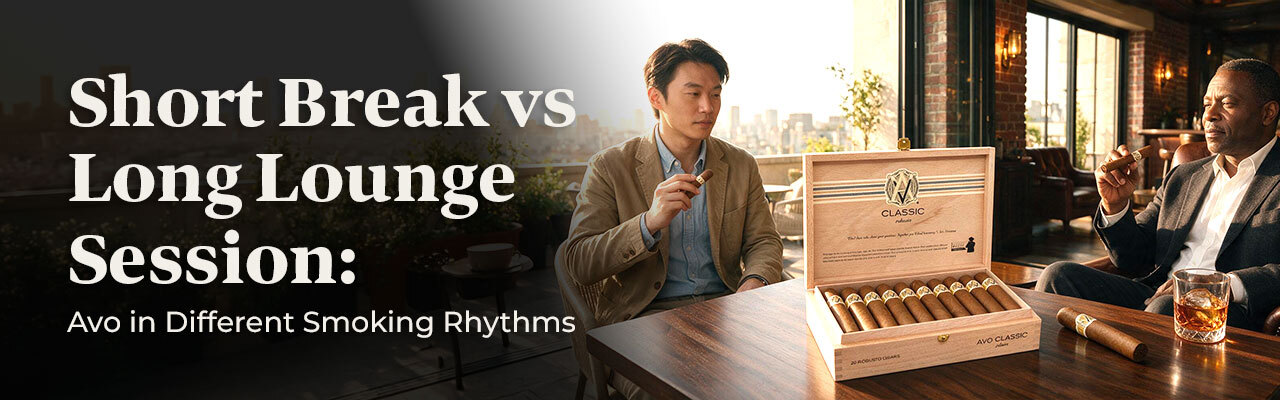
A premium cigar is a luxury of time, yet many enthusiasts treat it like a race against the clock. You've likely felt the sting of abandoning a half smoked Toro because a meeting started early or scorching a Petit Corona by puffing too fast to finish on time. Understanding your premium cigar smoking session length is the key to maintaining a sophisticated cigar lifestyle and ensuring you never waste an AVO Cigar or any other world class smoke again.
The relationship between cigar sizes, vitolas, and construction dictates your smoking duration and the evolution of flavor. We will show you exactly how to predict cigar burn time so you can match the right stick to your specific window. Whether you're enjoying AVO Cigars or another premium blend, this guide breaks down the technical mechanics of the smoke to help you avoid overheating and enhance your palate through proper pacing.
Whether you have fifteen minutes for a quick break or two hours for a deep lounge session, the right knowledge ensures every puff is intentional. You'll gain the confidence to choose between a stout Robusto and a slender Panatela based on the clock. We'll explore how ring gauge and length influence the physical experience, helping you get the most from AVO Cigars while turning every smoking session into a perfectly timed masterpiece.
Key Takeaways
- Identify how specific cigar vitolas and lengths dictate the total burn time to avoid wasting a high-quality stick.
- Use benchmarks for popular sizes, such as 45 minutes for a Robusto or over an hour for a Toro, to plan your smoking session accurately.
- Master the "one puff per minute" golden rule to control your premium cigar smoking session length and preserve the intended flavor profile.
- Select the ideal smoke for your specific window, from a quick 20-minute morning coffee break to a long, indulgent afternoon in the lounge.
- Build a versatile collection in your humidor that includes various sizes and profiles to suit any spontaneous schedule or environment.
Table of Contents
- The Anatomy of Time: How Cigar Sizes and Vitolas Dictate Your Session
- Cigar Burn Time Reference: Average Duration by Popular Vitolas
- Variables Beyond the Vitola: Why Your Smoking Session Length Varies
- Strategic Selection: Matching Premium Cigars to Your Schedule
- Curating Your Collection for Any Smoking Timeframe
The Anatomy of Time: How Cigar Sizes and Vitolas Dictate Your Session
A vitola is the specific structural blueprint for a cigar's smoking performance. It represents the combination of length and ring gauge that determines how a cigar looks, draws, burns, and evolves over time. Every premium cigar is blended with a specific combustion rate in mind, allowing you to match your selection precisely to your available schedule.
Length is measured in inches and serves as a primary indicator of overall smoking duration. Ring gauge is measured in 64ths of an inch and dictates both the temperature and speed of the burn:
Diameter (inches) = |
Ring Gauge |
64 |
- A 64-ring-gauge cigar has a diameter of exactly 64/64 or 1.00 inch.
- A 50-ring-gauge Robusto has a diameter of 50/64 or 0.781 inches.
- A 38-ring-gauge Lancero has a diameter of 38/64 or 0.593 inches.
Length vs. Ring Gauge: Wrapper-to-Filler Ratio Physics
The physics of cigar combustion can be counterintuitive. A slender, 7-inch Lancero often finishes faster than a shorter, thick 5-inch Petit Robusto. This occurs because thin vitolas have less filler tobacco to buffer heat, causing them to burn hotter and more rapidly if drawn too frequently.
Furthermore, ring gauge dictates the wrapper-to-filler ratio, which shapes the flavor profile:
- Thin Vitolas (38 to 42 Ring Gauge): The wrapper leaf represents a significantly higher percentage of the total tobacco volume. Because the wrapper contributes the majority of a cigar's nuanced flavors, thin cigars offer a wrapper-dominant, highly focused tasting experience.
- Thick Vitolas (58 to 60+ Ring Gauge): Filler tobacco dominates the volume. The larger core acts as a heat sink, allowing the burning ember (the "cherry") to stay cooler and promoting higher airflow, though delicate wrapper subtleties become blended into the broader filler profile.
Construction & Bunching Methods: Entubar vs. Book Bunching
Draw resistance directly alters how fast a cigar burns. When a cigar draws hard, smokers tend to puff forcefully, overheating the tobacco and causing bitter, metallic notes. Construction quality depends heavily on how the roller bunches the inner filler leaves:
- Traditional Entubar Bunching: The roller rolls each individual filler leaf into a tight, tube-like straw before grouping them together. This creates microscopic, uniform air channels running the entire length of the cigar, guaranteeing a cool draw and an even burn rate.
- Book Bunching: The roller folds filler leaves flat on top of one another like pages in a book. This faster, cheaper method increases the risk of dense spots, tight draws, and uneven burn lines ("canoeing").
Cigar Burn Time Reference: Average Duration by Popular Vitolas
Matching a cigar to your schedule prevents the disappointment of having to extinguish a fine stick halfway through. Use these reliable benchmarks to plan your session:
| Vitola |
Dimensions (Inches x Ring Gauge) |
Average Duration | Profile & Performance Highlights |
|---|---|---|---|
| Rothschild | 4.5 x 50 | 30 – 45 mins | Compact alternative to the Robusto; ideal for a dense, cool smoke on a tight timeframe. |
| Corona | 5.5 x 42 | 30 – 45 mins | Traditional slender format with a high wrapper-to-filler ratio for intense flavor. |
| Lancero | 7.0 x 38 | 45 – 60 mins | Connoisseur's size; burns surprisingly fast due to its thin profile; highly flavor-concentrated. |
| Lonsdale | 6.5 x 42 | 45 – 50 mins | Elegant balance of length and slender ring gauge; offers cool draws with wrapper-forward notes. |
| Robusto | 5.0 x 50 | 45 – 60 mins | The industry baseline; perfect proportion of heat management, flavor transition, and time. |
| Toro | 6.0 x 52 | 60 – 75 mins | Versatile workhorse size; extra length allows deep flavor development and a comfortable draw. |
| Churchill | 7.0 x 48 | 80 – 90+ mins | Named after Winston Churchill; classic celebration stick built for long, reflective evenings. |
| Gordo | 6.0 x 60 | 90 – 120 mins | Large surface area generates high smoke volume and an exceptionally cool burn line. |
Tapered Vitola Physics: Torpedos, Figurados, and Perfectos
Specialty shaped cigars introduce dynamic burn patterns that change as you smoke:
| Tapered Foot ──> (Starts fast/cool) |
Expanding Body ──> (Burn rate stabilizes) |
Tapered Cap (Concentrates heat/flavor) |
- Torpedos & Belicosos: Feature a pointed head that concentrates smoke directly onto the palate, increasing perceived strength and intensity toward the final third.
- Perfectos & Figurados: Tapered at both the foot and the cap. Lighting the tiny bulbous foot requires minimal flame, creating a brief, cool initial light. As the burn expands into the wider body, air intake increases and flavor volume peaks, before concentrating again near the head.
Variables Beyond the Vitola: Why Your Session Length Varies
Dimensions offer a baseline, but environmental factors, storage moisture, and tobacco primings drastically influence burn speed.
1. Leaf Primings: Ligero vs. Seco and Volado
Tobacco leaves are harvested in stages called primings. The location of the leaf on the plant dictates its burn rate:
- Ligero (Top Priming): Receives maximum sunlight, yielding thick, dark, oil-dense leaves. Ligero burns slowly and provides the bulk of a cigar's strength and body.
- Seco & Volado (Bottom/Middle Primings): Thinner, lower-oil leaves that burn easily. Rollers use them as combustion catalysts to keep oil-rich Ligero burning smoothly.
2. Modern Humidity Standards (62% to 68% RH)
Older literature frequently recommended storing cigars at 70% to 72% relative humidity (RH). Modern industry consensus agrees that 72% RH is excessively wet. High humidity causes filler leaves to swell, resulting in tight draws, tunneling (where the inner core burns faster than the damp outer wrapper), sour flavors, and mold growth.
Maintaining your humidor at 62% to 68% RH ensures proper combustion, clean flavor release, and an effortless draw.
3. Ash Retention & Insulation
Leaving a sturdy 1-inch column of ash insulates the burning ember, shielding it from excess oxygen and keeping combustion cool. Flicking the ash too frequently exposes the core directly to air, causing the cherry to burn too hot, accelerating smoke consumption, and introducing bitter flavors.
4. Outdoor Conditions & Wind Acceleration
Ambient wind acts like a bellows, forcing oxygen into the foot and accelerating the burn rate by 10% to 15%. Cold weather strips moisture from the air, making delicate wrapper leaves brittle and prone to cracking under sudden heat differentials.
Strategic Selection: Matching Premium Cigars to Your Schedule
Your schedule should dictate your humidor selection—never the other way around. Select your stick based on your actual available window of time:
TIME-BASED SELECTION GUIDE |
||
| Available Time | Recommended Vitola | Ideal Handmade Options |
| 20 – 30 Minutes | Rothschild / Small Panatela | Arturo Fuente Short Story, H. Upmann Half Corona |
| 30 – 45 Minutes | Corona / Petit Robusto | Romeo y Julieta Reserva Real Corona |
| 60 – 75 Minutes | Toro / Robusto | Oliva Serie V Melanio Robusto |
| 90+ Minutes | Churchill / Double Corona | Montecristo White Series Churchill |
Golf Course Environment Strategy
When smoking on the golf course or outdoors, opt for a Toro or Gordo. The thicker ring gauge holds up against wind resistance. Use a dedicated magnetic cigar clip to secure your cigar on the cart frame—never lay your cigar directly on damp grass treated with lawn chemicals.
Emergency Remedy for Nicotine Sickness:
If you smoke a full-bodied cigar too quickly on an empty stomach, you may experience nicotine-induced hypoglycemia (dizziness, cold sweats, or nausea). Quickly consume simple sugars—a spoonful of table sugar, a piece of chocolate, or a real-sugar soda. The sugar absorbs rapidly into the bloodstream, neutralizing symptoms within minutes.
Curating Your Collection for Any Timeframe
A well-curated humidor contains at least three distinct vitolas to match spontaneous schedules. However, maintaining variety requires strict storage hygiene.
CRITICAL WARNING: Storage Isolation & Cross-Contamination
Never store machine-made cigars, flavored cigars, or infused sticks (such as Acid or Tatiana) in the same humidor as natural long-filler premium cigars.
Machine-made cigars and infused sticks use added chemical aromatics, botanicals, and essential oils. These compounds off-gas continuously; placing them near premium long-filler cigars will cause those artificial oils to seep into natural tobacco, permanently ruining the flavor profiles of your unflavored inventory. Keep infused products in a separate, dedicated container or Tupperdor.
Lighting Mechanics of the Perfecto
Shaped cigars like the Arturo Fuente Hemingway (Perfecto) are uniquely suited for time management. Its narrow, nipple-shaped foot lights instantly with a brief touch of a torch flame. This eliminates the need for aggressive initial toasting, establishing an immediate, perfectly centered burn line from the very first puff.
Master Your Smoking Schedule Today
Elevating your cigar routine comes down to intentional planning. By understanding how ring gauge math, wrapper-to-filler ratios, and leaf primings dictate burn times, you can select the perfect stick for any scenario:
- Winter Months: Rotate to shorter vitolas like Rothschilds or Petit Coronas to enjoy a full flavor experience without standing in freezing outdoor temperatures.
- Summer Evenings: Reserve Churchills, Gordos, and Double Coronas for warm, relaxed nights when you can commit 90 to 120 minutes without rushing.
Audit your humidor today, organize your sticks by average burn duration, and ensure you always have the right vitola ready for your available time.
Frequently Asked Questions
How long should a Robusto cigar last?
A standard 5 x 50 Robusto should last between 45 and 60 minutes. This duration assumes a steady pace of one puff per minute. If you finish in under 30 minutes, you're likely puffing too fast, which can lead to a bitter taste. Conversely, a very slow pace might cause the stick to extinguish prematurely.
Can I relight a cigar if I don’t have time to finish it?
You can relight a cigar, but it's best done within 20 to 30 minutes of it going out. Purge the old smoke by blowing gently through the cigar before relighting to remove stale flavors. Don't save a half-smoked cigar overnight; the cold ash and trapped oils will create an unpleasant, acrid taste that ruins the premium experience.
Why does my cigar keep going out if I smoke slowly?
Your cigar likely goes out because the internal humidity is too high or your puff frequency is too low. Premium cigars require a consistent airflow to keep the cherry lit. If your humidor is set above 70% humidity, the tobacco may be too damp to maintain a steady burn. Try dry-boxing your stick for a few hours before your next session.
Does a higher price mean a longer smoking duration?
Price is a reflection of tobacco quality, aging, and craftsmanship rather than total Cigar Burn Time. A high-end Petit Corona will cost more than a budget Churchill but will finish much faster. You're paying for the complexity of the blend and the rarity of the leaves rather than the total number of minutes the smoke lasts.
Is it okay to smoke a cigar in 15 minutes?
Smoking a standard cigar in 15 minutes is generally not recommended because it causes the tobacco to burn too hot. This intense heat destroys delicate oils and creates a harsh, metallic flavor. If you only have a 15-minute window, choose a small cigarillo or a machine-made option like Backwoods Honey Berry that is specifically designed for a short duration.
What is the best cigar size for a beginner with limited time?
A Petit Corona or a standard Corona is the ideal choice for a beginner with a tight schedule. These Vitolas offer a manageable 30 to 40-minute Smoking Session without the physical weight of larger formats. They allow a newcomer to experience the full flavor profile of a brand like Arturo Fuentes without feeling overwhelmed by a two-hour commitment.
How does the ring gauge affect the temperature of the smoke?
A larger ring gauge typically results in a cooler smoke because it allows for more airflow and a larger surface area for heat dissipation. Thinner cigars concentrate the heat into a smaller stream, which can make the smoke feel sharper on the palate. This is why many enthusiasts prefer a 50 to 54 ring gauge for a more relaxed, flavorful experience.
Does the wrapper type (Maduro vs. Connecticut) change the burn time?
Wrapper type can influence the burn rate, but the filler blend is the primary driver of duration. Oily, thick Maduro wrappers often burn slightly slower and more evenly than thin, delicate Connecticut Shade leaves. However, the density of the internal tobacco and the overall construction of Premium Cigars remain the most significant factors in determining the total time.
Browse Related Articles:
- The Avo Experience: Rhythm, Relaxation, and Modern Premium Cigars
- How Music and Rhythm Influenced the Identity of Avo Cigars
- Avo Cigars and the Relaxed Premium Smoking Style
- Understanding the Smooth Profile Often Associated With Avo Cigars
- When Avo Fits the Moment: Social Evenings, Quiet Reflection, or Travel
- Pairing a Smooth Premium Cigar With Coffee, Wine, or Light Spirits
- What Makes Avo Different From Other Premium Handmade Cigars
- The Legacy Behind the Avo Name and Its Modern Appeal
- Avo Classic vs Avo Syncro: Smooth Traditional Style vs Modern Blend Direction
- Avo Syncro Nicaragua vs Avo Syncro Fogata: How the Experience Changes
- Avo XO vs Avo Classic: Refined Smoothness vs Everyday Premium
- Avo Syncro vs Traditional Avo Lines: What Feels Different in the Smoke
- Avo Maduro vs Avo Classic: How the Flavor Profile Shifts
- Short Session vs Long Lounge Smoke: Choosing the Right Avo Style
- Avo Cigars vs Other Premium Cigars: What Sets the Experience Apart
- Avo Cigars FAQ: Storage, Expectations, and First Impressions
Recent Posts
-

Holiday Gift Guide for Cigar Lovers: Gifts for Every Type of Enthusiast
Finding the right holiday gift for a cigar lover doesn't have to mean choosing the most expensive b …13th Nov 2026 -
Cigar Review | Avo Cigars No.2 Cigar is One of the Best
I'm not a cigar expert, but I know when I get my hands on something good, and this weekend I defini …11th Nov 2026 -
Top Five Avo Cigars and a History of Avo
"I have always loved beautiful music. Then I found the cigar. A good cigar is like music. Now I hav …6th Nov 2026