
Short Session vs Long Lounge Smoke: Choosing the Right Avo Style
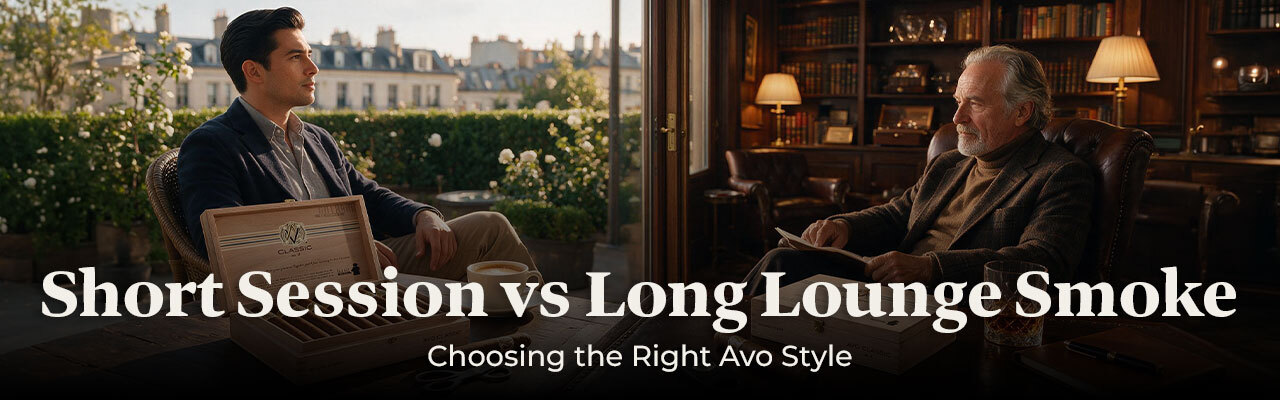
What if the most expensive part of your AVO Cigars isn't the retail price, but the thirty minutes of premium tobacco you're forced to abandon in the ashtray? With the June 2026 launch of the AVO Expresivo, matching your schedule to a specific Cigar Burn Time is more important than ever to avoid wasting a new release. Mastering the avo cigar session length requires more than just picking a box; it involves understanding how Vitolas and tobacco density dictate your Smoking Duration. By analyzing Premium Cigars and their specific Cigar Sizes, you can transform every Smoking Session into a perfectly timed ritual.
It's frustrating to watch a complex blend overheat because you're puffing too fast to beat the clock. You deserve a consistent, reliable experience that honors the craftsmanship of the tobacco without the pressure of a ticking watch. This article promises to help you choose the perfect style for any window of time, ensuring you never have to extinguish a masterpiece prematurely.
We'll break down the expected burn times for popular AVO shapes and share professional techniques to slow down your pace. You'll gain a clear roadmap for selecting the right cigar to fit your lifestyle, from quick afternoon breaks to deep, indulgent lounge sessions.
Key Takeaways
- Match your schedule to specific vitolas to ensure flavor transitions develop fully without the need to rush.
- Master your AVO Cigars, Smoking Duration, Cigar Burn Time, Premium Cigars, Cigar Sizes, Vitolas, Smoking Session, avo cigar session length by adopting the "Gotham Pace" of one puff per minute.
- Identify how environmental variables and individual draw strength can unexpectedly accelerate or slow down your burn.
- Apply the "One Minute Rule" and rotation techniques to keep the cherry at an ideal temperature for maximum flavor.
- Categorize your selections into 30, 60, and 90-minute windows to make quick, informed decisions for any smoking occasion.
Why Smoking Duration Matters for the AVO Experience
Smoking a premium cigar isn't a race to the finish line—it is a calculated performance. In the world of AVO Cigars, the concept of "Cigars in Perfect Harmony" isn't just a marketing slogan; it is a technical requirement. Every blend is engineered to reveal its profile across a specific timeline, and cutting that timeline short means missing the crescendo. Mastering your session length is the difference between a distracted puff and a true connoisseur’s experience.
The Physics of Heat and Oil Distillation
A cigar serves as a slow-burning heat exchanger. As the glowing cherry advances down the barrel, heat radiant from the combustion zone (~1,300°F to 1,400°F under ideal conditions) warms the unburnt tobacco ahead of it. This preheating process gently distills volatile essential oils locked within the leaf, drawing them back toward your palate and gradually concentrating flavors and nicotine toward the final third.
When you rush a session by puffing too frequently, you introduce excess oxygen into the foot, causing the cherry temperature to spike well past its sweet spot. This excess heat incinerates delicate flavor compounds—such as the creamy, floral, and subtle cedar notes found in the AVO Classic—before they can be tasted. Worse, hyper-combustion breaks down tobacco compounds into harsh, acrid off-gasses, releasing bitter tars, heavy carbon, and raw ammonia that ruin the palate.
The Musical Metronome: Maintaining an Andante Pace
As a world-renowned pianist and composer, Avo Uvezian crafted his blends with rhythmic timing in mind. A great smoke requires a steady metronome. Framed in musical terms, the ideal smoking cadence follows an Andante tempo—a steady, relaxed walking pace of roughly 60 BPM (one puff per minute).
This steady rhythm provides the precise balance needed to keep the cherry active and glowing without overheating the tobacco barrel. Giving the leaves adequate rest between puffs allows the cherry to cool back down toward 1,300°F, ensuring the smoke delivers its intended transition of flavors from first light to final band.
Planning Your Session for Maximum Flavor
Rushing a fine vitola is both a sensory failure and a direct financial loss—extinguishing a premium cigar halfway through discards half the hand-rolled artistry you paid for. Proper preparation turns a routine smoke into a ritual:
- Audit Your Schedule: Match your vitola to your available window. Never light a Toro or Churchill if you only have 30 or 40 minutes.
- Shield Your Environment: Select a spot sheltered from wind. Direct breezes act as a continuous bellows, accelerating combustion, unevenly burning the wrapper, and spiking cherry temperatures.
- Pair with Intention: Complement the profile with a coffee, craft ale, or neat whiskey that balances acidity and mouthfeel without drowning out subtle flavor shifts in the final third.
By respecting the clock, you respect the blender. Give yourself the time and space to hear the entire composition from the first light to the final puff.
AVO Cigar Sizes and Estimated Smoking Durations
Selecting the right vitola is the most practical step in managing your smoking session. To establish clear benchmarks, we use the "Gotham Pace" as our standard: exactly one puff per minute (1 BPM). This steady tempo keeps combustion balanced, preventing heat from spiking while keeping the cherry actively glowing.
Understanding size dynamics is essential because a cigar's physical dimensions directly dictate heat dissipation and flavor evolution. Small formats like the AVO Puritos deliver a rapid 15-to-20-minute tasting session, whereas a Churchill or Gordo demands a substantial time commitment to experience the blend’s full trajectory.
Ring Gauge Physics: The 1/64th Inch Standard
In the cigar world, thickness is measured in ring gauge, where 1 unit equals 1/64th of an inch in diameter (for example, a 50 ring gauge cigar measures 50/64ths of an inch thick).
Ring gauge physics directly alter smoke temperature and burn velocity:
- Narrow Vitolas (38–44 RG): Contain a smaller volume of filler tobacco. Because less ambient air is drawn in relative to the concentrated combustion area, narrow cigars burn hotter and faster, requiring strict pacing to avoid bittering the palate.
- Large Vitolas (52–60 RG): House a massive core of long-filler tobacco. The larger aperture pulls in a higher ratio of cool ambient air during each puff. This extra airflow lowers internal combustion temperatures, resulting in a noticeably cooler draw, richer smoke volume, and a significantly slower burn rate.
AVO Vitola Benchmark Data
Below are expected smoking durations across the core AVO portfolio based on an Andante (1 puff per minute) pace:
- Puritos / Covers (4" x 30): 15–20 minutes — Designed for short breaks or cold-weather sessions without sacrificing tobacco quality.
- Robusto (5" x 50): 45–60 minutes — The classic balance between wrapper and filler; ideal for a standard lunch hour or structured tasting.
- Toro / No. 2 (6" x 50 / 6" x 54): 60–80 minutes — A versatile evening format providing a relaxed, cool smoke with generous room for flavor evolution.
- Churchill / No. 3 (7.5" x 50): 75–90+ minutes — A commitment format that allows complex Dominican blends to transition through distinct opening, middle, and final movements.
- Gordo / Gran Toro (6" x 60, e.g., AVO Classic No. 6 or AVO Syncro Special Toro): 80–100+ minutes — The heavyweight format. Thanks to its massive filler density and thermal mass, the 60 ring gauge burns ultra-cool, making it perfect for lengthy outdoor gatherings or extended lounge sessions.
How Blend Density and Construction Impact the Clock
Dimensions alone do not dictate burn speed—leaf packing density and box-pressing play major roles:
- Leaf Density (AVO Heritage): Blends with high leaf density, such as the AVO Heritage line, pack more tobacco by weight into the barrel. This requires a deliberate, steady draw to maintain combustion, naturally extending burn time.
- Box-Pressed Formats (AVO Syncro Nicaragua): Compressing a cigar into a square or box-pressed shape alters internal airflow. The tighter packing can restrict draw velocity slightly, slowing down combustion and extending your session.
Comparing these characteristics to other market staples highlights AVO’s technical engineering. While lighter, airier burns like the Montecristo White Series offer effortless, rapid sessions, AVO’s denser Dominican core demands an attentive, measured pace to fully appreciate every layer of the blend.
Variables That Change Your Cigar’s Burn Time
While size and leaf density set the baseline, real-world conditions ultimately dictate how long your cigar burns. Everything from how you cut the cap to the ambient humidity on your patio will alter combustion speed and flavor delivery.
Personal Draw Technique and Airflow
Your personal smoking technique is the primary variable controlling burn speed. Taking aggressive, heavy draws introduces a rush of oxygen to the foot, causing the cherry to combust faster and hotter. This temperature spike chars the unburnt tobacco barrel, releasing bitter off-gasses. Conversely, a shallow or infrequent draw allows the cherry to cool too much, leading to misfires that require relighting—a process that introduces carbon bitterness into the palate profile.
The Impact of Cut Selection on Burn Speed
The tool you use to open the cap dictates airflow velocity and draw resistance:
- Guillotine / Straight Cut: Removes the entire cap area, creating a wide aperture. This loose, unobstructed draw increases oxygen intake per puff, which naturally accelerates combustion and reduces total burn time.
- V-Cut or Punch Cut: Concentrates the draw through a smaller, deeper channel or aperture. By restricting airflow slightly, these cuts increase resistance, keeping the cherry cooler and extending the overall burn time by several minutes.
Precise Humidity Metrics: The 5% Variable
Humidity determines how tobacco leaf physically combusts. A 5% swing in relative humidity (RH) can alter your total burn time by 10 to 15 minutes.
- AVO Classic (Connecticut Shade Sweet Spot: 68%–70% RH): Thin Connecticut Shade leaves require slightly higher humidity to retain elasticity. Storing them below 62% RH causes the tobacco to burn rapidly like a fuse, destroying delicate cream and cedar nuances while increasing the risk of the wrapper splitting.
- AVO Maduro (Broadleaf Sweet Spot: 65%–68% RH): Dense, oily Connecticut Broadleaf wrappers naturally hold more moisture. Storing them above 72% RH leads to tunneling—where the drier internal filler burns faster than the damp, heavy wrapper, leaving an unburnt outer shell and causing tight, plugged draws.
To stabilize moisture levels before lighting up, try dry-boxing your AVO for 12 to 24 hours in an unhumidified wooden box. This stabilizes internal moisture content and ensures a predictable, even burn rate.
Outdoor vs. Indoor Environmental Dynamics
Where you choose to smoke changes the physics of combustion:
- Breeze Factor: A steady outdoor breeze acts as a continuous bellows on the glowing foot, which can shave 15 minutes off a Toro's natural burn time while causing severe canoeing (uneven burn lines).
- The Chimney Effect: Holding a cigar vertically with the lit end down allows heat to rise directly through the unburnt tobacco column, preheating the leaves prematurely and drastically accelerating combustion. Always hold your cigar horizontal or at a slight upward angle, keeping it shielded from direct air currents.
Indoor sessions remain naturally predictable, allowing the hand-rolled tobacco to burn at its own intended pace without environmental interference.
Professional Tips to Control and Extend Your Session
Active management of your smoking cadence transforms a basic smoke into a technical performance. Adhering to the "One Minute Rule" keeps combustion balanced, preventing heat from spiking and charring the internal blend.
To maintain a level burn line, rotate your cigar 90 degrees every few puffs. Because heat naturally rises to the highest point of the burning foot, frequent rotation ensures that no single side of the wrapper leaf combusts faster than the rest.
The "One-Inch Rule" for Ash Isolation
Don't be in a hurry to flick your ash into the tray. Maintaining a solid column of ash—roughly one inch long—serves a vital technical function as a thermal regulator.
This dense ash acts as an insulator, shielding the glowing cherry from ambient oxygen gusts and stabilizing internal combustion temperatures. When the ash becomes long or unstable, avoid tapping the cigar forcefully against the tray, which can fracture the wrapper. Instead, gently roll the edge of the ash column against the side of the bowl to encourage a clean, natural break. On an AVO, a firm, white-to-light-gray ash indicates rich soil mineral content and proper moisture management.
Clearing Impurities: The Flame-Purge Method
If you notice a sudden shift toward harshness mid-session, perform a hot flame-purge. This advanced technique expels and incinerates accumulated ammonia, stale tars, and trapped combustion gases:
- Hold a lit torch flame roughly one inch away from the foot of the cigar.
- Gently and continuously blow air out through the cigar for 3 to 5 seconds.
- As trapped gases blow through the burning cherry and hit the flame, they will ignite, creating a brief blue flare exiting the foot.
- Continue purging until the blue flame disappears, effectively resetting the tobacco column and restoring the blend's original flavor profile.
Managing the Relight Without Ruining the Taste
If your session is interrupted, you can revive the cigar within a 10-to-15-minute window without a severe degradation in flavor. To avoid introducing harsh carbon bitterness during a relight, follow this precise sequence:
- Scrape the Foot: Use a cigar tool or the edge of an ashtray to gently remove loose, dead ash and charred wrapper edges from the foot.
- Cold Purge: Blow gently through the unlit cigar to expel stale air trapped inside the barrel.
- Pre-Toast the Tobacco: Hold your lighter flame at a distance to gently toast the rim and foot until the edges glow—do not draw on the cigar during this step.
- Final Light & Hot Purge: Take your first puff while simultaneously blowing out slightly against the flame to ensure initial butane and soot are expelled rather than pulled into the barrel.
Knowing When to Stop
Knowing when a session has reached its natural conclusion is just as important as the first light. A premium cigar is built without artificial glues or burning agents, meaning it is designed to be laid to rest, not stubbed out.
A session is complete when the cherry reaches roughly 1 to 1.5 inches from the head (the nub), or when heat and distilled oils concentrate to the point where they overpower the blend's balance. When the draw grows uncomfortably warm or heavy tars begin to mask the signature cedar and cream notes, simply place the cigar horizontally in the rest of your ashtray. A well-constructed AVO will gracefully extinguish itself within two minutes.
Finding Your Perfect AVO Match at Gotham Cigars
Mastering your schedule means knowing exactly which format to reach for when the clock is ticking. You shouldn't have to guess your session length when preparing for a specific window of relaxation. At Gotham Cigars, we simplify this decision by maintaining a comprehensive inventory of AVO vitolas stored in a climate-controlled facility held at 70% RH and 70°F.
Inconsistent storage is the primary enemy of a timed session. A cigar that is too dry will burn like a fuse and spike in temperature, while an over-humidified stick will require constant relights and burn unevenly. By sourcing from an authorized retailer, you guarantee that every leaf’s density, construction, and moisture content remain exactly as master blenders intended.
AVO Recommendations by Time Block
To tailor your session to your available time, select vitolas engineered for specific durations:
- The 15-to-30-Minute Break: Reach for AVO Classic Puritos (4" x 30). These small-format cigarillos provide a quick, concentrated dose of the signature AVO cedar-and-cream profile without requiring a major time investment.
- The 60-Minute Commute: Select an AVO Heritage Robusto (5" x 50) or AVO Syncro Fogata Robusto (5" x 50). These mid-sized formats fit smoothly into an hour-long window, providing enough tobacco volume to deliver rich flavor transitions without feeling rushed.
- The 90+ Minute Lounge Session: For extended evening relaxation, choose the AVO Classic No. 2 (6" x 50 Toro) or AVO Heritage Churchill (7.5" x 50). These larger vitolas allow the aged Dominican filler blends to evolve through multiple layers of flavor, rewarding patience with a smooth, cooler draw.
Flexible SKU Options and Packaging Formats
Whether you need a portable quick-smoke pack or want to stock a long-term humidor, Gotham Cigars provides flexible purchasing configurations across the AVO lineup:
- 10-Tin Bricks (Puritos / Covers): Bulk 100-cigar sleeve options featuring ten individual 10-count tins, tailored for short daily breaks.
- 4-Packs and 5-Packs: Sealed travel-ready bundles designed for short rotations, weekend trips, or tasting single lines before committing to a larger order.
- 20-Count Dress Boxes: Factory-sealed wooden boxes that offer the best per-cigar value for dedicated enthusiasts looking to restock home humidors or age cigars long-term.
Boveda Transit Protection and Freshness Guarantee
Maintaining climate control during transit is essential to protect delicate tobacco leaves from environmental spikes. Gotham Cigars utilizes a specialized shipping protocol to preserve factory freshness from warehouse to doorstep:
- Included 2-Way Humidity Control: Every cigar shipment is sealed in heavy-duty, moisture-barrier packaging equipped with Boveda 69% 2-way humidity packs. This maintains precise relative humidity during shipping, preventing thin Connecticut Shade wrappers from drying out or thick Broadleaf wrappers from losing essential oils.
- Physical Damage Protection: Fragile caps and delicate foot edges are shielded with impact-resistant packing materials to absorb transit vibration.
- Direct Authenticity: Every stick is sourced directly from authorized Davidoff/AVO distribution channels, guaranteeing factory-fresh product without risk of counterfeit stock or improper aging.
If you are eager to experiment with different session lengths across luxury brands, the Gotham Cigars Cigar of the Month Club and curated sampler packs offer an easy way to discover new vitolas and blends alongside AVO staples.
Master Your Next AVO Ritual
Choosing the right vitola is the critical first step toward a perfect session. By applying the "One Minute Rule" (Andante tempo) and maintaining a one-inch ash column as a thermal regulator, you transform a simple smoke into a technical performance that respects master blending intent. Mastering your session length ensures you never waste a single leaf of world-class Dominican tobacco due to a rushed schedule, improper cutting, or incorrect combustion speed.
Explicit Storage Baseline for Ideal Burn Times
To preserve the exact burn times and flavor transitions discussed throughout this guide, baseline humidor care is non-negotiable. Maintain your home humidor at a target relative humidity of 65% to 68% RH at 70°F:
- Storing tobacco above 70% RH introduces excess moisture, resulting in hard draws, frequent relights, and uneven tunneling.
- Dropping below 62% RH dries out volatile oils, leading to rapid combustion, harsh heat bitterness, and fragile, cracked wrappers.
Keeping your humidor dialed into the 65%–68% RH sweet spot keeps both delicate Connecticut Shade and oily Broadleaf wrappers in peak mechanical condition for a predictable, effortless draw every time.
Frequently Asked Questions
How long does an AVO Robusto typically last?
An AVO Robusto typically lasts between 45 and 60 minutes when smoked at a consistent pace. This estimate assumes you're taking one puff per minute, which is the ideal tempo for most AVO Cigars. If you find your session is ending sooner, you're likely drawing too frequently or smoking in a windy environment. Maintaining a steady rhythm ensures the tobacco stays cool enough to reveal its intended creamy and woody notes.
Can I stop smoking a cigar and finish it later?
You can finish a cigar later, but the flavor profile will degrade quickly after the first 15 minutes of being extinguished. Stale smoke and carbonized oils settle into the filler, creating a bitter, ashy taste upon relighting. If you must take a break, follow the "pre-toast" method mentioned earlier. For the best experience, try to select Cigar Sizes that match your available time window instead of stopping mid-smoke.
What is the best way to slow down a cigar that is burning too fast?
The most effective way to slow down a fast-burning cigar is to increase the time between puffs. You should also leave at least an inch of ash on the foot to act as a thermal regulator. This ash shield restricts the amount of oxygen reaching the cherry, naturally lowering the combustion temperature. If you're outdoors, move away from direct air currents that act like a bellows for the fire.
Why does my cigar keep going out even though I puff regularly?
Your cigar likely keeps going out because the internal humidity is too high, often exceeding 72% RH. Damp tobacco won't stay lit without constant, aggressive puffing, which eventually ruins the flavor. Check your hygrometer and consider dry-boxing your sticks for 24 hours before your next Smoking Session. A tight roll or a physical plug in the tobacco can also restrict airflow enough to cause frequent extinguishing.
Does a box-pressed AVO burn longer than a round vitola?
A box-pressed AVO often burns longer than a round vitola of the same length and ring gauge. The physical compression of the box-pressing process packs the tobacco leaves more tightly, which naturally restricts airflow. This restriction slows the rate of combustion and results in a more deliberate avo cigar session length. It's a favorite choice for enthusiasts who want a more concentrated flavor profile and a slower, cooler experience.
How does ring gauge affect the total smoking time?
Ring gauge directly impacts the total smoking time by determining the volume of tobacco and the draw's temperature. A thicker cigar allows for more filler leaves, which creates a larger surface area to dissipate heat. This cooler internal temperature prevents the tobacco from burning away too quickly. Consequently, a 54-ring gauge Toro will almost always outlast a 48-ring gauge Churchill despite being shorter in total length.
Is it normal for an AVO Churchill to take over two hours to smoke?
It is perfectly normal for an AVO Churchill to take 90 minutes to two hours to finish. This 7-inch vitola is engineered for a long, evolving experience that transitions through multiple flavor stages. If you try to finish a Churchill in under an hour, you'll likely overheat the tobacco and lose the subtle complexities of the blend. Respect the length of the stick and give yourself the time it requires.
How often should I puff on a premium AVO cigar?
You should puff on a premium AVO cigar approximately once every 60 seconds. This "One Minute Rule" is the industry standard for maintaining the perfect balance between heat and combustion. Puffing more often will cause the cherry to get too hot, resulting in a bitter or charred taste. Puffing less frequently risks the cigar going out, which forces a relight that can introduce unwanted carbon flavors into the profile.
Expand Your Knowledge:
- The Avo Experience: Rhythm, Relaxation, and Modern Premium Cigars
- How Music and Rhythm Influenced the Identity of Avo Cigars
- Avo Cigars and the Relaxed Premium Smoking Style
- Understanding the Smooth Profile Often Associated With Avo Cigars
- When Avo Fits the Moment: Social Evenings, Quiet Reflection, or Travel
- Pairing a Smooth Premium Cigar With Coffee, Wine, or Light Spirits
- Short Break vs Long Lounge Session: Avo in Different Smoking Rhythms
- What Makes Avo Different From Other Premium Handmade Cigars
- The Legacy Behind the Avo Name and Its Modern Appeal
- Avo Classic vs Avo Syncro: Smooth Traditional Style vs Modern Blend Direction
- Avo Syncro Nicaragua vs Avo Syncro Fogata: How the Experience Changes
- Avo XO vs Avo Classic: Refined Smoothness vs Everyday Premium
- Avo Syncro vs Traditional Avo Lines: What Feels Different in the Smoke
- Avo Maduro vs Avo Classic: How the Flavor Profile Shifts
- Avo Cigars vs Other Premium Cigars: What Sets the Experience Apart
- Avo Cigars FAQ: Storage, Expectations, and First Impressions
Recent Posts
-
Holiday Gift Guide for Cigar Lovers: Gifts for Every Type of Enthusiast
Finding the right holiday gift for a cigar lover doesn't have to mean choosing the most expensive b …13th Nov 2026 -
Cigar Review | Avo Cigars No.2 Cigar is One of the Best
I'm not a cigar expert, but I know when I get my hands on something good, and this weekend I defini …11th Nov 2026 -
Top Five Avo Cigars and a History of Avo
"I have always loved beautiful music. Then I found the cigar. A good cigar is like music. Now I hav …6th Nov 2026