
Backwoods vs Traditional Cigars: What Makes the Smoking Experience Different
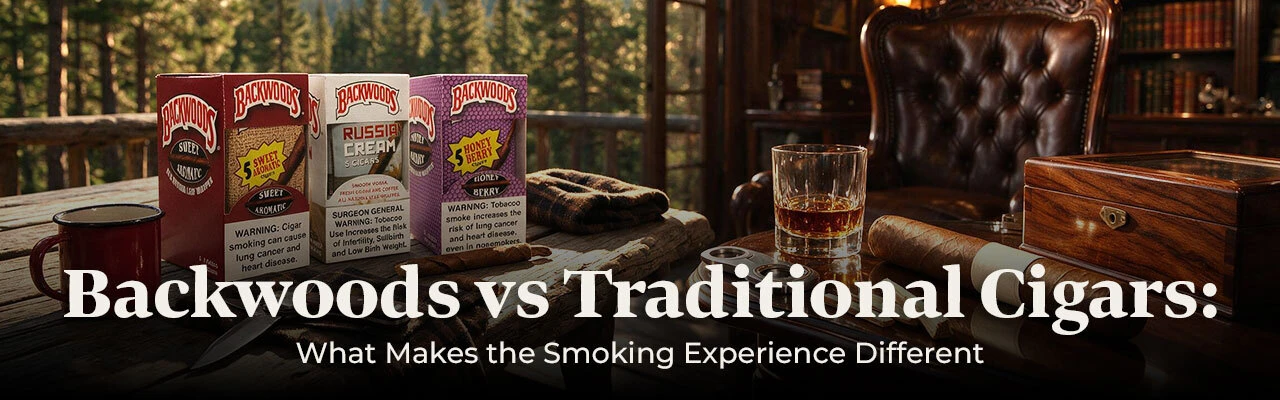
The frayed, rustic appearance of Backwoods Cigars might seem like the complete opposite of a polished, hand-rolled Premium Cigar, but both serve a specific purpose in the modern cigar lifestyle. You likely appreciate the convenience of a quick, flavorful smoke but find yourself craving the complexity and steady burn that only Traditional Cigars can provide. Choosing between Backwoods vs traditional cig options doesn't have to be a compromise between quality and cost. This cigar comparison explores the fundamental differences in tobacco quality and construction, from the rugged natural leaf wrapper of a machine-made favorite to the intricate layers of a premium blend.
You'll discover exactly how hand-rolled vs machine-made manufacturing affects your experience and which style offers the best value for your daily routine. This guide identifies the precise differences in construction and flavor while teaching you how to store both styles properly. We'll examine the specific flavor profiles of iconic brands like Acid Kuba Kuba and Montecristo White Series alongside the bold, infused notes of Backwoods Honey Berry to help you determine which cigar fits your palate.
Key Takeaways
- Contrast the 100% natural leaf wrapper of machine-made sticks with the sophisticated triple-layer construction found in hand-rolled premium cigars.
- Identify the ideal smoking occasion for each type, whether you have 20 minutes for a rustic outdoor smoke or 90 minutes for a complex, hand-rolled experience.
- Compare the flavor profiles of aromatic infusions like Honey Berry against the natural cedar and spice notes developed through traditional tobacco fermentation.
- Use this Backwoods vs traditional cig comparison to evaluate tobacco quality and decide between rustic cigars and hand-rolled vs machine-made premium cigars for your daily cigar lifestyle.
Defining the Categories: Backwoods vs. Traditional Premium Cigars
The world of tobacco offers two distinct paths: the rugged convenience of machine-made sticks and the refined artistry of hand-rolled gems. Backwoods Cigars represent the ultimate utility players in the modern cigar lifestyle, offering an accessible price point of roughly $1.50 to $2.50 per stick. They provide a quick 15- to 20-minute smoke with a signature "wild" and unfinished head that mirrors the aesthetic of frontier heritage. In contrast, Traditional Cigars are a premium investment—typically ranging from $8.00 to $25.00+ per stick—requiring a 45- to 90-minute commitment to fully appreciate their evolving flavor profiles. A traditional cigar is defined as a hand-rolled smoke that utilizes whole-leaf long-filler tobacco for its filler, binder, and wrapper to ensure a complex, evolving experience.
The primary distinction between these categories lies in their fundamental production mechanics, manufacturing scale, and intended smoking duration. While machine-fed manufacturing rapidly processes cut leaves for quick consumption, premium hand-rolled selections rely on deliberate manual assembly designed for unhurried relaxation. Understanding this Backwoods vs. traditional cigar comparison is essential for any enthusiast looking to balance flavor, craft, and budget. High-quality tobacco remains at the core of both, but how that leaf is processed, assembled, and presented creates two entirely different sensations on the palate.
The Origin and Evolution of the Rustic Aesthetic
Backwoods first hit the market in 1973, specifically designed to capture the rugged spirit of 19th-century frontier cigars. While most mass-market brands at the time chased a flawless, polished finish, these rustic cigars leaned into their imperfections. The frayed ends and tapered bodies weren't manufacturing flaws; they were strategic brand markers. This "unfinished" look helped the brand evolve from a niche product into a dominant force in the natural leaf market. Today, fans of Backwoods Honey Berry prioritize this approachable, low-stakes style for outdoor activities where a delicate, high-end cigar might feel too precious or vulnerable to damage.
The Standards of Traditional Cigar Craftsmanship
Traditional Premium Cigars rely entirely on the skilled hands of a Torcedor, or master roller. Rather than feeding chopped leaf into a high-speed machine, these artisans layer intact leaves using time-honored manual bundling techniques such as entubado (rolling individual leaves into tight, tubular straws to optimize airflow) or acordeón (folding leaves in an accordion pattern to guarantee a smooth draw). Master rollers meticulously combine leaves from premier growing regions like the Dominican Republic and Nicaragua to construct a balanced, harmonious blend.
Consistency is the hallmark of this manual craft. When you light up a Montecristo White Series or a Romeo y Julieta Reserva Real, you expect a flawless draw and an even burn every time. This hand-rolled vs. machine-made distinction serves as the primary driver of tobacco quality and cost. Premium brands utilize top-tier leaves that have undergone years of extensive aging and fermentation, yielding the complex, natural notes of cedar, leather, and spice that seasoned enthusiasts crave.
Construction Analysis: Natural Leaf Wrappers vs. Hand-Rolled Precision
The engineering of a cigar determines its durability, draw, and overall flavor delivery. Backwoods Cigars stand out in the mass-market category because they utilize a 100% natural leaf wrapper rather than homogenized tobacco leaf (HTL). HTL is a processed sheet material manufactured from pulverized tobacco scraps and synthetic cellulose binders, commonly found in cheaper machine-made brands. By opting for a genuine broadleaf wrapper, Backwoods maintains an organic leaf texture and raw quality that appeals to smokers who dislike manufactured paper products.
Traditional Premium Cigars employ a far more sophisticated "triple-threat" architecture. This structure consists of three distinct layers: the filler, the binder, and the wrapper. The binder provides the structural elasticity required to hold the filler leaf securely, while the wrapper delivers primary aesthetic appeal and contains essential oils for flavor. While Backwoods relies exclusively on a single style of rustic broadleaf, premium cigars offer a broad spectrum of wrapper varieties cultivated across world-class tobacco regions:
- Connecticut Shade: Grown under protective cloth canopies, yielding a silky, golden-brown leaf known for mild, smooth, and creamy flavors.
- Ecuador Sumatra: An oily, highly aromatic wrapper offering a delicate balance of subtle sweetness and mild earthiness.
- Mexican San Andrés: A rich, dark leaf grown in volcanic soil, prized for delivering bold notes of dark chocolate, leather, and espresso.
- Habano: Cuban-seed leaf grown primarily in Nicaragua or Ecuador, celebrated for its intense spice, cedar, and pepper profile.
Filler Composition and Internal Architecture
Filler composition creates the most significant divide in any hand-rolled vs. machine-made cigar comparison. Backwoods uses short-filler tobacco—consisting of chopped leaves that ensure a quick, hot, and uniform burn. In contrast, premium hand-rolled cigars use long-filler tobacco (tripa larga), where intact, whole leaves run the entire length of the stick. This long-filler construction prevents the cigar from becoming plugged and allows the flavor to evolve continuously as you burn through different leaf blend sections from the foot to the head.
The Mechanics of the Natural Leaf Wrapper and Regulatory Rules
The natural leaf used in rustic cigars is inherently fragile because it lacks chemical reinforcements. You'll notice the "wild" end of a Backwoods is intentionally left untrimmed; this deliberate design choice protects the integrity of the broadleaf during transit and seals in essential moisture. It serves as a practical engineering solution for a portable lifestyle.
Regulatory frameworks—specifically standards enforced by the TTB (Alcohol and Tobacco Tax and Trade Bureau) and the FDA—classify tobacco products based on weight thresholds. Federal statutory standards define cigars weighing more than 3 pounds per 1,000 units as "large cigars," separating them legally and tax-wise from cigarette-sized "small cigars." While both Backwoods and traditional premium sticks meet this federal weight threshold to qualify as large cigars, enthusiasts recognize that internal architecture—not just government weight metrics—dictates value and performance.
Premium Tobacco Aging and Fermentation
In the premium market, high-grade leaves undergo multi-year fermentation and aging. Iconic brands like Arturo Fuente age their leaf reserves for extended periods to eliminate harsh ammonia, lower bitterness, and develop complex natural sugars. This meticulous, patient curing creates precise internal air channels that regulate oxygen flow, combustion speed, and temperature—a level of refinement impossible in rapid mass-production curing. You can examine these construction styles firsthand by browsing the selection at Gotham Cigars to see how a silky Connecticut or San Andrés wrapper compares to a rustic broadleaf.
Flavor and Intensity: Comparing Profiles and Nicotine Strength
Flavor is the most immediate point of contrast in any Backwoods vs. traditional cigar comparison. Backwoods Cigars are legendary for their bold, aromatic profiles like Honey Berry, Russian Cream, and Sweet Aromatic that deliver immediate taste impact from the first draw. Traditional cigars, by contrast, rely exclusively on unadulterated tobacco leaves to create sophisticated, evolving profiles. While market data indicates that flavored and infused cigars account for roughly 18% of total cigar unit sales, seasoned smokers often navigate between both categories depending on the setting and time available.
Flavor Application Mechanics
The fundamental difference in flavor profile stems from how flavor is introduced to the leaf during production:
- Backwoods (Topical Casings and Sprays): Flavor is introduced via direct topical sprays, sugar dips, and liquid food-grade casings applied straight onto the natural leaf wrapper and cut short-filler scrap, yielding an immediate, consistent sweetness.
- Acid Cigars (Botanical Cold-Curing): Acid (by Drew Estate) utilizes a cold-curing process where premium long-filler cigars are hung in specialized aromatic rooms (cuartos aromáticos) lined with essential oils, herbs, and botanical extracts. Over months, the leaves naturally absorb aromatic compounds without direct liquid sprays or artificial coatings.
- Traditional Premium Cigars (Pure Terroir and Fermentation): Contain zero added flavors or chemical additives. Every flavor note—from cedar and leather to espresso and white pepper—stems naturally from soil terroir, seed lineage, leaf curing, and extensive multi-stage fermentation.
Nicotine Chemistry and Leaf Priming
Nicotine intensity is governed by botanical leaf selection and processing. In traditional hand-rolled cigars, master blenders control nicotine strength using leaf priming—selecting leaves based on their vertical position on the tobacco stalk:
- Ligero (Top Priming): Receives full sunlight, producing thick, oily leaves with the highest nicotine concentration and richest body.
- Seco (Middle Priming): Offers medium strength, subtle aroma, and complex taste profile.
- Volado (Bottom Priming): Lowest in nicotine, providing essential combustion quality and a smooth burn.
By balancing precise proportions of Ligero, Seco, and Volado, premium blenders achieve a balanced strength profile with smooth, gradual nicotine absorption. Conversely, Backwoods relies on dark broadleaf short-filler scrap that undergoes rapid processing rather than extended aging. Without multi-year fermentation to strip away harsh tobacco alkaloids, this cut leaf delivers a faster, punchier, and sharper nicotine hit on the throat.
Infused Experiences: Backwoods vs. Acid Cigars
Smokers often compare mass-market rustic sticks with boutique infused cigars. While Backwoods provides a quick, topical burst of sweetness, Acid Kuba Kuba pairs its botanical aroma with long-filler construction and higher-grade binder and wrapper leaves. Choosing between them depends on your goals: opt for Backwoods for a casual, sweet smoke on the go, or select an Acid cigar for an aromatic journey that retains the burn dynamics of a hand-rolled stick.
The Evolving Palate: From Sweet to Savory
Many enthusiasts begin their cigar journey with approachable, sweetened options like Backwoods Honey Bourbon or Dark Stout. As your palate develops, you may seek deeper nuance, transitioning into traditional "bridge" cigars such as Macanudo Café or Romeo y Julieta Reserva Real.
During a 45- to 60-minute premium smoke, natural flavor transitions occur sequentially—shifting from light cream and cedar in the first third to rich cocoa, leather, and earth by the final third. This dynamic evolution is unique to intact long-filler cigars and cannot be replicated by short-filler, single-note machine-made options.
Choosing Your Smoke: Occasions, Time, and Budget
Selecting the right tobacco product isn't just about flavor—it's about your schedule, environment, and financial allocation. If you only have 15 to 20 minutes between activities, lighting a $12 premium Arturo Fuente Hemingway is an inefficient use of high-grade leaf. Backwoods Cigars excel in these brief windows, providing a practical option for active routines where committing to a full-sized hand-rolled stick is unfeasible.
Cost-Per-Smoke and Budget Considerations
Budget expectations represent one of the clearest distinctions between mass-market and artisan cigars:
- Backwoods Cigars: Cost approximately $1.50 to $2.50 per stick, typically sold in resealable 5-pouch packs ranging from $6.00 to $10.00. At roughly $2.00 per 15-minute smoke, they offer an economical daily option for high-frequency smokers.
- Traditional Premium Cigars: Generally range from $8.00 to $25.00+ per stick for core production lines, with rare or ultra-premium releases reaching $30.00 to $50.00+ each.
A smoker lighting up three traditional premium cigars a week can expect a monthly investment of $100 to $250+, whereas a daily Backwoods smoker typically spends around $45 to $60 per month. Premium cigars demand a 45- to 90-minute commitment; you are paying for skilled manual labor, long-term aging, and complex blend evolution rather than quick convenience.
Actionable Storage Specs: Foil Pouches vs. Humidors
Storage requirements create another major division in the Backwoods vs. traditional cigar comparison:
- Backwoods Foil Pouches: Packaged in airtight foil pouches engineered to maintain broadleaf suppleness without external equipment. Unopened pouches remain fresh for months, making them convenient for casual storage.
- Premium Humidor Standards: Premium hand-rolled cigars are unsealed, living products that must be maintained within strict environmental parameters: 65% to 70% Relative Humidity (RH) and a controlled temperature of 65°F to 70°F. Dropping below 60% RH causes natural essential oils to evaporate, leading to brittle wrappers and hot, harsh burns. Exceeding 72% RH risks mold growth, uneven combustion, and plugged draws.
The "Outdoor" Cigar: Why Durability Matters
Backwoods are built for the elements. Their rugged construction is far more forgiving in outdoor environments like fishing trips, hiking trails, or golf courses. A delicate premium wrapper (such as a thin Connecticut Shade) can crack or unravel when exposed to wind and sudden humidity changes outside a controlled lounge. The self-contained portability of foil pouches makes Backwoods an easy choice for travel and spontaneous sessions where bringing a humidified travel case isn't practical.
The Ritual of the Premium Smoke
Enjoying a premium hand-rolled stick is an intentional ritual requiring specific tools and deliberate technique. You need a sharp double-guillotine cutter or V-cutter to open the cap cleanly, along with a reliable butane torch to toast the foot evenly without charring the wrapper. Maintaining a calibrated humidor protects your investment in luxury brands like Arturo Fuente or Montecristo. Creating a dedicated space to relax helps you fully appreciate the nuanced flavor layers that develop over an hour of smoking. Explore the selection of daily smokes and luxury classics at Gotham Cigars to match your timeline and budget.
Sourcing Your Collection: The Gotham Cigars Advantage
Finding a reliable supplier who understands the nuances of tobacco quality is essential for any enthusiast. Gotham Cigars operates as a premier digital destination, maintaining a massive inventory that bridges the gap between mass-market convenience and artisan craftsmanship. Whether you need a fresh pack of Backwoods Honey Berry for an outdoor trip or a box of Montecristo White Series for a milestone celebration, a climate-controlled warehouse ensures every item remains in peak condition before dispatch. This logistical excellence is what sets authorized online retailers apart in the tobacco market.
Purchasing from an established distributor guarantees authentic products directly from major manufacturers like Arturo Fuente and Altadis USA. Buying from verified sources eliminates the risks associated with third-party online marketplaces, ensuring that the natural leaf wrappers on rustic cigars arrive supple and ready to smoke.
Legal and Regulatory Compliance in Online Retail
Navigating online tobacco purchases requires strict adherence to federal and state statutes to ensure safety, legitimacy, and full regulatory compliance:
- PACT Act Compliance: Full alignment with the Prevent All Cigarette Trafficking (PACT) Act, ensuring proper state tax reporting, registration, and legal shipping practices across state lines.
- Mandatory Age Verification: Automated third-party database checks verify customer age and identity at checkout, ensuring sales are strictly restricted to individuals 21 years of age or older.
- Adult Signature Requirements: Shipments containing tobacco products are dispatched with mandatory Adult Signature Required (21+) protocols upon delivery to prevent underage possession.
- State-Specific Shipping Restrictions: Compliance with localized shipping regulations, including state-level direct-to-consumer shipping prohibitions and regional restrictions on flavored tobacco products.
Quality Assurance and Transit Damage Claims
Product integrity begins long before an order reaches your doorstep. Inventory is stored in climate-controlled facilities that maintain strict relative humidity and temperature levels. This prevents broadleaf wrappers from becoming brittle and protects traditional long-filler leaves from losing essential aromatic oils.
To address transit issues—such as cracked wrappers, torn caps, or crushed packaging caused by rough courier handling—operational claim protocols protect the buyer:
- Inspection Window: Customers receiving damaged or defective shipments are instructed to contact customer service within a designated claim window (typically within 72 hours of delivery notification).
- Documentation & RMA: Providing photo documentation of affected sticks allows customer service to issue a Return Merchandise Authorization (RMA) number quickly.
- Replacement Guarantee: Verified transit damage qualifies for immediate reshipment of replacement product or account store credit, ensuring zero risk when ordering delicate natural-leaf cigars online.
Join the Community: Cigar of the Month Club
For enthusiasts looking to expand their palate beyond daily machine-made options, a curated subscription provides a structured pathway into artisan tobacco. The Cigar of the Month Club delivers five unique, hand-rolled sticks selected by industry experts each month. It offers exposure to diverse wrapper varieties, growing regions, and boutique blenders—delivering value while guiding your transition from quick daily smokes to rich, contemplative hand-rolled cigars.
Elevate Your Cigar Journey Today
Your choice in the Backwoods vs. traditional cigar debate ultimately depends on the specific moment you want to create. As this comprehensive guide to tobacco quality, natural leaf wrappers, and the hand-rolled vs. machine-made lifestyle demonstrates, there is a distinct place for both the rugged and the refined. You can now confidently select a quick, aromatic rustic cigar for the outdoors, or a complex, premium masterpiece for a quiet evening.
Actionable Educational Resources
Before making your next selection, equipping yourself with the right knowledge ensures you get the most out of every stick. Whether you are lighting up a machine-made favorite or investing in a premium long-filler, we highly recommend exploring our educational resources to refine your technique and expand your palate:
- Beginner's Cut-and-Light Tutorial: Learn the proper mechanics of using a guillotine or V-cutter, alongside mastering a butane torch toast to guarantee an even, flawless burn without charring the wrapper.
- Ring Gauge and Shape Guide: Understand how a cigar's diameter and vitola (shape) directly impact airflow, burn time, temperature, and flavor intensity.
- Curated Starter Samplers: Take the guesswork out of your transition into traditional premium cigars by exploring our meticulously assembled mild-to-medium beginner samplers.
Your Trusted Source for Every Smoke
Gotham Cigars serves as your single source for both categories. As an authorized retailer for legendary brands like Arturo Fuente, Montecristo, and Backwoods, we maintain all inventory in strict climate-controlled storage to guarantee maximum freshness. With fast, legally compliant national shipping, you can explore new flavors and classic icons with total confidence in their authenticity. Every stick we ship reflects our commitment to logistical excellence and product integrity.
Shop our complete collection of Backwoods and Premium Cigars at Gotham Cigars today, and leverage our educational guides to find your perfect smoking experience.
Frequently Asked Questions
Are Backwoods cigars considered premium tobacco?
No, Backwoods are categorized as mass-market, machine-made cigars rather than Premium Cigars. While they utilize a natural leaf wrapper that mimics the look of high-end sticks, they don't feature the hand-rolled construction or aged long-filler tobacco required for a premium designation. They are designed for convenience and casual use rather than the slow, technical appreciation found in the luxury tobacco market.
How long do Backwoods stay fresh in their original foil pouch?
Unopened Backwoods pouches typically remain fresh for 12 to 18 months because the airtight foil provides a reliable moisture barrier. Once the seal is broken, the natural leaf wrapper will begin to lose its oils and dry out within 3 to 5 days. You should always reseal the pouch tightly after removing a cigar to preserve the remaining inventory for as long as possible.
Do I need a humidor for machine-made cigars like Backwoods?
You don't need a humidor for Backwoods if you plan to smoke them within a week of opening the pouch. The resealable packaging is specifically engineered to maintain the tobacco quality for short-term use. If you buy in bulk and want to keep pouches fresh for several months, placing them in a climate-controlled humidor will prevent the natural leaves from becoming brittle.
What is the best Backwoods flavor for a beginner?
Honey Berry is widely considered the best starting point for those new to the cigar lifestyle. It offers a smooth, sweet aroma that balances the natural strength of the tobacco without being overwhelming. If you prefer a less fruity profile, Sweet Aromatic provides a mellow introduction that focuses on a classic, sugary finish that is very approachable for a first-time smoker.
Why are hand-rolled cigars so much more expensive than Backwoods?
Hand-rolled cigars are more expensive because of the artisan labor and the extensive aging process of the tobacco. A single master roller can only produce a limited number of sticks per day, whereas machine-made production can output thousands. This hand-rolled vs machine-made difference accounts for the cost of sourcing premium long-filler leaves that have been fermented and aged for several years.
Can you inhale Backwoods cigars like cigarettes?
No, you should never inhale the smoke from a Backwoods cigar. These products are designed to be puffed so the flavor can be appreciated on the palate and through the nose. Because cigars contain a significantly higher volume of tobacco than cigarettes, inhaling can cause extreme throat irritation and an uncomfortably intense nicotine rush that ruins the experience.
What is a "natural leaf" wrapper and why does it matter?
A natural leaf wrapper is a whole, unprocessed tobacco leaf used to encase the cigar filler. It matters because it provides a more organic flavor and a rustic texture that homogenized tobacco leaf (HTL) cannot replicate. This feature is a primary focus in any backwoods vs traditional cig discussion, as it gives mass-market cigars a more authentic feel and better burning characteristics.
Which premium cigar is most similar to a Backwoods flavor profile?
Acid Kuba Kuba is the premium brand most similar to the Backwoods experience because of its intense botanical infusion and sweet finish. It serves as a bridge for smokers who love aromatic profiles but want the superior construction of Traditional Cigars. Transitioning to an Acid cigar allows you to enjoy a similar flavor intensity while benefiting from the even burn of a hand-rolled stick.
You May Also Be Interested In:
- The Backwoods Experience: Rustic Style, Outdoor Culture, and Casual Smoking
- Why Backwoods Cigars Look Different From Traditional Cigars
- Backwoods and Outdoor Smoking Culture: Travel, Camping, and Social Moments
- Casual vs Formal Smoking: Where Backwoods Fits in the Cigar World
- Understanding the Rough-Cut Format and Natural Leaf Style
- Quick Break vs Long Session: How Backwoods Fits Different Smoking Moments
- Pairing a Rustic Cigar With Coffee, Beer, or Outdoor Settings
- Do Rustic-Style Cigars Need a Humidor? What to Know
- The Story Behind Backwoods and Its Outdoor Identity
- Rough-Cut vs Smooth-Wrapped Cigars: Understanding the Backwoods Style
- Casual Outdoor Smoke vs Lounge Cigar Experience: Where Backwoods Fits
- Quick Break vs Long Session: Choosing the Right Rustic Cigar Moment
- Natural Leaf Appearance vs Traditional Uniform Cigars: What Changes in the Feel
- Backwoods FAQ: Expectations, Storage, and First Impressions
Recent Posts
-

Holiday Gift Guide for Cigar Lovers: Gifts for Every Type of Enthusiast
Finding the right holiday gift for a cigar lover doesn't have to mean choosing the most expensive b …13th Nov 2026 -

Cigar Review | Avo Cigars No.2 Cigar is One of the Best
I'm not a cigar expert, but I know when I get my hands on something good, and this weekend I defini …11th Nov 2026 -
Top Five Avo Cigars and a History of Avo
"I have always loved beautiful music. Then I found the cigar. A good cigar is like music. Now I hav …6th Nov 2026