
Why Backwoods Cigars Look Different From Traditional Cigars
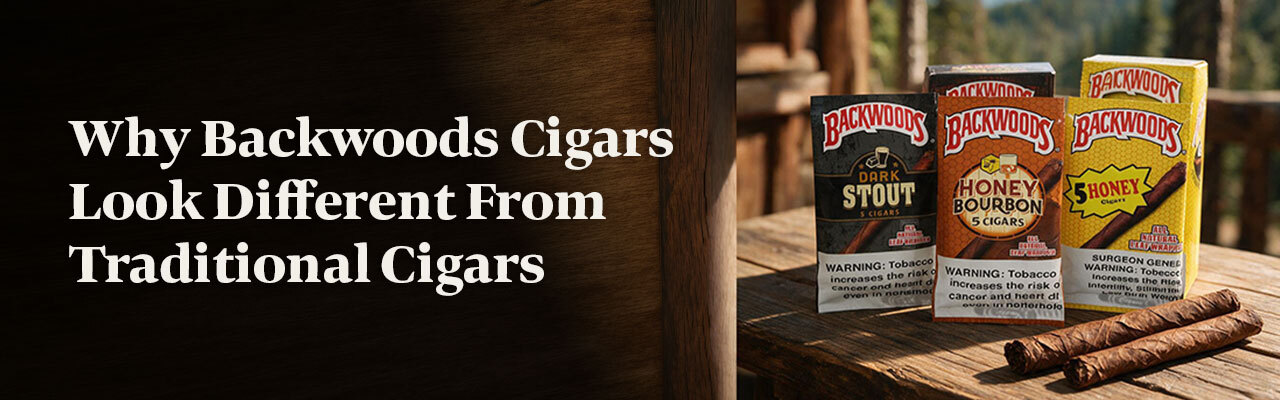
That frayed, veinous leaf on your favorite smoke isn't a manufacturing mistake. It is actually the secret to its legendary flavor profile. This guide provides a rustic cigar appearance explained, highlighting why Backwoods Cigars and other rustic cigars are known for their distinctive cigar appearance, featuring a natural leaf wrapper with a characteristically rough texture.
We also explore how the rugged cigar aesthetics of Backwoods Cigars, including a veinous wrapper and raw tobacco leaf, are signs of authenticity rather than flaws. You might worry a coarse exterior indicates a damaged product compared to the polished surface of the Montecristo White Series, but these textures are actually a visual promise of concentrated oils, handcrafted appeal, and unadulterated tobacco character.
By understanding these visual cues, you can better identify high quality selections in the Gotham Cigars inventory, including Backwoods Cigars and other rustic favorites. We break down the terminology of cigar texture to help you recognize what makes Backwoods Cigars unique and find the best value for your palate.
Key Takeaways
- Learn the science behind a rustic cigar appearance explained, where Rustic Cigars and their unique Cigar Appearance are defined by a Natural Leaf Wrapper, Rough Texture, and specific Cigar Aesthetics like a Veinous Wrapper or Raw Tobacco Leaf.
- Understand why thicker tobacco leaves provide a slower, cooler burn and a more intense, lingering finish than their smooth-skinned counterparts.
- Discover how to distinguish between natural leaf characteristics and actual damage by checking for a healthy sheen versus brittle, dry cracks.
- Identify premium examples of this aesthetic, from the toothy Cameroon wrappers of the Arturo Fuente Hemingway to the iconic look of Backwoods Honey Berry.
Defining the Rustic Cigar Aesthetic
A rustic cigar embraces the unrefined, natural state of the tobacco plant. While many premium cigars prioritize a silky, veinless exterior, rustic cigars value flavor density, heavy leaf oils, and structural character over cosmetic perfection. This visual style features wrappers with toothy textures, pronounced veins, and rich color gradients that reflect tobacco in its rawest form.
Rather than indicating lower quality control, a rugged wrapper often signals a deliberate choice by the blender to prioritize taste and combustion over delicate cosmetic uniformity.
Plant Physiology: Sun Exposure and Stalk Primings
The contrast between a pristine wrapper and a rugged wrapper begins in the field, driven by sun exposure and leaf placement on the plant:
- Shade-Grown vs. Sun-Grown: Delicate, smooth wrappers—such as Connecticut Shade found on a Montecristo White Series—are grown under cheesecloth tents to filter sunlight. This produces thin, elastic, veinless leaves with a mild flavor profile. Conversely, sun-grown varieties like Connecticut Broadleaf receive direct sunlight, causing the plant to produce thicker cell walls, deeper dark colors, and high concentrations of protective essential oils.
- Leaf Primings (Stalk Position): A leaf's location on the tobacco plant (its priming) heavily influences its texture. Upper primings—specifically Ligero and Corona leaves near the top of the stalk—receive the most intense sunlight and nutrients. Regardless of the tobacco seed variety, these top leaves naturally grow thicker, with heavier structural veins and dense oil content, yielding a bolder, more potent smoke.
Post-Harvest Sorting: Flavor Strength Over Cosmetic Grades
After curing and fermentation, tobacco leaves undergo rigorous sorting. "Pristine" wrappers are selected from Grade A leaves that are cosmetically flawless, silky, and uniform in color.
To create a rustic smoke, blenders select leaves where visual perfection takes a backseat to internal resin and flavor strength. These leaves might exhibit mottled coloration, pronounced lateral veins, or raised oil pockets. Choosing these heartier leaves ensures that the cigar delivers a robust, slow-burning experience packed with concentrated aromas.
The Visual Hallmarks of a Rustic Wrapper
You can identify a high-quality rustic smoke by several distinct physical markers:
- Veinous Structure: Clearly visible lateral veins indicating a thick, sun-drenched leaf structure harvested from higher primings.
- Toothy Texture: Fine, raised micro-bumps across the leaf surface, which represent crystallized pockets of essential oils.
- Natural Color Variance: Earthy, mottled patches and color gradients that reflect organic leaf fermentation rather than artificial chemical dying.
The Science of Texture: Veins, Tooth, and Essential Oils
The texture of a rugged cigar leaf tells a distinct botanical story. Veins serve as the circulatory network of the tobacco plant, transporting moisture and vital nutrients throughout the growing cycle. How these structural elements present on a finished cigar comes down to growing conditions, priming levels, and factory sorting.
Clarifying Vein Structure and Factory Technique
A common misconception is that factories "strip away" heavy lateral veins to make a cigar smooth. In tobacco production, stripping refers strictly to removing the thick, central midrib stem, which splits a cured leaf into two wrapper halves. The smaller lateral veins remain part of the leaf.
To achieve a silky, pristine exterior, factories sort out heavily veined leaves or instruct rollers to turn the leaf so the prominent vein ridges face inward against the binder. In contrast, rustic cigars roll the leaf naturally, leaving the raised lateral veins facing outward. These thick veins—often harvested from sun-rich upper primings—give the cigar structural rigidity and contribute to a slower, cooler burn.
What Exactly is "Cigar Tooth"?
"Tooth" refers to the tiny, raised micro-bumps on the surface of a wrapper leaf that resemble goosebumps or fine sandpaper. These bumps are crystallized pockets of essential oils, diterpenes, and sugars secreted by the leaf's glandular trichomes during growth and fermentation.
When a toothy cigar combusts, these concentrated oil pockets burst, releasing intense aromas, deep flavor complexity, and a rich, lingering finish on the palate. While many sun-grown broadleaf varieties develop tooth, African Cameroon and Sumatra tobaccos are widely considered the world's benchmark origins for highly toothy leaves.
Visual Proof in the Burn: "Ash Tooth"
A key indicator of an oil-rich, toothy leaf reveals itself after lighting. As the toothy wrapper burns, the tiny crystallized oil pockets do not simply vaporize—they leave behind distinct visual evidence in the ash. Smokers can observe tiny, raised white pimples embedded across the grey-and-white ash column. This phenomenon, known as ash tooth, serves as physical proof that the leaf possessed high oil density and peak maturity prior to rolling.
Rustic vs. Smooth Wrappers: Flavor and Burn Profiles
The physical thickness and density of a wrapper leaf fundamentally change how it interacts with heat and fire. Thicker, oil-dense wrappers burn slower and at a lower temperature than delicate, paper-thin leaves. This cooler combustion prevents essential oils from scorching, avoiding the bitter, acrid notes that occur when delicate leaves overheat.
The high concentration of resins and oils in a rough natural leaf yields a "chewy," heavy smoke with a lingering finish on the palate that lighter, smoother wrappers rarely achieve.
Burn Maintenance: The Operational Trade-Off
While thick broadleaf and maduro wrappers preserve complex oils, they demand more attention from the smoker. Because of their thickness and oil density, these leaves require significantly higher ignition heat—ideally from a double or triple-jet torch lighter—to establish a complete, even ember.
If lit carelessly, smoked too fast, or exposed to wind outdoors, rustic wrappers are prone to specific burn flaws:
- Canoeing: Occurs when one side of the thick leaf burns slower than the other, causing the cigar to burn down one side like a canoe.
- Tunneling: Happens when the dryer internal filler combusts faster than the heavy outer broadleaf wrapper, leaving a hollow core inside an unburnt outer wrapper.
Maintaining an even draw speed and touch-up lighting with a torch flame are essential techniques when enjoying thick, rustic leaves.
The Wrapper-to-Filler Ratio: Ring Gauge Matters
A rustic wrapper's flavor impact depends heavily on the cigar’s ring gauge (thickness):
- Small Ring Gauges (Lancero, Corona, Lonsdale): In slender cigars, a thick, toothy wrapper makes up a major percentage of the total tobacco volume. Here, the rustic leaf can dictate up to 60% to 80% of the entire flavor profile, delivering concentrated spice, sweetness, and strength.
- Large Ring Gauges (Gordo, 60 Ring Gauge): In thick cigars, the massive volume of internal filler tobacco dominates the palate, dampening the wrapper's tactile and flavor contributions.
Volcanic Soils and Ash Resilience
The firm, holds-its-shape ash characteristic of many rustic cigars is a direct result of soil geography. Dark, toothy leaves are often cultivated in mineral-rich volcanic soils—most notably in regions like Estelí, Nicaragua and the San Andrés Valley in Mexico.
The high concentration of magnesium, calcium, and potassium in volcanic soil is absorbed by the tobacco plant, resulting in thick cell structures that produce dense, bright white or grey ash that resists flaking.
Flavor Expectations by Leaf Texture
You can predict a cigar's performance and flavor direction before lighting up by observing its exterior:
- Toothy Texture: Signals high oil content and concentrated sugars. Expect a sweet-and-spicy profile with notes of cocoa, black pepper, and rich aromatics.
- Veinous Structure: Indicates upper-priming leaves (Ligero). Expect dark, heavy flavor notes such as damp earth, espresso, charred wood, and leather.
- Smooth Texture: Indicates shade-grown or low-priming leaves (Volado or Seco). Expect mild, creamy, floral, or subtle nutty flavors with a clean, short finish.
Evaluating Quality: Is It Rustic or Damaged?
Distinguishing between intentional rustic character and a damaged or poorly stored cigar is an essential skill. While a rugged natural leaf displays a rough texture, there is a clear distinction between organic variation and a structural flaw.
Natural Leaf Traits vs. Structural Defects
- Veins vs. Fractures: A raised lateral vein is structural and integral to a natural broadleaf wrapper. A crack, on the other hand, is a recessed fracture that ruptures the wrapper, allowing air to escape during the draw and ruining combustion.
- Why Rustic Wrappers Burst: While dry storage causes cracking, thick broadleaf wrappers can also crack during a smoke due to rapid humidity or temperature shifts. If a cigar moves quickly from a cold, dry environment to warm ambient air—or if smoked too fast—the internal filler leaves expand faster than the thick outer broadleaf can stretch, causing the seam to split open.
Harmless Blemishes vs. Environmental Damage
Novice smokers often misinterpret harmless natural variations on sun-grown leaves as damage or spoilage:
- Sun Spots (Chlorophyll Spots): Small green or yellowish flecks—often called "frog eyes"—occur when moisture drops trap chlorophyll during the curing process. These green spots are purely cosmetic, completely harmless, and have zero impact on flavor or burn quality.
- Oil Sheen vs. Dehydration & Mold: A well-maintained rustic wrapper displays a faint, oily sheen. If a leaf looks dull, grey, and brittle, it has lost its moisture. However, if greyish-white patches appear fuzzy or wipe off easily, it is a sign of cigar mold caused by excessively high humidity rather than simple dehydration.
The Pinch Test and Construction Standards
You can evaluate the internal condition of a rustic cigar using tactile cues before lighting:
- The Pinch Test: Gently press the body of the cigar between your fingers. A healthy leaf yields slightly under pressure and springs back without making a noise. A sharp crackling or crunching sound indicates the leaf is dangerously dry.
- Tooth vs. Flaking: A fine, "sandy" texture on your fingertips indicates desirable, oil-rich tooth. A "flaky" or powdery texture indicates the outer leaf is disintegrating due to poor storage.
- Seams, Caps, and Cuts: Even on a heavily veined rustic smoke, professional rolling standards apply. Wrapper seams should remain flat and tightly adhered. The head should feature a secure cap (double or triple cap) capable of being cut without unravelling the heavy veins below, and the foot should exhibit a clean, straight cut across all internal tobacco layers.
Experience the Raw Character of Premium Rustic Cigars
Embracing the raw character of tobacco means looking past visual uniformity to discover flavor depth. By choosing rustic cigars, smokers opt for a sensory experience that pale, ultra-smooth wrappers simply cannot match. Whether you prefer the fine tooth of an African Cameroon leaf or the heavy, dark veins of an Oscuro or Broadleaf wrapper, a world of rich flavor resides behind a rugged exterior.
Landmark Examples of Natural Leaf Construction
To explore raw tobacco character at its finest, several iconic hand-rolled and machine-made lines serve as gold standards for the rustic aesthetic:
- Arturo Fuente Hemingway (African Cameroon): A masterclass in toothy leaf aesthetics. This legendary series utilizes a sun-grown African Cameroon wrapper covered in microscopic oil pockets. When lit, these oil crystals burst to deliver a distinct sweet-and-woody aroma that has made the line a staple for aficionados.
- La Aroma de Cuba Mi Amor (Mexican San Andrés Negro): You cannot discuss rustic wrappers without highlighting Mexican San Andrés Negro. Grown in the volcanic soil of Mexico’s San Andrés Valley, this leaf is universally recognized for its coarse, bumpy, toothy, and heavily veined texture. It serves as the backbone for full-bodied blends, yielding deep notes of dark chocolate, espresso, and spicy black pepper.
- AJ Fernandez Enclave Broadleaf: Rather than generalized brand recommendations, specific releases showcase AJ Fernandez's mastery of rugged wrappers. The Enclave Broadleaf features a heavy, dark Connecticut Broadleaf wrapper packed with natural oils and pronounced lateral veins, delivering a dense, "chewy" smoke profile with rich earth and cocoa undertones.
- Backwoods (Natural Leaf All-Tobacco): For a casual, everyday session, Backwoods represents the ultimate "raw leaf" aesthetic. Its unfinished head, frayed foot, and exposed leaf veins are direct nods to the tobacco leaf in its most unrefined state.
(Note: While some infused cigars use natural wrappers, true tobacco enthusiasts turn to non-infused lines like those above to experience unadulterated leaf character without artificial flavorings masking the tobacco's natural resins).
Top Entry Points for the Rustic Enthusiast
If you want to begin exploring textured, oil-heavy wrappers, these selections offer distinct sensory entry points:
- Arturo Fuente Hemingway: Renowned for its toothy, sun-grown Cameroon wrapper offering a balance of sweet cedar and baking spice.
- AJ Fernandez Enclave Broadleaf or San Lotano Oval Maduro: Dark, toothy, and heavily veined options loaded with espresso and dark chocolate notes.
- La Aroma de Cuba Mi Amor: Highlighted by its coarse Mexican San Andrés wrapper, perfect for fans of rich, earthy complexity.
- Backwoods Original or Honey Berry: The quintessential rustic machine-made smoke for a quick, flavor-packed session.
Building Your Collection at Gotham Cigars
When expanding your humidor, consider picking up a comparison sampler that pairs a smooth Connecticut Shade wrapper against a rugged Connecticut Broadleaf or San Andrés Negro. Sampling them side-by-side allows you to physically feel the difference in leaf texture while experiencing how wrapper density affects burn rate and flavor depth.
To keep these oil-dense leaves in peak smoking condition, store your collection at a steady 65% to 70% Relative Humidity (RH). Proper moisture management keeps native essential oils active and ready to deliver a bold session.
Elevate Your Smoking Experience
A rugged exterior is a visual promise of intense flavor, rich essential oils, and unadulterated tobacco quality. Knowing that a veinous surface or toothy texture signals leaf maturity rather than a construction flaw allows you to explore full-bodied blends with confidence.
Practical Techniques for Handling Rustic Wrappers
Because thick, oil-heavy wrappers interact differently with fire and tools than delicate shade-grown leaves, applying a few key techniques will elevate your smoking session:
- Clean Cuts Through Heavy Cap Veins: Always use a razor-sharp guillotine cutter or deep V-cutter. Dull blades can catch on thick lateral veins near the cap, causing the outer leaf to tear or unravel. Cut with swift, decisive pressure.
- Power Ignition (Double/Triple-Jet Torch): Soft flames or matches often struggle to ignite thick broadleaf and maduro foot structures evenly. Use a double or triple-jet torch lighter, holding the flame a few inches away to toast the entire foot thoroughly before taking your first draw.
- Proactive Burn Touch-Ups: If a heavy vein causes a temporary uneven burn or canoeing, don't wait for it to correct itself. Use your torch flame to perform a quick touch-up light on the lagging edge of the wrapper to restore a straight, steady burn line.
Sourcing Freshness at Gotham Cigars
Getting the most out of oil-rich natural leaves requires proper warehouse care before the cigars ever reach your humidor. Gotham Cigars has served enthusiasts since 2001, utilizing a climate-controlled facility to keep broadleaf, San Andrés, and Cameroon wrappers supple, oily, and fresh.
Whether you are looking for classic Arturo Fuente Hemingways, rich AJ Fernandez broadleaf releases, or quick-session natural leaf options, buying from an authorized, high-volume retailer guarantees authentic inventory held in optimal conditions. Explore the collection at Gotham Cigars today and experience the bold, unrefined character of premium rustic tobacco.
Frequently Asked Questions
Is a veinous cigar lower quality than a smooth one?
A veinous cigar is not lower quality than a smooth one. Veins are a natural part of the leaf anatomy and often indicate a sun-grown leaf with high oil content. This rustic cigar appearance explained shows that ruggedness is often a sign of a more robust flavor profile. You'll find that these leaves provide a slower, cooler burn that protects the blend's complexity during your session.
What causes small bumps on a cigar wrapper?
Small bumps on a wrapper, known as "tooth," are crystallized pockets of essential oils. These form during the curing and fermentation process and are highly prized by enthusiasts. They release intense aromas and deep flavors when the leaf is lit. A toothy wrapper is a visual guarantee that the tobacco has reached a high level of maturity and oil density before being rolled.
Will a rough wrapper make the cigar taste bitter?
A rough wrapper won't make your cigar taste bitter. Bitterness is typically caused by over-puffing or scorching thin, delicate leaves. Because rustic wrappers are thicker and denser, they burn at a lower temperature. This protects the essential oils from burning too quickly, which results in a smoother and more flavorful smoking experience with a lingering, pleasant finish on your palate.
Why do some cigars have a matte finish while others are shiny?
The finish depends on the specific tobacco seed and the length of the fermentation process. Sun-grown leaves used in Rustic Cigars often have a matte look because they develop thicker cell walls to survive the elements. This variation in Cigar Appearance is a natural result of how the plant grew. Shiny cigars simply have a different oil structure or come from shade-grown primings.
Are rustic cigars harder to light?
Rustic cigars aren't necessarily harder to light, but they do require a more patient approach. Because the leaves are thicker and hold more moisture and oil, you should use a powerful torch lighter. Ensure the entire foot is glowing evenly before you take your first puff. This prevents an uneven burn and helps you get the most out of the rugged leaf from the start.
Does a veinous wrapper affect the draw of the cigar?
A veinous wrapper doesn't negatively impact the draw of a professionally rolled cigar. The draw is determined by how the filler tobacco is bunched and the overall ring gauge of the vitola. While the veins are a prominent part of the Cigar Aesthetics, they are purely external. If your cigar has a tight draw, it's likely an internal construction issue rather than a result of the wrapper texture.
What is the best way to store rustic, oily cigars?
Store these cigars at a consistent 65% to 70% relative humidity to keep the oils from drying out. This ensures that a Veinous Wrapper remains supple and the Raw Tobacco Leaf retains its signature flavor profile. If the humidity drops too low, even the most oil-rich rustic smokes can become brittle and lose their aromatic complexity. Proper storage is vital for maintaining the leaf's integrity.
Can a rustic appearance be a sign of a fake cigar?
A rustic look is rarely a sign of a counterfeit product. Most fakes attempt to mimic the "perfect" look of high-end brands rather than the Natural Leaf Wrapper and Rough Texture of a boutique smoke. Authenticity is better judged by the quality of the band, the consistency of the filler, and whether you purchased it from a reputable, authorized retailer like Gotham Cigars.
Further Resources:
- The Backwoods Experience: Rustic Style, Outdoor Culture, and Casual Smoking
- Backwoods and Outdoor Smoking Culture: Travel, Camping, and Social Moments
- Casual vs Formal Smoking: Where Backwoods Fits in the Cigar World
- Understanding the Rough-Cut Format and Natural Leaf Style
- Quick Break vs Long Session: How Backwoods Fits Different Smoking Moments
- Pairing a Rustic Cigar With Coffee, Beer, or Outdoor Settings
- Do Rustic-Style Cigars Need a Humidor? What to Know
- The Story Behind Backwoods and Its Outdoor Identity
- Backwoods vs Traditional Cigars: What Makes the Smoking Experience Different
- Rough-Cut vs Smooth-Wrapped Cigars: Understanding the Backwoods Style
- Casual Outdoor Smoke vs Lounge Cigar Experience: Where Backwoods Fits
- Quick Break vs Long Session: Choosing the Right Rustic Cigar Moment
- Natural Leaf Appearance vs Traditional Uniform Cigars: What Changes in the Feel
- Backwoods FAQ: Expectations, Storage, and First Impressions
Recent Posts
-

Holiday Gift Guide for Cigar Lovers: Gifts for Every Type of Enthusiast
Finding the right holiday gift for a cigar lover doesn't have to mean choosing the most expensive b …13th Nov 2026 -

Cigar Review | Avo Cigars No.2 Cigar is One of the Best
I'm not a cigar expert, but I know when I get my hands on something good, and this weekend I defini …11th Nov 2026 -
Top Five Avo Cigars and a History of Avo
"I have always loved beautiful music. Then I found the cigar. A good cigar is like music. Now I hav …6th Nov 2026