
Understanding the Rough-Cut Format and Natural Leaf Style
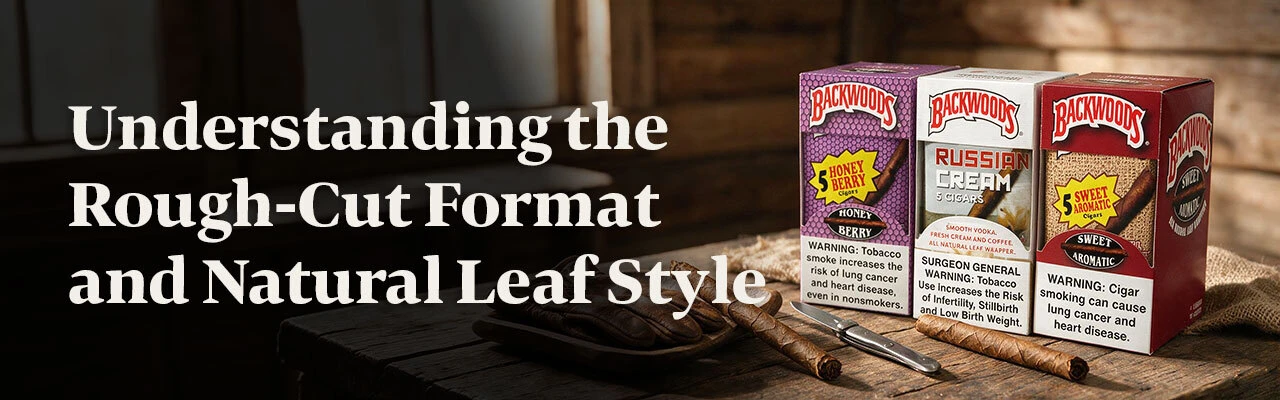
At first glance, Backwoods Cigars don't look like the traditional premium cigar. Their rough edges, unfinished foot, and rustic natural leaf wrapper often leave first-time smokers wondering whether these features are intentional or signs of poor craftsmanship. In reality, this distinctive appearance is one of the reasons Backwoods Cigars have earned such a loyal following, offering an authentic, rugged smoking experience that stands apart from more polished cigar styles.
If you've ever questioned why Backwoods Cigars look frayed, burn differently, or feature an exposed foot, you're not alone. Many cigar enthusiasts are surprised to learn that these design elements are purposeful. The unfinished foot allows you to taste the filler blend before the wrapper joins the burn, while the natural leaf wrapper gives each cigar its unique, handcrafted character. Understanding these features can help you better appreciate what makes Backwoods unlike conventional parejos or machine-made cigars.
In this guide, we'll explain why Backwoods Cigars have their signature rustic appearance, how the unfinished foot influences the smoking experience, and what these characteristics reveal about their construction and flavor. By the end, you'll understand why their rugged look is part of their appeal and how to enjoy them with greater confidence.
Key Takeaways
- Learn the structural differences between high-end shaggy foot sticks and budget-friendly options to make informed purchasing decisions for any occasion.
- Understand the science behind the flavor snap that occurs when the burn line transitions from the exposed filler to the main wrapper leaf.
- Master the precise lighting and cutting methods required to maintain an even burn on cigars with intentionally unfinished or uneven ends.
- Identify the unique characteristics of Rough Cut Cigars, Rustic Cigars, Cigar Formats, Shaggy Foot, Natural Leaf Wrapper, Unfinished Foot, Cheroot Cigars, and the rough cut cigar format to expand your smoking repertoire.
- Discover which industry staples, such as Backwoods Honey Berry and Acid Kuba Kuba, deliver the most consistent and flavorful experience in the rustic category.
Defining the Rustic Aesthetic: Rough Cut vs. Shaggy Foot Cigars
The sight of a cigar with an Unfinished Foot often surprises new smokers. They might assume the roller made an error or that the tobacco is unraveling. In reality, the rugged, frayed tip of Rough Cut Cigars and shaggy foot vitolas is a deliberate design choice that balances raw, unadulterated flavor with a distinct visual personality.
Rustic cigars prioritize a "farm-to-table" aesthetic. This style highlights the natural leaf wrapper, which retains its organic veins, tooth, and tactile texture rather than being pressed into a perfectly uniform cylinder. Choosing a rustic style doesn't mean settling for inferior tobacco—many premium manufacturers utilize their highest-grade long-filler leaves to construct these artisanal formats.
Historical Origins: From "Fumas" to Artisanal Showpieces
To understand why the shaggy foot exists in premium cigars, one must look at factory history. The format originated from "fumas"—the crude, unpolished sample cigars smoked by factory rollers during their work shifts. Rollers left the foot untrimmed and raw so they could quickly light up and evaluate the burn, draw, and flavor profile of the internal filler blend before spending time selecting, stretching, and trimming a delicate wrapper leaf.
What began as an informal factory quality-control shortcut evolved into a celebrated retail format, allowing modern enthusiasts to experience tobacco the exact same way a master roller does on the factory floor.
Structural Mechanics: Long-Filler vs. Short-Filler Architecture
While shaggy foot and rough cut cigars share a rugged appearance, their internal leaf architecture serves completely different market intents:
- Shaggy Foot (Artisanal Long-Filler): Found on high-end, hand-rolled premium sticks. Whole, uncut long-filler leaves extend 1/4 to 1/2 inch past the wrapper leaf. It requires immense rolling skill to ensure the exposed filler and binder remain tightly bunched without the structural girdle of the outer wrapper.
- Rough Cut (Value Short/Mixed-Filler): Popularized by mass-market options like Backwoods Honey Berry. These utilize chopped short-filler or mixed-filler leaf wrapped in a sturdy natural leaf. They are engineered for fast combustion, high moisture retention, low maintenance, and rugged outdoor durability.
Anatomy and Exposed Bunch Airflow Dynamics
In a shaggy foot construction, the exposed binder and filler tobacco protrudes past the end of the wrapper, creating a brush-like, frayed foot that looks as if it were pulled straight from the curing barn.
Exposed Bunch Airflow Dynamics: Without the compression and radial seal provided by the wrapper leaf at the foot, the exposed tobacco bunch has exceptionally high initial air permeability. Oxygen enters freely from all sides of the frayed tip, resulting in virtually zero initial draw resistance. However, because air permeates the uncompressed bunch so easily, pulling flame aggressively into the foot will trigger a harsh, high-temperature flare-up. Gentle, indirect heat is critical during ignition.
Rough Cut Cigars in the Modern Market
Modern rough cut cigars have carved out a massive niche by prioritizing portability, quick lighting, and bold flavor. Featuring jagged, untrimmed ends and heavy natural leaf wrappers, these cigars deliver a rugged hand-feel built for active use.
Unlike premium boxed cigars, mass-market rough cuts are frequently packaged in airtight soft pouches. This preserves ambient moisture and natural aromas for smokers on the move without requiring a wood humidor.
This format is directly descendant from historical Cheroot Cigars—small, thin cigars featuring two open, untapered ends. Born out of 19th-century military utility where quick, cutter-free smoking was required, today's rough cut options represent a calculated choice for modern smokers who value a dependable, unrefined smoking experience.
Cigar Formats and Construction: Why the Foot Matters
Most handmade cigars feature a standard "open foot," where the filler, binder, and wrapper are cut completely flush. However, altering how a cigar's foot is finished dramatically shifts the physics of lighting and the initial flavor profile.
Understanding the structural differences between foot finishes illuminates why rustic vitolas perform so differently during those crucial first few minutes of a smoke.
Mechanical Contrast: Closed Foot vs. Unfinished Foot
The mechanical contrast between a closed foot and an unfinished foot represents two polar opposite flavor strategies:
Closed Foot ----> Wrapper folded over tip ----> 100% Wrapper flavor on 1st puff
Unfinished Foot ----> Wrapper stops short ----> 0% Wrapper flavor (Binder/Filler only)
- Closed Foot: The outer wrapper leaf is folded entirely over the open end of the cigar. Upon lighting, the flame ignites pure wrapper leaf, delivering an immediate 100% concentrated burst of wrapper oils and sugars before the binder or filler engage.
- Unfinished / Shaggy Foot: The wrapper leaf stops short of the tip, leaving only the internal binder and filler leaves exposed. On your first puff, you taste 0% wrapper leaf, allowing you to isolate the core blend in its purest state.
Shaggy Foot vs. Unfinished Foot: Clarifying the Terminology
While these terms are often used interchangeably in casual lounge conversation, master rollers distinguish between two distinct styles:
- Shaggy Foot: Intentionally "wild" and unrefined. The protruding filler tobacco splays outward like a coarse brush, creating a mop-top appearance that allows maximum air flow into the exposed bunch. Benchmark examples include the Leaf by Oscar, Kristoff Shaggy Natural/Maduro, RoMa Craft Neanderthal HOXD, and Viaje Summerfest.
- Unfinished Foot: A more restrained, clean presentation. The outer wrapper stops approximately 1/4 to 1/2 inch short of the tip, leaving a neatly bunched, exposed section of binder and filler without the wild splay.
Technical Correction — The Perfecto Misconception:
Classic vitolas like the Arturo Fuente Hemingway series are often mistakenly grouped with unfinished formats due to their unusual shapes. However, the Hemingway is a classic Perfecto featuring a pinched, tapered "nipple" tip where the wrapper wraps fully around the foot. True shaggy or unfinished feet explicitly leave the internal bunch untrimmed and uncovered by wrapper leaf.
Combustion Mechanics: Ring Gauge and the Tunneling Hazard
The ring gauge (diameter) of an unfinished cigar dictates how the exposed bunch burns before reaching the wrapper leaf. A wider ring gauge (50+) provides a larger surface area of exposed filler, yielding a remarkably cool, airy initial draw.
However, this construction introduces a distinct combustion risk:
- The Tunneling Hazard: The outer wrapper leaf normally acts as a tight structural girdle, compressing the internal leaves and forcing air evenly through the core. Without the wrapper's radial tension at a shaggy foot, an unevenly bunched binder leaf can create hidden internal air channels.
- If you apply uneven heat during ignition, air will rush through the path of least resistance, causing the cherry to tunnel straight down the center filler while leaving the outer binder unburned.
To prevent tunneling, an unfinished foot requires a deliberate, even distribution of indirect heat across the entire exposed surface area before drawing.
The Cheroot: The Primitive Ancestor of Rustic Formats
The historical ancestor of all modern rough-cut cigars is the Cheroot. Characterized by two completely open, un-tapered ends and a uniform cylindrical shape, cheroots lack a traditional closed cap or head.
Originating in the 19th century for military utility and field labor, cheroots required no cutter and no delicate handling. It remains a no-nonsense format that prioritizes pure tobacco delivery, efficiency, and unrefined character—a historical philosophy that directly inspires the modern rough-cut market today.
Flavor Evolution: The Science of the Unfinished Foot
The primary appeal of an Unfinished Foot is the dramatic, two-stage sensory evolution that unfolds during the first few minutes of the smoke. While a traditional parejo delivers its full blend profile from the very first puff, lighting a Shaggy Foot offers a rare opportunity to isolate the foundation of the cigar before the outer leaf introduces its concentrated characteristics.
Stage 1: Isolating the Core Blend (Binder + Filler Mechanics)
Many smokers assume that an unfinished foot lets you taste "only the filler." In reality, you are experiencing the binder and filler working in tandem.
The binder leaf plays a crucial role during these initial minutes. Often harvested from thick, flavorful tobaccos—such as a spicy Nicaraguan Habano, a robust Mexican San Andrés, or a rich Connecticut Broadleaf—the binder provides structural containment while imparting significant earth, pepper, and wood notes to the exposed filler core.
This naked baseline delivers a lighter body and a clean, crisp finish, typically characterized by raw cedar, dry hay, and subtle toasted grain.
Stage 2: "The Snap" & The Wrapper Flavor Ratio
The defining moment of an unfinished vitola occurs when the burn line transitions from the exposed bunch to the edge of the wrapper leaf—an event enthusiasts call "The Snap."
[Exposed Bunch: Binder + Filler] → The Snap → [Wrapper Ignition] → [Full Harmonic Blend]
- The 60%–80% Wrapper Ratio: The outer wrapper leaf typically accounts for 60% to 80% of a cigar's overall flavor profile. Because wrapper leaves undergo long fermentation to concentrate their essential oils and natural sugars, their sudden introduction creates an immediate surge in body, smoke density, and sweetness rather than a subtle background shift.
Thermal Dynamics: Caramelization vs. Scorching
As the burn line reaches the wrapper, the sudden ignition of concentrated wrapper oils creates a brief internal temperature spike:
- Caramelization Ideal: When heated gently, these oils volatilize and caramelize smoothly, showering the palate with rich notes of dark chocolate, cream, espresso, or heavy spice.
- Scorching Hazard: If you draw too aggressively right as the fire engages the wrapper leaf, the excessive heat will scorch the delicate wrapper oils rather than volatilizing them. Scorched oils ruin "The Snap," turning what should be a rich transition into harsh, bitter, and acrid smoke.
The Sensory Evolution Timeline
A well-crafted shaggy or unfinished session unfolds across three distinct phases:
- Minutes 1–5 (Pure Core Isolation): Clean, light-to-medium body. Prominent dry wood, hay, and raw earth notes driven entirely by the binder and filler. Virtually zero wrapper influence.
- The Snap (Wrapper Ignition): The exact instant fire reaches the outer wrapper. A sudden surge in oiliness, body, and aromatic richness as the wrapper's 60%–80% flavor contribution engages the palate.
- Minutes 10+ (Full Blend Synergy): The cherry stabilizes. The natural wrapper, binder, and filler harmonize into the master blender’s fully intended profile, providing balanced complexity through the remainder of the stick.
Natural Leaf Wrapper Integrity vs. Processed Alternatives
Experiencing a true "flavor snap" requires a genuine Natural Leaf Wrapper. Natural wrappers are single, intact leaves possessing high elasticity, visible vein structures, and dense natural oils.
Unlike Homogenized Tobacco Leaf (HTL)—a mass-market sheet manufactured from pulverized tobacco scraps and cellulose binders—a natural leaf retains the organic sugars and essential oils necessary to create a dynamic flavor shift upon ignition. The sheen and tooth of a fermented natural leaf not only give rustic cigars their organic appeal, but also provide the structural depth required for a clean, rewarding burn transition.
How to Properly Smoke and Handle Rustic Cigars
Lighting and enjoying a Shaggy Foot or rough-cut cigar format requires more finesse than a standard clean-cut parejo. Because the filler and binder protrude without the protective armor of an outer wrapper, they are highly susceptible to superheating and scorching. Applying too much heat too quickly carbonizes the wrapper edge before you even reach the main body, ruining the flavor transition.
Mastering a few fundamental lighting techniques and storage habits ensures you capture that signature "flavor snap" without a bitter, burnt start.
Lighting Dynamics: The No-Draw Passive Lighting Method
The most critical mistake smokers make with an unfinished foot is puffing while applying a flame. Drawing flame directly into an exposed, uncompressed bunch acts like a bellows, pulling intense heat deep into the core filler and scorching the tobacco from the inside out.
The No-Draw Passive Method:
Hold a soft flame or single-jet torch at a generous distance from the tip—never letting the direct flame touch the tobacco. Do not draw or puff on the cigar. Rotate the stick constantly while letting the ambient heat passively toast the protruding filler and binder until the entire foot glows evenly with a soft red ember.
The Transition Ritual: Purging at "The Snap"
As the burn line progresses through the exposed bunch and reaches the edge of the wrapper leaf, perform The Purge:
- Gently blow air outward through the cigar for 2 seconds.
- This simple action expels trapped combustion gases, stale carbon, and heat from the initial light-up.
- Purging right at "The Snap" cleanses the internal airway, ensuring your very first draw of the burning wrapper leaf delivers pure, unadulterated flavor without acrid residual gas.
Ash Management on Exposed Bunches
The ash produced during the first half-inch of a Shaggy Foot is naturally looser and flakier than the ash formed on a standard wrapped cigar.
- Don't Force a Long Ash: Do not attempt to build a long ash during the initial baseline phase. The exposed bunch lacks the structural compression of a wrapper leaf, making the ash prone to falling unexpectedly.
- Gently Tap Early: Lightly tap the loose filler ash into an ashtray just before the burn line reaches the wrapper.
- Wrapper Structural Hold: Once the cherry engages the natural leaf wrapper, the structural integrity of the ash will improve dramatically, holding a tight, solid column.
Storage, Humidity, and Fragility Concerns
Rustic cigars require mindful handling in your humidor due to their exposed structure and delicate tips.
- Exposed Foot Desiccation: Unwrapped, frayed tobacco loses relative humidity twice as fast as tobacco encased in a sealed wrapper. If stored in a dry environment (below 62% RH), the exposed foot rapidly desiccates, becoming brittle and crumbling into dust before you even strike a match.
- Cellophane Protection: Keep unfinished and shaggy foot cigars in their original cellophane sleeves or airtight soft pouches as long as possible. The cellophane acts as a physical buffer against friction and helps retain essential moisture in the exposed tip.
- Humidor Drawer Caution: Handle rustic sticks gently when rearranging your humidor. The jagged, untrimmed wrapper edges can easily snag on cedar dividers or adjacent cigars, causing the outer leaf to tear or unravel. If a minor tear occurs near the foot, the cigar will still smoke fine—just ensure the cap and head remain intact to preserve a clear, consistent draw.
Top Rustic and Rough Cut Choices at Gotham Cigars
Finding the right stick depends on your preference for flavor intensity, construction style, and the specific occasion. Gotham Cigars stocks a wide variety of Rough Cut Cigars and premium Shaggy Foot options that cater to every type of enthusiast—from active outdoorsmen needing a rugged smoke to lounge smokers looking for an artisanal flavor evolution.
Storage & Cross-Contamination Guidelines
Before building your rustic lineup, keep these essential storage rules in mind to protect your collection:
- Infused vs. Traditional Isolation: Infused options like Acid Kuba Kuba utilize potent essential oils and botanicals that off-gas constantly. Always store infused cigars in a separate container (a secondary Tupperdor or travel humidor) to prevent flavoring from permanently bleeding into traditional tobaccos within 24 to 48 hours.
- Pouch / Machine-Made Storage: Pouch-packaged cigars like Backwoods are treated with food-grade humectants to maintain pliability. They do not require humidor storage. Placing pouch cigars inside a traditional wood humidor can introduce excess moisture and artificial flavorings to your premium hand-rolled inventory.
Machine-Made Rough-Cut Benchmark: Outdoor Utility
For quick, flavorful smokes on the move, machine-made natural-leaf options offer unmatched convenience:
- Backwoods Honey Berry: The undisputed gold standard for value-driven, rough-cut construction. Featuring a jagged, untrimmed foot and a heavy, dark Natural Leaf Wrapper, Backwoods cigars are rolled with deliberate looseness to ensure an effortless draw and a consistent, sweet aroma. Their airtight soft-pouch packaging keeps them moist and ready for action without requiring a humidor—making them ideal for hiking, fishing, or outdoor tasks.
Premium Hand-Rolled Unfinished Benchmarks
For an elevated, multi-stage smoking experience, reach for artisanal long-filler cigars featuring true shaggy or unfinished feet:
- Leaf by Oscar (Natural / Maduro / Corojo): The modern poster child for rustic presentation. Before you even reach the stick, it is encased in a raw, rustic tobacco leaf instead of cellophane. Upon unwrapping, it reveals a masterfully crafted Unfinished Foot where the binder and long-filler extend past the smooth wrapper, offering an ideal baseline before "The Snap."
- Kristoff Shaggy Natural / Maduro: Features a wildly splayed Shaggy Foot and an uncut, pigtail cap. This vitola lets you experience an intense 5-minute preview of Kristoff's rich Dominican and Nicaraguan binder/filler blend before the oily outer wrapper ignites.
- Montecristo White Series (The Control Benchmark): While not a shaggy foot, keeping a flush-cut, traditional benchmark like the Montecristo White in your humidor provides a side-by-side comparison. Smoking a clean-cut open foot next to an unfinished foot highlights exactly how much "The Snap" alters the initial body, aroma, and complexity of a session.
Curated Discovery: The Cigar of the Month Club
If you want to explore unique vitolas—from traditional parejos to cheroots and shaggy foot styles—without the guesswork, the Gotham Cigars Cigar of the Month Club is an ideal resource. This curated service delivers diverse, factory-fresh selections directly to your door, making palate expansion a seamless part of your routine.
- Backwoods Honey Berry: Value-driven, natural-leaf rough cut built for active, humidor-free utility.
- Leaf by Oscar / Kristoff Shaggy: Premium hand-rolled benchmarks featuring authentic unfinished and shaggy feet.
- Acid Kuba Kuba (Store Separately): A modern aromatic classic combining high-aroma herbal infusions with rich tobacco.
- Montecristo White Series: Standard flush-cut control stick to benchmark the flavor transition of unfinished formats.
Elevate Your Smoking Experience with Rustic Craftsmanship
Exploring rustic craftsmanship—from the value-driven utility of rough-cut sticks to the multi-stage sensory evolution of an artisanal shaggy foot—offers an authentic departure from standard parejos. These formats aren't just visual novelties; they showcase raw tobacco blends in a way that perfectly uniform, flush-cut cigars simply cannot replicate. Understanding these technical nuances allows you to appreciate the skill, history, and physics behind every stick in your humidor.
Quick-Reference Guide: Foot Constructions Compared
To help you match the right construction to your session, use this quick-reference summary comparing the four primary foot styles:
| Foot Type | Wrapper Coverage | Initial Flavor Profile | Lighting Technique |
|---|---|---|---|
| Open Foot | Flush with cut | Balanced (Wrapper + Binder + Filler simultaneously) | Standard gentle toast & draw |
| Closed Foot | Folds completely over tip | 100% Wrapper blast on the first puff | Light outer leaf before drawing |
| Unfinished / Shaggy | Stops 1/4" to 1/2" short of tip | Binder + Filler isolation ("The Snap" follows) | 100% Passive toast (Zero puffing during light) |
| Rough Cut | Untrimmed, jagged natural leaf | Immediate, punchy, unrefined blend | Casual light; highly wind-resistant |
Shipping, Fragility, and Transit Acclimation
Buying rustic and unfinished cigars online requires special care once your package arrives on your doorstep:
- Exposed Foot Fragility: Because shaggy and unfinished feet lack the protective radial seal of an outer wrapper leaf, exposed tobacco loses moisture faster than wrapped tobacco during transit temperature shifts.
- The 48-to-72 Hour Rest Period: Upon receiving your order, inspect the delicate frayed tip for physical damage, then place your new sticks into your calibrated Tupperdor or humidor (62%–65% RH) for 48 to 72 hours before smoking. This short acclimation period re-stabilizes the moisture level throughout the exposed filler bunch, preventing a bitter burn, harsh draw, or crumbling foot upon ignition.
Quality and Freshness Guaranteed
At Gotham Cigars, we bring over 20 years of industry expertise directly to your door. Every order is stored in and shipped from our state-of-the-art, climate-controlled warehouse to ensure your sticks arrive in peak condition. Backed by fast national shipping and humi-shielded packaging, your next cigar discovery is only a few days away.
Step outside the traditional box and embrace the raw, organic character of these unique artisanal smokes. Explore our full selection of Rough Cut and Rustic Cigars at Gotham Cigars today!
Frequently Asked Questions
What is a shaggy foot on a cigar?
A shaggy foot is an intentional construction feature where the binder and filler tobacco extend about a half inch past the wrapper leaf. This creates a frayed, brush-like appearance at the lighting end. It allows you to taste the core tobacco blend in its purest form before the wrapper leaf ignites and adds its own complexity to the profile.
Are rough cut cigars lower quality than regular cigars?
No, the rustic appearance of Rough Cut Cigars is a deliberate stylistic choice and not an indicator of inferior tobacco. While some options are value-driven, many premium manufacturers use high-grade long-filler tobacco in these formats. The rugged look often highlights the use of an authentic natural leaf wrapper rather than a processed, homogenized tobacco sheet.
Do I need to cut the end of a rough cut cigar?
You only need to cut the head of the cigar if it features a traditional cap; you never cut the unfinished foot. Most machine-made rustic options come pre-cut at both ends for immediate use. For premium shaggy foot vitolas, use a standard guillotine or V-cut on the capped head while leaving the frayed foot exactly as it arrived.
Why do some cigars have an unfinished foot?
Manufacturers use an unfinished foot to provide a two-stage smoking experience. This design lets the smoker isolate the flavors of the filler and binder during the first few puffs. It also serves as a visual marker of artisanal craftsmanship, signaling that the cigar was rolled using traditional, less-processed methods that prioritize the raw character of the tobacco.
How do you light a shaggy foot cigar without a torch?
Use a soft flame lighter or a cedar spill held at a distance to gently toast the protruding filler. Avoid letting the flame touch the tobacco directly to prevent scorching the delicate binder. Rotate the stick constantly until the entire surface of the shaggy foot is glowing evenly before you take your first puff to ensure a straight burn line.
Is a cheroot the same as a rough cut cigar?
A cheroot is a specific historical vitola with two open, untapered ends, while rough cut is a broader category for various Rustic Cigars. While they share a similar unrefined aesthetic, a cheroot is defined by its thin shape and lack of a cap. Modern rough cut styles often incorporate these historical elements but may use different ring gauges and flavor infusions.
Do natural leaf wrappers affect the taste of a cigar?
Yes, natural leaf wrappers contribute the majority of the sweetness, spice, and oiliness to the overall flavor profile. Because these leaves are intact and minimally processed, they retain a higher concentration of natural sugars and essential oils. This is why the rough cut cigar format often delivers a more robust and lingering aftertaste compared to cigars using processed binders.
Can I put rough cut cigars in my humidor?
You can safely store these cigars in your humidor, but it's best to keep them in their original pouches or cellophane sleeves. The exposed tobacco at the foot is more susceptible to physical damage and can dry out faster than a sealed foot. Proper storage ensures the natural leaf wrapper stays pliable and prevents the frayed ends from becoming brittle or unravelling.
More Cigar Knowledge:
- The Backwoods Experience: Rustic Style, Outdoor Culture, and Casual Smoking
- Why Backwoods Cigars Look Different From Traditional Cigars
- Backwoods and Outdoor Smoking Culture: Travel, Camping, and Social Moments
- Casual vs Formal Smoking: Where Backwoods Fits in the Cigar World
- Quick Break vs Long Session: How Backwoods Fits Different Smoking Moments
- Pairing a Rustic Cigar With Coffee, Beer, or Outdoor Settings
- Do Rustic-Style Cigars Need a Humidor? What to Know
- The Story Behind Backwoods and Its Outdoor Identity
- Backwoods vs Traditional Cigars: What Makes the Smoking Experience Different
- Rough-Cut vs Smooth-Wrapped Cigars: Understanding the Backwoods Style
- Casual Outdoor Smoke vs Lounge Cigar Experience: Where Backwoods Fits
- Quick Break vs Long Session: Choosing the Right Rustic Cigar Moment
- Natural Leaf Appearance vs Traditional Uniform Cigars: What Changes in the Feel
- Backwoods FAQ: Expectations, Storage, and First Impressions
Recent Posts
-

Holiday Gift Guide for Cigar Lovers: Gifts for Every Type of Enthusiast
Finding the right holiday gift for a cigar lover doesn't have to mean choosing the most expensive b …13th Nov 2026 -

Cigar Review | Avo Cigars No.2 Cigar is One of the Best
I'm not a cigar expert, but I know when I get my hands on something good, and this weekend I defini …11th Nov 2026 -

Top Five Avo Cigars and a History of Avo
"I have always loved beautiful music. Then I found the cigar. A good cigar is like music. Now I hav …6th Nov 2026