
The Backwoods Experience: Rustic Style, Outdoor Culture, and Casual Smoking
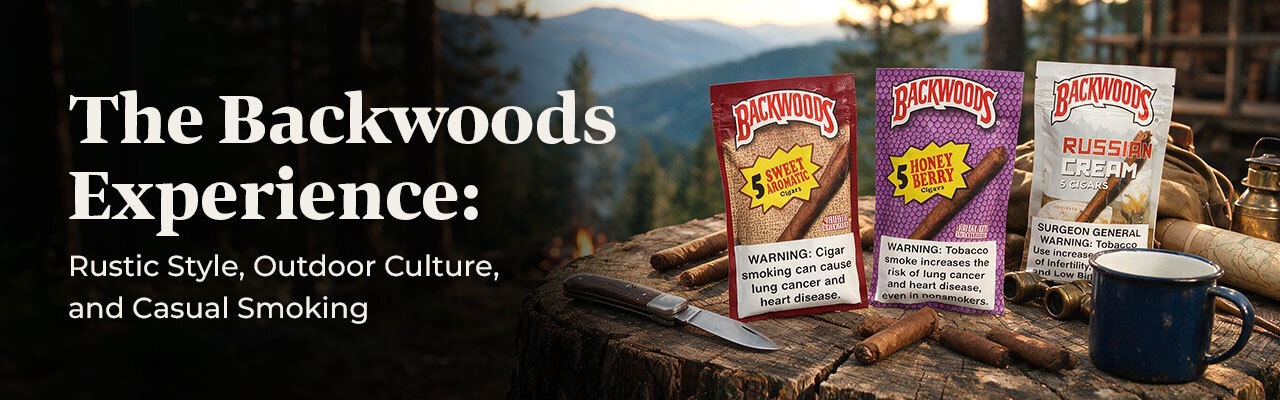
The frayed edges and rustic look of a Backwoods cigar aren't manufacturing flaws; they're the signature of a brand that redefined the modern smoking experience. Since 1973, Backwoods Cigars have bridged the gap between rugged outdoor traditions and the pulse of Urban Lifestyle. Whether you see them in the hands of a pioneer or as a staple of Hip-Hop Culture, these Natural Leaf Cigars represent a unique intersection of Cigar Culture and Pop Culture that few other Cigarillos can match. Embracing Rustic Cigars is about more than just a quick smoke. It's about participating in a specific backwoods cigar lifestyle culture that prioritizes a "Wild & Mild" profile.
You likely appreciate the convenience and flavor variety of these cigars, but finding a fresh pack that hasn't gone stale at a local shop is often difficult. It's frustrating to settle for a dry, brittle wrapper. You deserve that signature soft and aromatic experience every time you light up.
This guide will help you identify the best flavor profiles for your specific palate. We'll provide technical tips for proper storage to ensure every pack stays fresh. You'll also learn the history behind the brand's rise to icon status and why its unique construction continues to dominate the market.
Key Takeaways
- Trace the brand's evolution from its 1973 launch as a rugged outdoor smoke to its current status as a global icon of casual sophistication.
- Understand the cultural significance of Backwoods Cigars, Cigar Culture, Urban Lifestyle, Hip-Hop Culture, Natural Leaf Cigars, Cigarillos, Pop Culture, Rustic Cigars, and the broader backwoods cigar lifestyle culture.
- Learn why the 12-month aging process of Connecticut Broadleaf tobacco is the technical secret behind the signature dark color and "Wild & Mild" profile.
- Identify the distinct tasting notes of market leaders like Honey Berry and Russian Cream to find a flavor profile that matches your preferences.
- Discover why foil pouch packaging is essential for moisture retention and how sourcing from high-volume retailers like Gotham Cigars ensures you receive fresh inventory.
The History and Evolution of Backwoods Cigars
The story of Backwoods Cigars begins with a strategic pivot during a period of shifting tobacco regulation. In 1973, the Consolidated Cigar Corporation introduced the brand as a direct response to the Public Health Cigarette Smoking Act of 1970, which had banned cigarette advertisements from broadcast television and radio. Because the law targeted cigarettes specifically, small cigars and cigarillos remained eligible for broadcast marketing. Consolidated Cigar Corporation capitalized on this distinction, building a massive visual identity through TV commercials that emphasized a rugged, outdoorsy lifestyle to reach smokers looking for all-tobacco alternatives.
The 1970s Launch and Market Positioning
The initial marketing strategy leaned heavily into a "Wild & Mild" persona aimed at hikers, fishermen, and outdoorsmen. During a decade when consumers grew increasingly wary of chemical additives in mass-produced cigarettes, the brand’s focus on all-natural components was revolutionary. These were not standard, uniform tubes. Their distinctive frayed ends, unfinished caps, and tapered bodies suggested a hand-rolled quality that felt authentic. This rustic appearance challenged the polished image of premium cigars while offering far more character than budget-friendly paper-wrapped options.
Packaging Innovation: The Hermetic Foil Pouch
Beyond its aesthetic appeal, the brand achieved long-term retail success through a major packaging innovation: the hermetically sealed foil pouch. Before this development, machine-rolled cigars made with natural leaf wrappers required humidor storage to keep the leaf from drying out and cracking. The airtight foil pouch locked in moisture directly at the factory, allowing natural leaf cigars to sit on convenience store and gas station shelves for months without losing their pliability or flavor. This packaging solution made authentic tobacco wrappers accessible to mass-market consumers everywhere.
National Expansion and Urban Transition
By 1981, Backwoods achieved nationwide distribution across the United States. The brand's reliability hinged on a strict 12-month aging process for its Connecticut Broadleaf wrappers, ensuring a consistent burn and flavor profile from pack to pack. This predictability turned casual trial users into loyal daily smokers.
During the late 1980s and 1990s, the product transitioned from rural trails into metropolitan markets. Urban smokers valued the genuine broadleaf wrapper, which burned significantly slower and tasted richer than the homogenized tobacco leaf (HTL) paper used by main street competitors. (Though corporate mergers later brought the brand under the Altadis U.S.A. banner in 1999, its early foundational identity was already firmly established.) This shift set the stage for Backwoods to evolve from a niche outdoorsman’s smoke into an enduring staple of modern popular culture.
Natural Leaf Construction and the Wild & Mild Aesthetic
The visual appeal of a Backwood is entirely intentional. While most machine-made cigarillos aim for perfect symmetry and smooth, paper-like surfaces, these prioritize a rugged, unpolished look. This aesthetic relies on a 100% natural Connecticut Broadleaf wrapper wrapped around an all-tobacco core. Unlike competitors that use Homogenized Tobacco Leaf (HTL)—a paper-like sheet made from ground tobacco scraps and chemical binders—a single intact tobacco leaf wraps each cigar, offering a texture, weight, and aroma that closely mimics a classic hand-rolled product.
The Connecticut Broadleaf Wrapper and Natural Imperfections
Connecticut Broadleaf is a sun-grown tobacco variety. Direct sunlight exposure causes the plant to produce thick, hearty leaves rich in natural oils. Following harvest, the wrapper undergoes a 12-month aging process, allowing the leaf to darken naturally to a deep, rich brown without artificial dyes or flavor-masking sprays.
Because it uses an intact natural leaf rather than processed HTL sheet paper, organic variance is part of the package. Consumers frequently encounter thick leaf veins and pronounced stems running along the wrapper. While these heavy stems reinforce the cigar's raw, authentic origin, they represent a double-edged sword: they can occasionally create a friction point for smokers, making the wrapper stiffer to manage or causing minor burn irregularities if a thick vein runs through the foot.
The Internal Short-Filler Blend
While the wrapper gets most of the attention, the interior construction dictates how the cigar burns. Inside the broadleaf wrapper sits a short-filler core composed primarily of a Caribbean Basin Cuban-seed tobacco blend. This short-filler recipe provides a balanced structural backbone, ensuring consistent airflow and steady combustion throughout the smoke despite the irregular shape of the outer leaf.
"Wild & Mild" vs. True Nicotine Strength
The brand’s famous "Wild & Mild" slogan refers to the smooth, naturally sweet flavor profile imparted by the aged broadleaf and casing. However, new smokers are often surprised by its actual strength. The combination of a heavy natural broadleaf wrapper and a rich Caribbean short-filler blend delivers a noticeably higher nicotine hit and a stronger throat feel than homogenized paper competitors like Swisher Sweets or White Owl. The smoke carries substantial body and punch beneath its mild, aromatic notes.
The Functional Purpose of the Frayed End and Taper
The frayed end and unfinished head serve both aesthetic and practical purposes:
- Visual Identity: The frayed foot reinforces the "homestyle" look that sets the brand apart from sleek, mass-produced cigarillos.
- Effortless Lighting: Functionally, the open, untrimmed frayed end makes the cigar far easier to light. Because the filler isn't tightly bound or capped at the foot, heat spreads evenly across the tobacco on the very first draw.
- Consistent Airflow: The tapered body maintains a steady, predictable draw from start to finish, balancing machine-made efficiency with a rustic, hand-rolled feel.
Backwoods in Urban Culture and Hip-Hop
The brand's identity underwent a massive transformation as it moved from the rural trails of the 1970s into metropolitan communities during the 1990s. Hip-hop culture became the primary catalyst for this shift, turning a mass-market cigarillo into an enduring symbol of street authenticity, ritual, and craftsmanship.
The Cannabis Connection: The Art of the Natural Leaf Blunt
While early corporate marketing targeted outdoorsmen, the brand’s explosive popularity in urban markets was driven primarily by cannabis culture. Smokers discovered that the intact Connecticut Broadleaf wrapper offered distinct advantages over traditional rolling papers and paper-based HTL (homogenized tobacco leaf) cigars like Swisher Sweets or Dutch Masters.
The ritual involves unrolling the broadleaf, discarding the internal short-filler tobacco (commonly referred to as "guts"), and re-rolling the intact outer leaf around cannabis. Because the wrapper is a thick, 100% natural leaf, it burns significantly slower, handles larger quantities of flower, and produces a richer flavor profile. Learning to unravel and re-roll a delicate natural leaf without tearing it requires patience and skill, turning rolling into a respected craft within the community.
Regional Pioneers: From Bay Area "Guts and Wraps" to Global Media
The media narrative often highlights modern rap icons like Drake, Travis Scott, or Wiz Khalifa referencing the brand in lyrics and music videos. However, the foundational adoption began decades earlier through West Coast and Southern hip-hop pioneers.
In the 1990s and early 2000s, Northern California’s San Francisco Bay Area—championed by cultural figures like Mac Dre—played a massive role in embedding "guts and wraps" into the broader hip-hop lexicon. West Coast and Southern rap communities embraced the dark leaf for its heavy smoke and unrefined aesthetic long before it became a mainstay in mainstream pop culture. What started as a grassroots preference in regional hip-hop hubs eventually scaled into a global lifestyle accessory seen throughout modern music, fashion, and social media.
State Flavor Bans and the Secondary Market
This high visibility in youth and urban cultures has made the brand a primary target for regulatory bodies. Beyond federal FDA oversight on flavored tobacco products, state and local legislation has drastically altered the retail landscape.
A major turning point occurred with California’s 2022 statewide ban on flavored tobacco products. As the largest single market for natural leaf cigars, California’s restriction on popular options like Honey Berry and Russian Cream severely disrupted supply chains. Rather than killing demand, these regulatory bans created a thriving secondary market. Enthusiasts routinely source limited-edition or banned flavors from out-of-state retailers, online distributors, or grey-market channels, proving the deep community loyalty behind the brand’s flavored lineup.
A Guide to Popular Backwoods Flavors
Flavored tobacco products account for over half of convenience store cigar sales, highlighting strong consumer demand for aromatic profiles. Backwoods has capitalized on this by pairing its earthy Connecticut Broadleaf wrapper with distinct flavor casings. Rather than completely masking the tobacco, these casings complement the rich, natural broadleaf base.
The Core Lineup: Staples and Classics
While individual retail availability varies, the primary portfolio features a wide spectrum of sweet, dark, and traditional flavor profiles:
- Original (Wild & Mild): The benchmark unflavored option. It relies entirely on the natural sweetness, earthiness, and richness of the 12-month aged Connecticut Broadleaf wrapper and Caribbean short-filler blend.
- Honey Berry: Long regarded as a top seller. It combines sweet, fruit-forward berry aromas with a subtle honey finish that balances the dark wrapper.
- Honey: A distinct staple separate from Honey Berry or Honey Bourbon. It delivers a straightforward, smooth honey sweetness without fruit or liquor accents.
- Sweet Aromatic: A traditional favorite offering mild sweetness and a pleasant, pipe-tobacco-like room note without overpowering the underlying leaf.
- Russian Cream: A smooth, dessert-inspired blend featuring notes of coffee, sweet cream, and dark spirits. It remains a major favorite among smokers seeking a creamy finish.
- Black Russian: A darker, richer variation of the cream profile, blending coffee and subtle cocoa notes for a bolder aroma.
- Honey Bourbon: Infused with warm whiskey notes and oaky sweetness, catering to smokers who enjoy spirit-inspired pairings.
- Dark Stout: Inspired by dark beers, offering roasted malt, chocolate, and dark coffee undertones that integrate cleanly with the broadleaf wrapper.
- Port & Grape: Traditional fruit and wine-infused profiles that built early brand loyalty prior to the rise of dessert-inspired blends.
Cult Favorites, Limited Drops, and "Hype" Culture
In addition to its standard offerings, the brand utilizes high-demand, low-supply marketing similar to streetwear drops. These limited releases generate intense secondary-market interest when stock arrives at retailers:
- Banana / Bananas Foster: One of the most famous cult flavors in the brand's history. After initial discontinuation, high resale demand prompted periodic limited re-releases, making fresh packs highly sought-after.
- Vanilla & Caribe: Rare or regional drops that deliver smooth, natural vanilla notes, often requiring online sourcing due to limited physical distribution.
- Wild Rum & Rum Cake: Spirit-infused seasonal releases featuring sweet sugarcane and spiced oak notes.
- Select & City Packs: Special regional releases—such as Select Guatemala, Select Honduras, or city-branded drops like Atlanta Southern Sweet Tea and Chicago Sweet Summertime—tailored to specific regional markets or distinct leaf origins.
Maintaining Freshness and Buying Backwoods Online
The integrity of a natural broadleaf wrapper depends entirely on its moisture content. Unlike cigars wrapped in paper or homogenized tobacco leaf (HTL), natural leaf cigars rely on native essential oils to remain pliable, aromatic, and easy to roll. When these oils evaporate, the leaf becomes brittle, cracking easily and burning hot and harsh. The airtight foil pouch acts as the primary defense line, locking in factory moisture until you are ready to smoke.
The "Pouch Test": How to Spot Fresh Stock
Whether buying at a local store or receiving an online shipment, you can instantly check tobacco freshness before opening the package by performing the "Pouch Test":
- Pliable & Cushioning: Gently squeeze the sealed foil pouch between your fingers. Fresh cigars will yield easily, feeling pillow-soft and springy without cracking under mild pressure.
- Rigid or Crackly: If the pouch feels hard, stiff, or produces a crunching sound when pressed, the air seal has failed or the product has sat too long, causing the leaf to dry out.
Relative Humidity (RH) Targets: Avoiding the Soggy Leaf Trap
For enthusiasts storing open packs or buying in bulk, target metrics are essential. Natural broadleaf cigars perform best when kept within a 65% to 72% Relative Humidity (RH) range.
- The Over-Humidification Risk: Because Connecticut Broadleaf is thick and absorbent, over-humidifying is just as damaging as drying it out. Storing broadleaf above 72% RH causes the leaf to absorb excess water, making it soggy, difficult to light, and prone to tight, clogged draws or mold growth.
- Home Storage Tip: If a pack is open for more than 48 hours, store the cigars in an airtight container or sealable bag with a 65% or 69% 2-way humidity pack. Avoid storing packs in hot cars or direct sunlight, as high heat degrades the aromatic flavor casings.
Strategic Sourcing and Inventory Turnover
Because natural leaf products degrade over time, sourcing from high-volume distributors like Gotham Cigars provides a distinct quality advantage. High inventory turnover ensures packs don't sit on warehouse shelves for months at a time. Furthermore, purchasing full 8-pack or 24-pack boxes rather than individual pouches protects the product inside secondary packaging and offers better value for regular smokers. Climate-controlled warehousing ensures that every pack arrives with its broadleaf wrappers soft, oily, and ready to smoke.
Elevate Your Smoking Experience
The transition of Backwoods from a 1970s outdoorsman’s niche to a global icon proves that authentic natural leaf construction will always hold a dedicated audience. However, getting the absolute best session out of a natural broadleaf wrapper requires a little bit of technique and preparation.
Practical Tips for Unraveling and Leaf Prep
Because broadleaf wrappers are 100% natural, they feature organic variations, thick veins, and delicate seams. Mastering a few prep techniques ensures a smooth, tear-free roll every time:
- Find the Seam at the Head: Never force open the broadleaf from the frayed foot. Instead, locate the tightly wound seam near the mouthpiece (the head). Gently peel back the edge and unravel the leaf spiraling downward toward the foot.
- Managing Thick Stems and Veins: Heavy stem veins are common in natural broadleaf tobacco and can cause uneven burns or tears. Use a razor blade or sharp utility knife to carefully pare down thick stems flush with the leaf surface, or press dry stems flat with a smooth lighter before rolling.
- Moisture Adjustment: If the leaf feels slightly dry or brittle along the seam during prep, apply a light, even dab of moisture along the inner side to restore pliability before wrapping.
Recommended Beverage Pairings
The rich, earthy profile of aged Connecticut Broadleaf tobacco pairs exceptionally well with drinks that match its natural sweetness and roasted notes:
- Dark Spirits: Aged bourbon, dark rum, and rye whiskey complement the sweet oak and vanilla casing notes found in varieties like Honey Bourbon, Original, and Honey Berry.
- Coffee & Espresso: Double espresso, cold brew, or dark roast black coffee highlights the cocoa and sweet cream undertones in Russian Cream, Black Russian, and Sweet Aromatic.
- Craft Beers: Imperial stouts, porters, and milk stouts provide a heavy, dark malt backbone that blends seamlessly with the natural tobacco character of Dark Stout and Original.
Sourcing Freshness
Whether you appreciate the broadleaf leaf for its rustic character or use it as a prized wrap, starting with fresh inventory is half the battle. Sourcing through authorized Altadis U.S.A. retailers like Gotham Cigars ensures your packs are stored in professional, climate-controlled environments—protecting the native oils and pliability of every wrapper from the facility to your door.
Frequently Asked Questions
Are Backwoods cigars made with real tobacco leaves?
Yes, every Backwoods cigar uses a 100% natural Connecticut Broadleaf wrapper. Unlike many budget-friendly options that use homogenized tobacco leaf, these utilize an intact leaf aged for 12 months. This construction provides the authentic texture and earthy flavor profile that defines the brand. It's a hallmark of high-quality Natural Leaf Cigars in the modern market.
Why do Backwoods cigars look frayed and unfinished?
The frayed ends and unfinished heads are intentional design elements meant to project a rugged, "homestyle" aesthetic. This look was originally developed in 1973 to appeal to outdoorsmen and hikers. Functionally, the frayed foot makes the cigar easier to light by allowing heat to distribute evenly across the filler from the start. This design ensures a consistent draw despite the irregular exterior.
What is the most popular Backwoods flavor in the United States?
Honey Berry is currently the most popular flavor in the United States. Its sweet, fruit-forward profile has made it a staple in Pop Culture and a frequent reference in music. Other high-performing varieties include Russian Cream and Sweet Aromatic, which cater to the 51% of convenience store shoppers who prefer flavored cigar products over traditional tobacco tastes.
Do I need a humidor to store Backwoods cigars?
You don't strictly need a humidor for these cigars as long as the original foil pouch remains sealed. The airtight foil is designed specifically for moisture retention to keep the natural leaf pliable and soft. If you open a pack and don't finish it, move the remaining cigars to a resealable plastic bag or airtight container to prevent the tobacco from becoming brittle.
How long do Backwoods stay fresh in the pouch?
Unopened Backwoods typically stay fresh for several months thanks to the protective foil packaging. Once you break the seal, the cigars will begin to lose moisture within 24 to 48 hours depending on your local climate. Buying from high-volume retailers like Gotham Cigars ensures you receive inventory that hasn't sat on a shelf long enough for the seal to degrade or the oils to dry out.
What is the difference between Backwoods and other cigarillos?
The primary difference lies in the wrapper construction. Most standard Cigarillos use homogenized tobacco leaf, which is a processed paper-like product made from tobacco scraps and binders. Backwoods uses a whole, sun-grown leaf that provides a slower burn and a more complex flavor. This distinction is central to the backwoods cigar lifestyle culture that prioritizes organic materials over mass-produced uniformity.
Why are Backwoods so popular in hip-hop culture?
Their popularity in Hip-Hop Culture stems from their rugged, "raw" look and the superior quality of the natural leaf. Artists in the 1990s adopted the brand as a status symbol of street-level authenticity. The durability of the leaf also makes it a preferred choice for the ritual of rolling, which remains a significant social aspect of the modern Urban Lifestyle.
Are Backwoods cigars hand-rolled or machine-made?
Backwoods cigars are machine-made, though they are engineered to look hand-rolled. This manufacturing process allows for massive production scales while maintaining the signature tapered body and frayed end. By using machines, the brand can offer a consistent draw and flavor profile across millions of units while keeping the price accessible for casual smokers who appreciate a rustic aesthetic.
Related Content:
- Why Backwoods Cigars Look Different From Traditional Cigars
- Backwoods and Outdoor Smoking Culture: Travel, Camping, and Social Moments
- Casual vs Formal Smoking: Where Backwoods Fits in the Cigar World
- Understanding the Rough-Cut Format and Natural Leaf Style
- Quick Break vs Long Session: How Backwoods Fits Different Smoking Moments
- Pairing a Rustic Cigar With Coffee, Beer, or Outdoor Settings
- Do Rustic-Style Cigars Need a Humidor? What to Know
- The Story Behind Backwoods and Its Outdoor Identity
- Backwoods vs Traditional Cigars: What Makes the Smoking Experience Different
- Rough-Cut vs Smooth-Wrapped Cigars: Understanding the Backwoods Style
- Casual Outdoor Smoke vs Lounge Cigar Experience: Where Backwoods Fits
- Quick Break vs Long Session: Choosing the Right Rustic Cigar Moment
- Natural Leaf Appearance vs Traditional Uniform Cigars: What Changes in the Feel
- Backwoods FAQ: Expectations, Storage, and First Impressions
Recent Posts
-

Holiday Gift Guide for Cigar Lovers: Gifts for Every Type of Enthusiast
Finding the right holiday gift for a cigar lover doesn't have to mean choosing the most expensive b …13th Nov 2026 -

Cigar Review | Avo Cigars No.2 Cigar is One of the Best
I'm not a cigar expert, but I know when I get my hands on something good, and this weekend I defini …11th Nov 2026 -
Top Five Avo Cigars and a History of Avo
"I have always loved beautiful music. Then I found the cigar. A good cigar is like music. Now I hav …6th Nov 2026