
The Story Behind Backwoods and Its Outdoor Identity
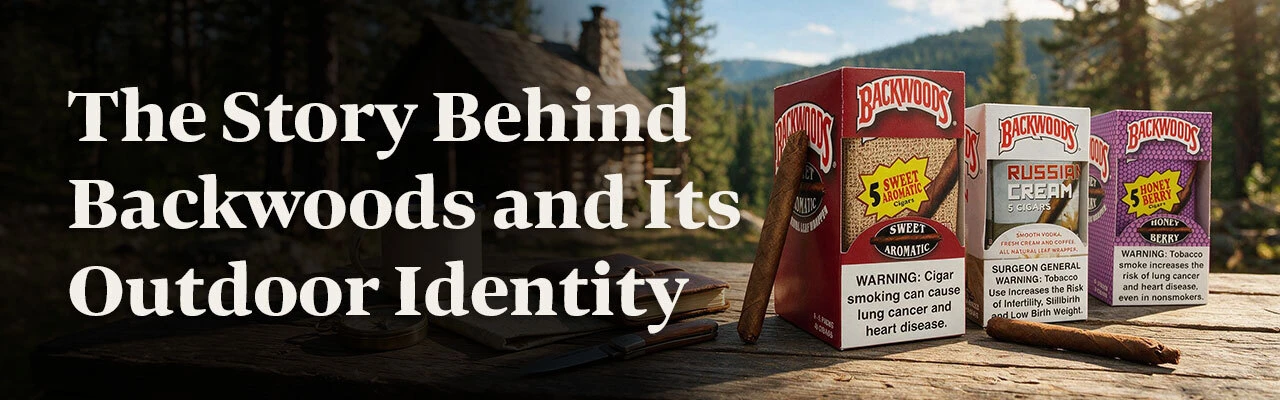
Backwoods succeeded by intentionally embracing imperfection in an industry obsessed with uniformity. You likely recognize the frayed ends and tapered bodies of these rustic cigars as a hallmark of outdoor authenticity. Since their 1973 debut, they have stood apart from mass market cigars that rely on homogenized tobacco scraps. This backwoods cigar history overview reveals how a brand built on a Wild 'N Mild persona became a global icon for natural leaf cigars.
It is common to confuse these with cheaper alternatives, but the brand origin is rooted in a deep commitment to tobacco heritage. You will discover how the brand evolution transformed a tactical response to 1970s advertising bans into a massive cultural phenomenon. We provide specific details on their unique construction and flavor evolution to help you identify the best profile for your palate.
At Gotham Cigars, we know that freshness is a major concern when purchasing Backwoods Cigars online. Operating since 2001, we utilize a large climate-controlled warehouse to ensure every Connecticut Broadleaf wrapper maintains its moisture and integrity. Learn the full cigar history and why this brand remains a reliable staple for enthusiasts who value a rugged, honest smoke.
Key Takeaways
- Trace the brand evolution from its 1973 debut to its current status as a global leader in natural leaf cigars by reviewing this comprehensive backwoods cigar history overview.
- Distinguish the technical construction of Backwoods, which uses a 100% natural leaf wrapper instead of the homogenized tobacco leaf (HTL) found in typical mass market cigars.
- Learn how the signature frayed ends and tapered bodies were intentionally designed to appeal to smokers seeking a rugged, outdoor identity.
- Explore the flavor history of the brand, including how the "Wild 'N Mild" slogan defined their early success and paved the way for modern infusions like Honey Berry and Russian Cream.
- Understand why climate-controlled storage is essential for preserving the moisture and quality of these all-natural tobacco products.
The Origins of Backwoods Cigars: From 1973 to National Icon
Backwoods cigars officially entered regional test markets in 1973, created and launched by the Consolidated Cigar Corporation. This release was a strategic response to the Public Health Cigarette Smoking Act of 1970, which banned cigarette advertising on television and radio while leaving "small cigars" exempt. By positioning the new product as a rugged, natural alternative to standard cigarettes, Consolidated Cigar successfully navigated these marketing restrictions to reach a massive audience. They didn't just sell tobacco; they established a brand identity rooted in authenticity and unrefined appeal.
The early marketing revolved around the iconic "Wild 'N Mild" slogan. This positioning directly addressed consumer demand for a smoke that looked untamed yet delivered a smooth taste on the palate. Early promotional campaigns relied heavily on outdoorsmen, hikers, and hunters, cementing the brand's association with a rustic, adventurous lifestyle.
The Vision for Rustic Smokes & Strategic Testing (1973–1981)
Before Backwoods, the market was split between expensive hand-rolled cigars and uniform, paper-wrapped machine-made options. Consolidated Cigar Corporation identified a clear gap for an accessible product that carried the visual character of a handcrafted cigar. They achieved this by utilizing a 100% all-natural Connecticut Broadleaf wrapper, intentionally leaving the head frayed and the body tapered to mimic a classic, rustic cheroot.
Though introduced in 1973, Backwoods was not an overnight nationwide release. Between 1973 and 1981, Consolidated Cigar kept the product in limited regional test markets. This eight-year incubation period allowed the company to refine its manufacturing processes, stabilize natural leaf supply chains, and fine-tune its marketing strategy before committing to full-scale national distribution.
The 1981 National Expansion
The official 1981 commercial rollout transformed Backwoods from a regional success into an American staple. Consumers across the country were drawn to the tapered body, unfinished head, and deliberate asymmetry, which stood out sharply against the perfectly straight, uniform lines of competing machine-made cigars.
Several key innovations propelled this rollout:
- Packaging Innovation: The introduction of foil pouches locked in moisture, ensuring product freshness across long-distance distribution networks.
- Distinct Visual Identity: The frayed "wild" end became instant visual shorthand for an unrefined, natural smoke.
- Supply Chain Stability: Long-term sourcing strategies for Connecticut Broadleaf wrappers allowed the brand to maintain quality and withstand market fluctuations throughout the 1980s.
The Cultural Pivot: From Outdoorsmen to Urban Icon
While outdoorsmen drove early adoption, the brand underwent a fundamental evolution starting in the late 1990s and 2000s. During this era—around the time Consolidated Cigar was integrated into the newly formed Altadis USA in 1999—Backwoods experienced a major cultural shift.
Urban communities and hip-hop culture embraced Backwoods for its heavy natural leaf wrapper, aroma, and versatility. This organic adoption eclipsed the original "mountain man" demographic, establishing Backwoods as a prominent fixture in popular music, street style, and modern lifestyle culture. What began as a tactical regulatory workaround in 1973 ultimately evolved into an enduring cultural icon through a combination of intentional rustic design and authentic grassroots appeal.
Anatomy of a Legend: The Natural Leaf Difference
Most mass-market cigars emerge from a factory line looking uniformly machine-stamped. Backwoods takes the opposite approach, embracing a raw, frayed, and asymmetrical aesthetic that serves as a deliberate nod to rustic tobacco heritage. This unrefined construction is the primary reason the brand continues to dominate the natural leaf cigar category.
Natural Leaf vs. Homogenized Tobacco (HTL)
The core distinction between Backwoods and competing convenience-store cigars lies in the wrapper material:
- Homogenized Tobacco Leaf (HTL): Many mass-market brands wrap cigars in HTL—a reconstituted slurry of pulverized tobacco scraps, cellulose, and chemical binders rolled into synthetic sheets like paper. While easy to machine-process, HTL burns hot, lacks flavor complexity, and turns brittle when exposed to air.
- All-Natural Broadleaf: Backwoods rejects HTL in favor of a whole-leaf, dark Connecticut Broadleaf wrapper. Containing natural plant oils and leaf veins, this wrapper delivers deep earthy notes, natural sweetness, and a touch of spice that synthetic sheets cannot match.
Beyond flavor, the choice of authentic broadleaf provides critical structural elasticity and pliability. Unlike rigid HTL, the natural broadleaf wrapper retains substantial durability and moisture. Smokers can unroll, re-moisten, or manipulate the wrapper without causing the structural tears or splitting common with paper-bound alternatives.
Internal Blend and Physical Specifications
While the dark wrapper defines its appearance, the interior construction dictates the smoke profile:
- Dimensions & Specs: A standard Backwoods cigar measures 4.125 inches (105 mm) in length with a variable 27 to 32 ring gauge. This compact footprint is engineered specifically for an accessible 15–20 minute smoke time.
- Filler Tobacco: Beneath the wrapper, Backwoods utilizes a short-fill blend of aged Caribbean and Central American tobaccos. This filler is aged to maintain a mild, smooth draw that tempers the richer, heavier notes of the outer Connecticut Broadleaf wrapper.
Functional Design: The Frayed End and Tapered Body
The frayed foot and unfinished head mirror 19th-century "cheroot" style cigars, which were hand-rolled quickly by outdoorsmen for practical daily use. However, these features also deliver functional smoking benefits:
- Flavor Concentration: The tapered head compresses smoke as it reaches the palate, intensifying flavor delivery with every puff.
- Controlled Draw: The slight taper generates ideal draw resistance, promoting a slower, cooler burn despite the cigar's compact size.
- Individual Character: Because real broadleaf tobacco varies naturally, no two cigars feature the exact same frayed layout, emphasizing the "all-natural" identity.
Packaging Configurations and Market Accessibility
Maintaining broadleaf freshness across global retail channels requires precise packaging. Backwoods relies on moisture-locking foil pouches that preserve essential tobacco oils during storage and shipping.
To cater to diverse consumer buying habits and price points, these pouches are distributed in several core packaging configurations:
- Singles: Convenient individual packs for immediate use.
- 3-Packs & 5-Packs: Standard portable multi-packs preferred by everyday consumers.
- 8-Packs & Retail Boxes: Larger bundle formats designed for regular consumers and high-volume sales.
By balancing rustic visual charm, flexible broadleaf construction, precise filler aging, and strict compliance with modern FDA labeling regulations, Backwoods maintains its status as an enduring benchmark in mass-market natural tobacco.
The Evolution of Flavors: From Original to Russian Cream
Backwoods did not just modernize the cigar aesthetic; the brand fundamentally redefined the flavor expectations of mass-market smokers. While the shaggy, unrefined appearance delivered the "Wild" half of their famous slogan, the "Mild" aspect referred to smooth, aromatic flavor infusions. This balance was revolutionary in the 1970s and 1980s, creating a bridge for enthusiasts who found traditional tobacco too harsh or monochromatic.
The Core Classics
The foundation of the Backwoods portfolio relies on timeless profiles built around Connecticut Broadleaf tobacco:
- Original: The purist profile showcasing unflavored, earthy, and woody notes from natural tobacco leaf.
- Sweet Aromatic: Designed for a gentle, smooth draw with subtle vanilla undertones that soften natural tobacco bitterness.
- Honey & Honey Berry: Signature bestsellers blending rich golden honey sweetness with tart fruit undertones.
- Honey Bourbon: A boozy, oak-infused spin on classic honey tobacco, appealing to adult beverage pairings.
Cult Favorites, Discontinued Gems, and Special Batches
Beyond its standard lineup, Backwoods established brand fanaticism through limited regional runs, seasonal drops, and premium trial batches. Historic releases like Grape, Vanilla, Wild Rum, and Port gained cult followings long after leaving retail shelves.
To cater to discerning palates, the brand also introduced small-run iterations like the Select and Special Batch lines. These releases utilized elevated aging periods and distinct leaf selections, cementing the brand's reputation among collectors.
The 2016–2020 Hype Wave: Convenience Cigar as a Collectible
Between 2016 and 2020, Backwoods experienced a massive resurgence driven by viral releases that turned everyday pouch cigars into sought-after commodities:
- Russian Cream (2016): Delivering a velvety profile of sweet coffee liqueur and custard, Russian Cream altered mass-market tobacco trends and sparked widespread demand for dessert-inspired smokes.
- Banana (2020): Released in limited supply runs, the Banana flavor triggered intense secondary-market resale, social media speculation, and sweeping nationwide store shortages.
This era proved that consumers viewed new Backwoods flavor drops with the same enthusiasm typically reserved for limited sneaker drops or premium boutique cigars. Modern releases like Dark Stout (roasted cocoa and coffee) and Cognac XO continue to build on this trend.
Global Flavor Regulations and Rebranding
International health regulations—most notably European Union directives banning characterising flavors in tobacco—forced Backwoods to adapt its global strategy:
- Color & Concept Names: In European and select overseas markets, explicit flavor names were replaced with abstract color or destination designations. Vanilla became Blue, Honey Berry became Purple, Rum became Caribe, and Original was styled as Authentic.
- Regional Compliance Ranges: In response to state-level flavor restrictions (such as California’s flavored tobacco ban), the brand launched concept-named lines like the California Range to maintain market presence while navigating complex legal frameworks.
By pairing flexible global marketing with high-demand flavor innovations, Backwoods has sustained its status as both a convenience store staple and an international cultural phenomenon.
Market Impact: How Backwoods Redefined Mass-Market Cigars
Before Backwoods disrupted the category, convenience store tobacco shelves were dominated almost exclusively by uniform, paper-wrapped, homogenized tobacco leaf (HTL) cigars. By introducing a rustic, all-natural Connecticut Broadleaf product to mass retail, Backwoods proved that adult smokers valued authenticity and flavor over factory symmetry. This pivot redefined expectations across the industry, moving the mass-market conversation away from mere tobacco delivery toward an appreciation for genuine tobacco heritage.
The "Leaf War": Competitor Responses
The overwhelming commercial success of Backwoods forced legacy mass-market manufacturers to rethink their product lines. As consumers increasingly demanded natural broadleaf wraps over synthetic HTL paper, major competitors launched direct clones to capture a piece of the rustic market segment:
- Swisher Sweets Leaf: Swisher’s entry into rough-cut, natural leaf cigars.
- Game Leaf: Developed by Garcia y Vega to counter Backwoods' dominance in flavored broadleaf options.
- Dutch Masters Leaf & White Owl Leaf: Additional natural-leaf expansions by dominant convenience store brands.
This industry-wide shift—often dubbed the "Leaf War"—solidified Backwoods as the originator and benchmark of an entirely new mass-market category.
The Foil Pouch Innovation
Natural tobacco leaves are highly sensitive to humidity fluctuations. Without proper moisture control, the oils dry out and the leaf becomes brittle. Backwoods solved this logistical hurdle through the introduction of the moisture-locking foil pouch.
This airtight packaging created a portable, humidor-like environment, ensuring that cigars remained fresh from factory shipping to point-of-sale display. The pouch format allowed smokers, outdoorsmen, and travelers to take natural leaf cigars anywhere without worrying about storage degradation, transforming how tobacco products were merchandised and sold across retail outlets.
Hip-Hop Cosigns and Pop Culture Elevation
While early 1970s marketing targeted outdoor enthusiasts, the brand’s secondary—and far larger—cultural explosion was driven by organic adoption within urban communities and hip-hop culture.
Pioneering Bay Area artists like Mac Dre and West Coast icons like B-Real of Cypress Hill were early adopters who brought Backwoods into rap vocabulary. Over time, references from modern megastars including Drake, Travis Scott, and Wiz Khalifa turned the rustic pouch into a prominent fixture in music videos, lyrics, and street fashion. This organic endorsement elevated a humble convenience-store cigar into a luxury-adjacent lifestyle symbol among youth and music culture.
The Resale Gray Market
The combination of intense brand loyalty, localized distribution, and hype-driven limited releases gave birth to an unprecedented phenomenon in mass-market tobacco: a secondary resale market.
When high-demand flavors like Banana or rare overseas imports (such as Vanilla or Caribe) were released in limited quantities, acute store shortages quickly followed. Enthusiasts and collectors turned to online marketplaces and social media gray markets, where individual 5-packs regularly resold for $20 to $50+—a markup of up to 1,000% over retail price. This secondary economy highlighted a level of brand fanaticism rarely seen outside of limited sneaker drops or boutique cigars.
By refusing to alter its rough-cut visual identity while embracing flavor innovation and organic cultural momentum, Backwoods proved that authentic imperfection remains one of the most powerful brand assets in modern retail history.
Sourcing Quality Backwoods: The Gotham Cigars Advantage
Understanding Backwoods history and tobacco heritage is essential for any fan of the brand. However, its evolution into a global cultural phenomenon means supply chains are longer and more complex than ever. Freshness is the single most critical factor when purchasing natural leaf cigars. Unlike machine-made brands that rely on homogenized tobacco leaf (HTL), rustic cigars depend on preserved moisture to keep their Connecticut Broadleaf wrappers pliable and their signature flavors intact.
Since 2001, Gotham Cigars has operated as a direct e-commerce destination for enthusiasts seeking factory-fresh inventory. By bypassing the uncertain shelf life of local convenience stores, direct online distribution preserves the integrity of every stick from warehouse to door.
Warehouse Standards for Natural Leaf Integrity
The Connecticut Broadleaf wrapper used on every Backwoods is an organic, breathing leaf highly sensitive to environmental shifts. Dry conditions render broadleaf tobacco brittle and prone to cracking, while excess humidity degrades aromatic oils or introduces mold risks.
To preserve wrapper pliability and flavor potency, inventory is stored under strict 70/70 conditions—a constant 70 degrees Fahrenheit and 70% relative humidity within a specialized climate-controlled facility. Fulfillment teams perform visual checks during picking to inspect leaf color, moisture level, and pouch integrity, preventing dry or compromised packs from shipping.
Counterfeit Awareness and Regulatory Compliance
The hype surrounding rare Backwoods drops—such as Banana, Russian Cream, and imported regional editions—has led to an influx of counterfeit packaging, knockoff pouches, and dried-out grey-market inventory across third-party marketplaces. Buying through authorized distributors eliminates these risks by guaranteeing direct-from-manufacturer authenticity.
Selling and shipping tobacco online also requires navigating a strict legal landscape:
- PACT Act & Age Verification: Remote tobacco transactions must comply with federal guidelines under the Prevent All Cigarette Trafficking (PACT) Act. Compliant online distributors utilize third-party database checks to enforce federal Tobacco 21 age verification before orders are processed.
- State OTP Excise Taxes: Online distributors manage state-by-state Other Tobacco Products (OTP) excise tax collection and licensing requirements, ensuring transactions fully satisfy local tax jurisdiction laws.
Practical Home Care & Broadleaf Rehydration Tips
While commercial packaging locks in moisture, natural broadleaf cigars benefit from simple maintenance once opened at home:
- Two-Way Humidity Packs: If storing loose sticks out of their original pouch, keep them in an airtight container or humidor bag with a 65% to 69% two-way humidity pack (such as Boveda).
- Resealing Pouches: Always press excess air out of the foil pouch before resealing to protect remaining sticks from environmental exposure.
- Gentle Rehydration: If a broadleaf wrapper feels stiff or dry, place the unopened pouch in a humidor or sealed bag with a humidity control pack for 24–48 hours. The wrapper will absorb ambient moisture, restoring its natural elasticity and preventing tears when unraveling or smoking.
Exploring the Gotham Collection
Beyond standard single packs, online sourcing offers access to full product lines and bulk purchasing options:
- Bulk Savings: Buying full 8-pack display boxes or multi-pack bundles (such as Honey Berry or Sweet Aromatic) delivers the lowest price-per-stick ratio.
- Subscription Delivery: Automated recurring deliveries ensure a steady supply of core flavor profiles without relying on local retail availability.
- Expanded Tobacco Horizons: For smokers interested in exploring beyond rustic broadleaf, options like the infused Acid Kuba Kuba or the Gotham Cigars Cigar of the Month Club offer a curated bridge into premium, hand-rolled cigars.
Partnering with a supplier that enforces rigorous climate storage, legal compliance, and authentic sourcing ensures that every pouch delivers the "Wild 'N Mild" experience exactly as intended.
Experience the Legacy of Natural Leaf Tobacco
The story of Backwoods is built on a willingness to defy mass-market conventions. By choosing raw, natural Connecticut Broadleaf over paper substitutes, the brand established an outdoor identity and cultural footprint that remain unmatched in the tobacco industry. From its 1973 regional launch to its status as a worldwide icon, Backwoods has proven that authentic imperfection resonates deeply with adult consumers.
Navigating Future Regulatory Frontiers: FDA Flavor Regulations
While Backwoods successfully navigated the 1970 Public Health Cigarette Smoking Act during its inception, the brand today faces a new regulatory landmark: proposed federal regulations by the U.S. Food and Drug Administration (FDA) aimed at banning characterising flavors in all cigars.
Because flavored options like Honey Berry, Sweet Aromatic, and Russian Cream represent a substantial portion of modern sales, these potential restrictions mark the most significant regulatory shift for the category in over five decades.
Brand Adaptation: Expanding Tobacco-Forward Lines
To prepare for potential flavor restrictions and satisfy growing demand for unflavored premium profiles, the brand has proactively expanded its core, tobacco-forward portfolio. Recent additions focus on celebrating the natural characteristics of aged broadleaf tobacco without added infusions:
- Backwoods Select Vintage: Premium-tier releases highlighting aged Connecticut Broadleaf wrappers with refined natural tobacco notes.
- Aged Leaf Series: Limited offerings focused on natural sweetness, earthy undertones, and extended tobacco maturation.
This pivot demonstrates that Backwoods' core strength lies not merely in its flavor infusions, but in the quality and elasticity of its signature natural broadleaf construction.
Accessing Fresh Inventory at Gotham Cigars
Whether enjoying classic infused pouches or exploring tobacco-forward vintage editions, wrapper freshness remains essential to the natural leaf experience. As an authorized distributor, Gotham Cigars maintains every pouch in a strict 70/70 climate-controlled facility to preserve essential oils and broadleaf pliability.
Smokers seeking to broaden their horizons can explore the full Backwoods collection or join the Gotham Cigars Cigar of the Month Club for a curated journey through hand-rolled premium cigars.
Frequently Asked Questions
When were Backwoods cigars first introduced?
Backwoods cigars were first introduced in 1973. This launch was a strategic move by Altadis USA to navigate the 1970 Public Health Cigarette Smoking Act. By classifying them as small cigars, the brand was able to continue television advertising while other tobacco products were restricted. This period marks the official beginning of the backwoods cigar history overview and the brand's rise as a rustic tobacco icon. It established the "Wild 'N Mild" identity early on.
Why do Backwoods cigars have a frayed end?
The frayed end is a deliberate design choice intended to mimic the hand-rolled cigars of the 19th century. This "unfinished" look reinforces the brand's rugged, outdoor identity and differentiates it from perfectly straight, mass-market alternatives. It provides a unique visual appeal that suggests a more organic and less processed smoking experience. The tapered body and frayed foot have become the brand's most recognizable structural hallmarks since its national expansion in 1981.
Are Backwoods cigars hand-rolled or machine-made?
Backwoods cigars are machine-made, although their appearance is carefully engineered to look hand-rolled. This manufacturing process allows the brand to maintain high-volume production while preserving the rustic aesthetic that consumers expect. By using machines, Altadis USA ensures a consistent draw and flavor profile across millions of units. This balance between industrial scale and artisanal appearance is a key part of their market success and long-term brand evolution within the tobacco industry.
What is the most popular Backwoods flavor?
Honey Berry and Russian Cream are currently the most popular flavors in the global lineup. Honey Berry remains a classic favorite for its balance of natural sweetness and tart notes, often serving as the benchmark for infused cigars. Russian Cream has seen a massive surge in popularity due to its smooth, velvety custard profile. At Gotham Cigars, we prioritize these top-sellers in our climate-controlled warehouse to ensure they arrive at your door fresh and flavorful.
How long do Backwoods cigars stay fresh in the pouch?
Backwoods cigars typically stay fresh for several months when kept in their original, unopened foil pouch. The moisture-locking foil is specifically designed to protect the natural leaf wrapper from drying out without the need for a humidor. Once you open the pouch, it's best to consume the cigars within a few days to ensure peak flavor. For long-term storage, keeping your packs in a cool, dark place helps maintain the delicate aromatic oils and tobacco integrity.
What makes Backwoods different from other cigarillos?
The primary difference is the use of a 100% natural tobacco leaf wrapper instead of homogenized tobacco leaf (HTL). Most other mass-market cigarillos use a reconstituted paper-like material made from tobacco scraps and chemical binders. Backwoods uses a whole Connecticut Broadleaf, which provides a deeper, earthier flavor and a more authentic texture. This commitment to natural materials is the foundation of their tobacco heritage and premium status in the digital e-commerce space.
Who manufactures Backwoods cigars?
Backwoods cigars are manufactured by Altadis USA, which is one of the largest tobacco companies in the world. Altadis is also responsible for producing legendary premium brands like Montecristo and Romeo y Julieta. This corporate lineage ensures that Backwoods benefit from high-level tobacco sourcing and rigorous quality control standards. Their expertise in both premium hand-rolled and machine-made markets allowed them to create the unique "Wild 'N Mild" category that redefined the modern tobacco industry.
Are Backwoods cigars made with 100% natural leaf?
Yes, the defining characteristic of these cigars is their 100% natural tobacco leaf wrapper. While the inner filler consists of high-quality tobacco, the outer layer is a single, whole leaf that hasn't been reconstituted or chemically altered. This construction is what separates them from the majority of mass market cigars. It ensures that every puff delivers the organic, spice-based notes found in the original tobacco plant, providing a truly authentic and unrefined smoking experience.
Additional Resources:
- The Backwoods Experience: Rustic Style, Outdoor Culture, and Casual Smoking
- Why Backwoods Cigars Look Different From Traditional Cigars
- Backwoods and Outdoor Smoking Culture: Travel, Camping, and Social Moments
- Casual vs Formal Smoking: Where Backwoods Fits in the Cigar World
- Understanding the Rough-Cut Format and Natural Leaf Style
- Quick Break vs Long Session: How Backwoods Fits Different Smoking Moments
- Pairing a Rustic Cigar With Coffee, Beer, or Outdoor Settings
- Do Rustic-Style Cigars Need a Humidor? What to Know
- Backwoods vs Traditional Cigars: What Makes the Smoking Experience Different
- Rough-Cut vs Smooth-Wrapped Cigars: Understanding the Backwoods Style
- Casual Outdoor Smoke vs Lounge Cigar Experience: Where Backwoods Fits
- Quick Break vs Long Session: Choosing the Right Rustic Cigar Moment
- Natural Leaf Appearance vs Traditional Uniform Cigars: What Changes in the Feel
- Backwoods FAQ: Expectations, Storage, and First Impressions
Recent Posts
-

Holiday Gift Guide for Cigar Lovers: Gifts for Every Type of Enthusiast
Finding the right holiday gift for a cigar lover doesn't have to mean choosing the most expensive b …13th Nov 2026 -

Cigar Review | Avo Cigars No.2 Cigar is One of the Best
I'm not a cigar expert, but I know when I get my hands on something good, and this weekend I defini …11th Nov 2026 -
Top Five Avo Cigars and a History of Avo
"I have always loved beautiful music. Then I found the cigar. A good cigar is like music. Now I hav …6th Nov 2026